








Sauna GFCI Requirements: What the NEC Says and Who Decides
Whether a sauna needs GFCI protection in the United States depends on four things: how the heater is connected (cord and plug or hardwired), where the sauna sits (indoors, basement, outdoors), which NEC edition your jurisdiction enforces, and what the heater’s listing and manual say. There is no single yes or no. This guide walks through each factor, so you can ask your electrician and inspector the right questions before any wire is pulled.
TL;DR
- GFCI rules in the NEC attach to specified locations and receptacles. Basements, garages, bathrooms and outdoor areas are all covered in dwellings under the 2020 NEC, so where the sauna sits matters as much as what it is.
- A heater on a 240-volt single-phase circuit is still roughly 120 volts to ground, so the “150 volts or less to ground” wording in the dwelling rules can reach it.
- Some heater manuals say not to use GFCI protection. Others are silent. Never ignore either, and never decide alone: bring the manual to your electrician and the inspector.
- The authority having jurisdiction (AHJ) has the final word, and code editions and local amendments differ from state to state.
- Get the answer in writing before you buy the breaker, the heater or the sauna.
Table of Contents
- Why a sauna raises the GFCI question
- What NEC 210.8 actually covers
- Location: where the sauna sits changes the answer
- Plug-in versus hardwired heaters
- Read the heater listing and manual first
- Who decides: code adoption and the AHJ
- A planning checklist before you buy
- Commercial saunas, gyms and rentals
- Perspective: what we see on sauna electrical jobs
- Choose the heater with the electrical plan in hand
- FAQ
- Sources
Why a sauna raises the GFCI question
A sauna combines a high-wattage heating element, heat, humidity and often a bare or damp floor. A ground-fault circuit interrupter trips when current leaks to ground, which is the failure that causes shock. That is why electrical codes lean toward GFCI protection wherever water and electricity meet.
The complication is that a sauna heater is not a typical load. Residential traditional heaters commonly run on 240-volt circuits at 30 to 50 amps, and the heater is usually wired directly to the circuit rather than plugged into a receptacle. Infrared cabins often use standard 120-volt plug-in circuits. The two types fall under different parts of the code, which is why search results disagree so sharply. If you want the full load and wire-size picture first, our guide to sauna electrical requirements for homeowners and installers covers it.
What NEC 210.8 actually covers
The starting point is NEC Section 210.8, the GFCI protection rule for personnel. It lists specific receptacles and locations rather than naming appliance types. According to an Eaton guide to the 2020 NEC changes, the dwelling provisions cover 125- through 250-volt receptacles supplied by single-phase circuits rated 150 volts or less to ground. Listed locations include bathrooms, indoor damp or wet areas, garages, basements and outdoors.
NFPA gives a similar list for homes. Under the 2020 NEC, GFCI protection is required in residential bathrooms, garages, outdoors, crawl spaces, basements, kitchens, sink areas, boathouses, bathtub or shower stalls and laundry areas.
Two practical points follow:
- Voltage to ground is the key number, not the nameplate voltage. A 240-volt single-phase circuit with a grounded neutral measures about 120 volts from either hot leg to ground. It sits inside the “150 volts or less to ground” band. Three-phase commercial supplies are a different case and need a separate review.
- Where the protection lives is flexible. A GFCI circuit breaker protects the entire branch circuit. A GFCI receptacle can protect itself and downstream outlets. NFPA notes the code does not necessarily require the device to sit at the protected receptacle: a remotely located GFCI receptacle or panel breaker can protect downstream outlets. The same Eaton guide adds that protection must be in a readily accessible location.
Location: where the sauna sits changes the answer
Basement saunas
Basements are a listed GFCI location for dwelling receptacles under the 2020 NEC, which is why so many homeowners with basement saunas are told their circuit needs protection. If your sauna is a plug-in unit on a basement receptacle, expect the inspector to apply the basement rule to that receptacle. A hardwired heater is a different configuration, and whether the same rule is applied to it is an inspector decision in many jurisdictions.
Outdoor saunas
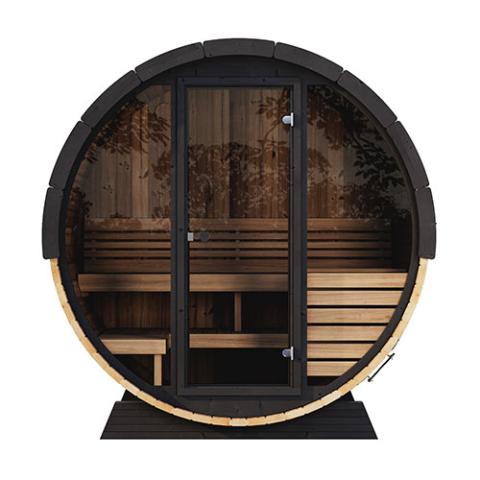
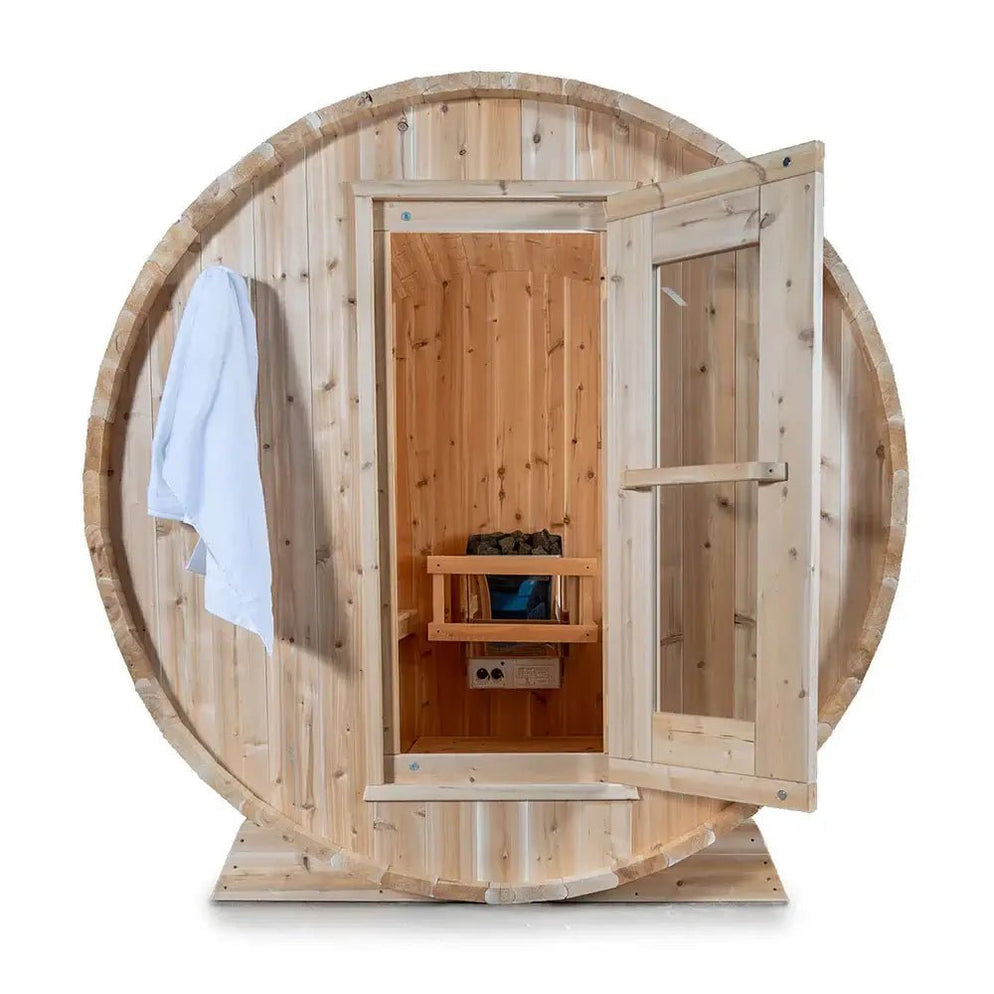
Outdoor barrel and cabin saunas are where the question gets sharpest. The 2023 NEC, in Section 210.8(F), requires GFCI protection for dwelling outdoor outlets supplied by single-phase circuits rated 150 volts or less to ground and 50 amperes or less, subject to its stated exceptions. The exceptions cover listed HVAC equipment and certain lighting outlets, and neither names sauna equipment.
The edition changes the numbers. Eaton’s 2026 NEC dwelling-unit comparison shows outdoor dwelling outlets covered up to 50 amperes in the 2020 to 2023 columns and up to 60 amperes in its 2026 column. A 50-amp sauna circuit sits right at that boundary. Whether your heater circuit is caught depends on the exact amperage, the edition and how your inspector reads “outlet” when the load is a hardwired heater inside a structure.

Indoor dry rooms
A sauna in a finished, dry interior space, such as a spare room, is not automatically in a listed location. Bathrooms and “indoor damp or wet areas” are listed, though, and a sauna adjacent to a shower, or one built in a bathroom or pool room, often lands there. Walk the space with your electrician and describe it honestly.
Plug-in versus hardwired heaters
Section 210.8 is written around receptacles and specific outlets. That matters because the two common sauna setups differ:
| Setup | Typical connection | How GFCI usually comes up |
|---|---|---|
| Infrared cabin | 120-volt cord and plug on a dedicated circuit | The receptacle is in scope if it sits in a listed location such as a basement, garage or outdoors |
| Small traditional heater, cord-connected | 120 or 240-volt receptacle | Same receptacle logic, plus voltage and amperage limits |
| Traditional heater, hardwired | 240-volt dedicated branch circuit, often 30 to 50 A | Depends on location rule, edition, listing and the inspector’s reading |
| Commercial or three-phase | Higher voltage or three-phase feed | Separate review by a licensed electrician; do not assume the dwelling rules apply |
For sizing, see why a 9 kW heater can call for a 50-amp breaker. A heater that draws more current on a hardwired circuit also changes which edition thresholds apply.
Read the heater listing and manual first
The NEC does not operate alone. The 2024 GSA residential code text requires sauna heaters to be installed according to manufacturer instructions, protected from accidental contact by a low-thermal-conductivity guard and compliant with UL 875. UL’s own guidance on electrical heating explains that “listed” generally means evaluated by an independent third-party certification organization, and that the product’s markings and installation instructions set limits and conditions of use.
That is why you will find some manuals stating a ground-fault device should not be used with the heater, while others make no statement. Forum threads are full of electricians and homeowners stuck between a code location rule and a manual. When this happens:
- Photograph the manual page and the heater’s rating plate.
- Ask the manufacturer’s technical support whether a GFCI breaker is acceptable for that model and what nuisance tripping they have seen.
- Take both to your electrician and the local inspector before the circuit is installed.
Do not remove or bypass GFCI protection that the code requires because a heater trips it. A tripping GFCI is a signal to find the cause: a leaking element, moisture in the junction box or wiring, or a heater not suited to the protection. A qualified electrician should diagnose it.
Also confirm the guard. Our page on sauna heater guards and safe fit explains why the guard and clearances are part of the same safety picture as the circuit.
Who decides: code adoption and the AHJ
The NEC is a model code. It becomes law only when a state, county or city adopts it. NFPA’s adoption research found that adoption varies by jurisdiction: most states adopt statewide electrical codes, some use county or local rules, and some permit local amendments. NAHB tracks this too, and its 2026 NEC adoption kit includes a document showing which NEC editions states have adopted, noting that jurisdictions proceed through their own adoption processes.
So a neighbor two states away may have been told something different from what you will be told, and both can be right. Under NEC Section 90.4, as NFPA explains, the AHJ interprets the rules and approves or rejects equipment and materials. In practice:
- Ask the building department which NEC edition and local amendments apply to your address.
- Ask whether a hardwired sauna heater circuit in your location needs GFCI protection, and have the answer written on the permit or in an email.
- Ask how they treat a heater whose manual says not to use GFCI.
If you are planning a wood-fired indoor unit, our U.S. permit checklist for indoor wood saunas shows how NFPA 211, the IRC and the NEC fit together on one permit.
A planning checklist before you buy
Work through these in order, since each answer feeds the next:
- Heater type and rating. Electric traditional, infrared, or steam. Note kilowatts, voltage, and amperage from the rating plate.
- Connection method. Plug-in receptacle or hardwired branch circuit.
- Location. Basement, garage, bathroom-adjacent, finished interior, or outdoors.
- Code edition. The NEC version your jurisdiction currently enforces, including local amendments.
- Manual and listing. What the manufacturer says about ground-fault devices.
- Written determination. The inspector’s or plan reviewer’s answer on GFCI for this circuit.
- Licensed electrician. Hire one who has wired saunas. Our list of four questions to ask a sauna electrician is a good start.
For circuit planning beyond GFCI, the guides on sauna power requirements and traditional sauna electrical requirements go through wire size, disconnects and dedicated circuits.
Commercial saunas, gyms and rentals
Gym owners, spa operators and vacation rental managers face the same questions with more variables: higher kilowatt heaters, three-phase feeds, multiple rooms and public use. Branch-circuit configuration and GFCI breaker choices should be signed off by a licensed electrical contractor and the local AHJ. Staff who work around panels and live electrical equipment also benefit from live low-voltage panel rescue training, which covers CPR and rescue in that setting. Insurance carriers and rental platforms often ask for permits and inspection records, so keep your GFCI determination with the project file.
Perspective: what we see on sauna electrical jobs

Most GFCI confusion we see starts before anyone has read the manual. Buyers pick a heater, then ask an electrician what breaker to use, and only afterward discover that the model’s instructions and the local rule point in different directions. We think the order should be reversed: confirm the location rule and the manufacturer’s position first, then choose the heater.
We also advise treating the manual and the code as two checks that must both pass. When they conflict, the answer is not to pick the one you prefer. It is to put both documents in front of the inspector and ask for a determination, and to contact the manufacturer about the specific model. That is the reason we encourage customers to call us with the rating plate details and their installation location before ordering, so the heater we recommend suits the circuit that will actually be approved.
— Teddy
Choose the heater with the electrical plan in hand
Sauna Heater Supply carries electric, wood-fired and gas heaters, controls and replacement parts for residential and commercial installations, and our team can help match a heater’s electrical specifications to your space and circuit. Browse sauna heaters or complete outdoor and indoor saunas, and contact us with your location and rating plate details for personalized guidance.

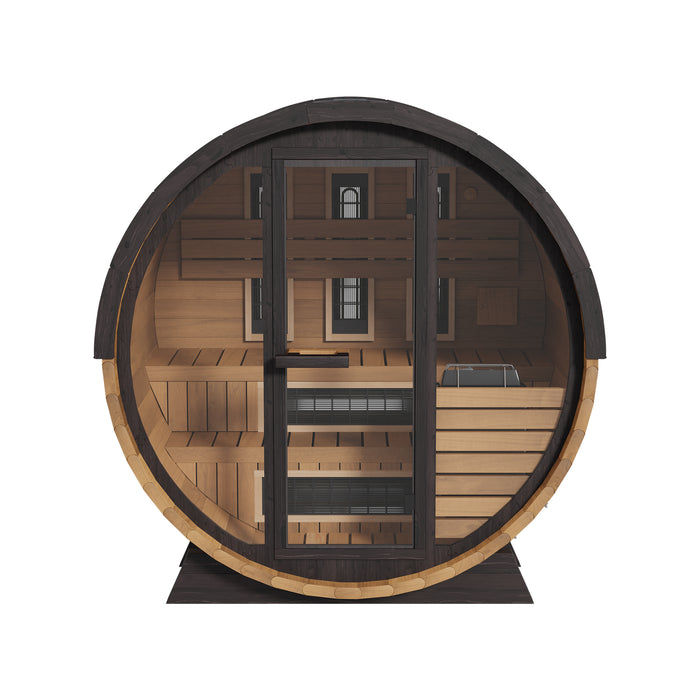
If you want a ready-to-assemble option for a yard, the SaunaLife Model G2 outdoor home sauna kit is one place to start. Whatever you choose, have the outdoor circuit reviewed against the edition and amperage rules above. We also offer professional installation and custom design; see our main site for details.
Before the heater arrives, read the heater installation step-by-step guide and the page on confirming heater clearances with the manual.
FAQ
Does every sauna heater need a GFCI breaker?
No single rule covers every sauna. The NEC attaches GFCI protection to listed locations and receptacles, and the answer changes with the heater’s connection, location, the NEC edition in force and the inspector’s reading. Some manufacturers also instruct against ground-fault devices on certain heaters. Get a written determination from your local building department.
Does an infrared sauna need a GFCI outlet?
Many infrared cabins plug into a 120-volt receptacle. If that receptacle is in a location the code lists, such as a basement, garage, bathroom or outdoors, it will generally need GFCI protection under the dwelling rules. Check the cabin’s manual too, then confirm with your electrician.
Can I use a GFCI breaker if my heater manual says not to?
Do not decide this yourself. Contact the manufacturer about your model, show the manual page to your electrician and ask the inspector how they want it handled. The AHJ approves or rejects equipment and installations, so their written answer protects you.
Does an outdoor sauna need GFCI protection?
Outdoor outlets in dwellings are covered by the NEC’s GFCI rule, with the 2023 text applying to circuits of 150 volts or less to ground and 50 amperes or less, and the 2026 comparison showing a 60-ampere limit. Neither listed exception names sauna equipment. Whether a hardwired heater counts as an outlet under that rule is something your inspector will confirm.
Sources
- GFCI Protection Installation Tips and NEC 2020 Updates (Eaton)
- 5 Ways to Check GFCIs (NFPA)
- National Electrical Code 2023, TIA 70-23-3 (NFPA)
- AFCI and GFCI requirements for dwelling units, 2026 NEC (Eaton)
- Chapter 19 Special Appliances, Equipment and Systems (GSA IRC 2024)
- Electrical heating code guide (UL)
- Falling Behind: electrical code adoption (NFPA)
- 2026 National Electrical Code Adoption Kit (NAHB)
- Article 90 and Electrical Inspectors (NFPA)
- Live low-voltage panel rescue training (Prime First Aid Training)