








Traditional Sauna Electrical Requirements: 2025 Guide

Now that winter is behind us, many people are dreaming of having a sauna right at home (whether indoors or outdoors).
If you're considering a traditional electric sauna heater, it's essential to understand the importance of a proper electrical setup. Without it, your sauna simply won't perform as it should.
While there are several traditional saunas, this guide focuses on electric models. We'll cover everything you need to know, from voltage and wiring to safety and installation.
Disclaimer: If you're not experienced with traditional sauna electricals, it is ultimately ideal to consult a licensed electrician for installation.
Table of Contents
- Understanding Sauna Heater Power Requirements
- Voltage Requirements for Traditional Electric Sauna Heaters
- Amperage and Circuit Requirements
- Wiring Considerations and Best Practices
- Quality Heater Options and Their Electrical Specifications
- Where To Buy Reliable Heaters For Traditional Electric Saunas
- Installation Considerations
- Troubleshooting Common Electrical Issues in Traditional Saunas
- Remember…
- FAQs
Understanding Sauna Heater Power Requirements
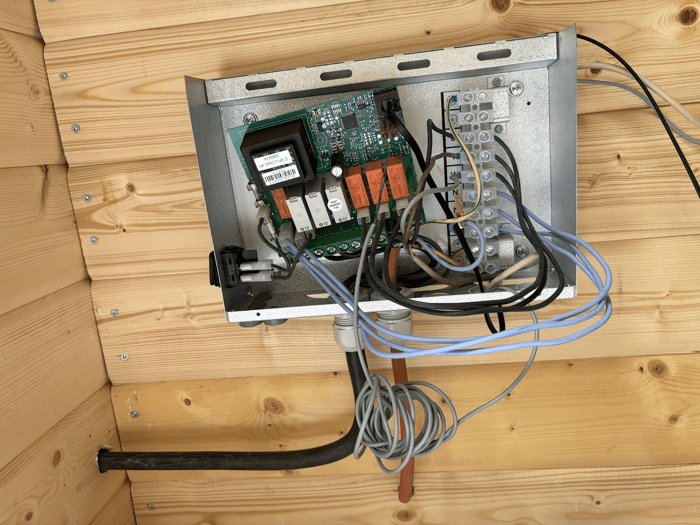
The power requirements for a sauna room depend on its size, so there are different power requirements for different sauna sizes. This power is measured in kilowatts (kW).
To calculate the appropriate size of heater required, you need to know the dimensions of your sauna. It is simple:
Multiply the room's length, width, and height, and divide the figure by 1.3 cubic meters or 45 cubic feet.
- The rule is 1kW per 1.3 cubic meters (45ft³), so if you have a room with the dimensions 1.5m, 1.5m, and 2m, multiplying them gives you 4.5m³.
- Using the rule, you divide 4.5m³ by 1.3, which comes to approximately 3.5 kW.
- This means the sauna will need about 3.5 kW of power.
There are usually other factors to consider aside from the room's dimensions.
For example, consider the height of the ceiling. A higher ceiling means more air to heat up, so more time to heat up.
Also, rooms with glass doors or uninsulated walls take longer to heat up and require more power. You add roughly 1.4m³ (about 50ft³) to the total dimensions for glass doors and windows.
Flooring of the Sauna Space Matters, Too
Another factor is the tiles, floors, and concrete materials used in the sauna.
They take longer to heat up because they have a high thermal capacity, absorbing a lot of heat before rising in temperature. You should add about 2m³ (roughly 70ft³).
Power consumption pattern
In addition to the materials and dimensions of the room, it's worth noting that power consumption isn't always the same as calculated.
Most saunas only draw the full kilowatts calculated when they're turned on, since that's when they're at full power.
Traditional electric saunas, for example, use their full kilowatt capacity when heating up the room, and less power overall, since they heat your body directly rather than the air.
Let's put things into perspective:
Say it's a medium-sized sauna room with dimensions 2m, 2.2m, and 2.5m, a glass door, and a tiled floor.
- The base volume comes to about 11m³, plus roughly 1.4m³ for the glass door and 2m³ for the tile floor.
- The total works out to about 14.4m³.
- Dividing that by 1.3 gives roughly 11.1 kilowatts, so an 11kW heater would fit.
It will always round up, so an 11.5kW heater is also a viable option.
Voltage Requirements for Traditional Electric Sauna Heaters
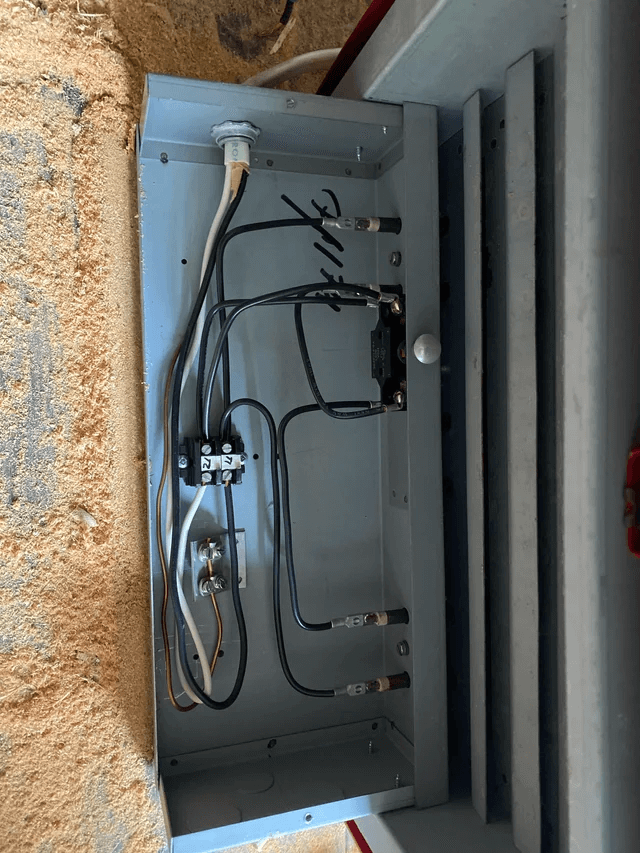
After calculating the kilowatts your sauna heater needs, the next step is figuring out the voltage.
NOTE: This is important because if you mismatch the voltage or phase type, you could burn out or destroy the heater, the plug sockets, or the entire electrical panel.
For a 3 kW and above heater, you need a 230V plug (standard socket).
It can also work for 4 to 6 kW, but at that point it has to be hardwired to your electrical panel, while anything above 6 kW needs to be connected to a 3-phase 400V supply.
A 230V plug can't comfortably handle anything above 6 kW.
You also have to consider the phase power, i.e. the type of power supply. A single phase can handle up to about 6 kW, while a 3-phase setup is typically needed from around 9 or 10 kW and above.
Voltage matters a lot because it directly affects the heater's performance. A 230V plug, for instance, can conveniently carry a 3 kW heater without tripping the breaker or overheating the power panel.
For installation, 3 kW to roughly 6 kW can match a 230V single-phase setup, sometimes needing to be hardwired to the general power panel, but it works fine.
What about Sauna Heaters with Higher Kilowatt?
For sauna heaters with higher kilowatts (9 kW and above), you need to connect to a 400V 3-phase power supply to prevent tripping, overheating, and fire risk in your home.
When selecting your heater, ensure it's compatible with your home's voltage, breaker size, phase type, and wiring system.
Amperage and Circuit Requirements
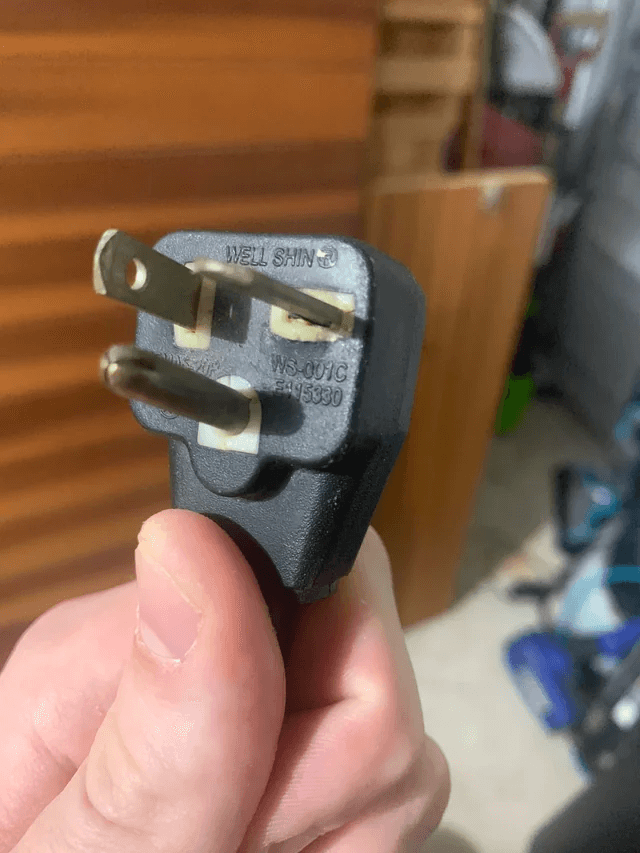
The appropriate amperage of a breaker is calculated by dividing the kilowatts of the heater by the voltage.
- For example, a 3 kW heater on a 230V single phase will need approximately 13A, so the appropriate breaker size would be 16A minimum.
A 6 kW heater running on 230V draws about 26A, so you'd want a 32A breaker at minimum. You can always go higher (32A or 50A instead of the 16A minimum for a 3 kW heater), just never lower than the minimum.
- After choosing the right circuit, make sure it's isolated and not shared with lights, plugs, or other appliances.
Sauna heaters draw a lot of steady current that can trip other appliances or affect them. An isolated circuit prevents overheating and lets the heater run at full power.
If you go with a type C breaker, make sure it covers all live wires for 3-phase sauna heaters — it can handle higher inrush currents before tripping to prevent damage.
You can also include a Residual Current Device (RCD) or Ground Fault Interrupter (GFCI) for steam or humid saunas.
This helps detect leaks or water getting into the heater's electrical parts, cutting power to prevent damage.
Having a proper, well-protected circuit ensures your sauna heater runs steadily, lasts longer, and reduces fire risk.
To make things easier, you can use our Sauna Heater Size Calculator.
Wiring Considerations and Best Practices
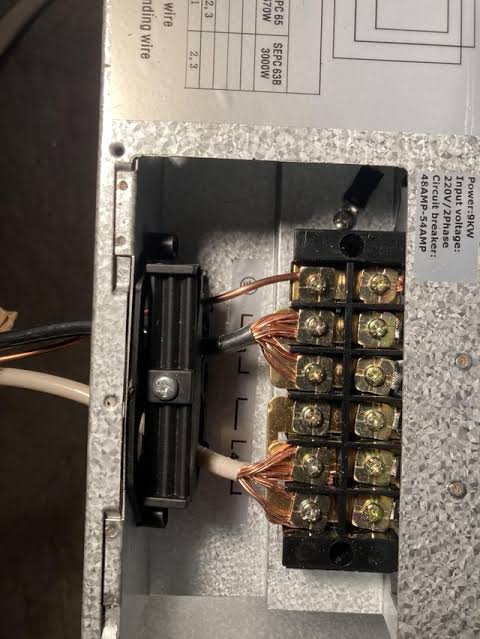
When wiring your sauna heater, you have to consider the following factors:
- Heat
- Moisture
- High current
- Quality
- Durability
The type of wire you use should withstand high temperatures, since it will be running into the sauna where it's constantly exposed to heat and, sometimes, moisture.
Silicone and rubber-insulated wires are good options. Silicone-insulated wire can withstand temperatures over 180°C, while rubber-insulated wire is durable and moisture-resistant. PVC cable can work but tends to degrade over time.
Keep wires outside the sauna as much as possible, and route any wiring that must be inside under heat shields, secured with cable clips, away from direct exposure to radiant heat.
If there's a junction box, keep it outside the sauna, away from heat, somewhere it can be easily inspected. Sauna heaters should also be grounded to prevent shocks and fire hazards.
What about the Wire Gauge?
Another consideration is wire gauge — the thickness and diameter of the wire, usually measured using the American Wire Gauge (AWG) system. The higher the number, the thinner the wire.
You need to know the correct wire gauge for your heater. A wire that's too thin can cause the circuit breaker to trip, create a fire hazard, or damage the heater.
Size Chart for Traditional Sauna Heater Wire Connection
You can use the wire size chart below to determine the AWG based on the amps of the heater:
| Maximum Amps | AWG (Wire Gauge) |
| 15A | 14 |
| 20A | 12 |
| 30A | 10 |
| 40A | 8 |
| 55A | 4 |
Quality Heater Options and Their Electrical Specifications
There are a lot of quality heater options out there, but here are our top two brands:
1. HUUM Sauna Heaters

HUUM DROP 9
$1,751.00 $2,188.75
Inspired by the shape of a water drop, this heater's rounded design softens and complements the angular interior of a classic sauna.
View ProductAll HUUM heaters have minimal metal surfaces, creating more surface area for the stones.
This results in more efficient, consistent, and quicker heating while reducing power consumption.
One of HUUM's award-winning designs is the HUUM DROP Series, which received a Red Dot Award for its minimalist look inspired by a water droplet.
- The wall-mounted HUUM DROP Series is an excellent choice for small and medium saunas.
- For larger saunas, the HUUM HIVE Series has a 550-lb stone capacity and can heat spaces up to 1,236 cu ft.
- For tight spaces, the HUUM CLIFF Series has a slim design inspired by coastal cliffs.
- Smaller saunas can use the wall-mounted Mini CLIFF, or the full-sized CLIFF Series, which can heat up to 600 cu ft.
NOTE: The amount of sauna stones a HUUM heater requires depends on the model, ranging from around 122 lbs to over 500 lbs.
2. Amerec Sauna Heaters
US-based Amerec has over 60 years of experience manufacturing more than a million sauna heaters.
The Designer Pure series is a great choice if you want something similar but a bit more advanced.
- The Designer Pure series comes in three variants: Designer Trend 45S at 4.5 kW, Designer Trend 60 at 6 kW, and Designer Trend 80 at 8 kW — suitable for sauna rooms sized 100 to 425 cu ft.
- Another favorite is the Fonda Pure Series, with a sleeker look, matte black finish, and rounded edges.
- The Fonda Pure Series is compatible with A30 or Pure 2.0 controls and comes in three variants: Fonda 45 Pure at 4.5kW, Fonda 60 Pure at 6kW, and Fonda 80 Pure at 8kW.
The Amerec Himalaya Pure Series can be a centerpiece in your sauna room — a rock-tower heater with over 210 lbs of stones, BWT-ready, suited to sauna rooms up to 350 cu ft.
Where To Buy Reliable Heaters For Traditional Electric Saunas
Sauna Heater Supply carries a range of sauna electric heaters and replacement parts, including stones, control units, heating elements, and other accessories.
Our team of sauna-loving experts is also available for a consultation or to help you select the right heater for your space.
Installation Considerations
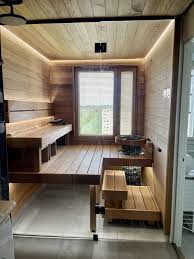
Unless it's a DIY sauna heater, you'll need to hire a licensed electrician for your sauna heater installation.
Most states require permits and code compliance for electrical installations, so check with your electrical inspector or local housing authority about what permits you'll need.
Usually, the electrician obtains the permit after submitting wiring diagrams and specifications for your heater. Here's roughly how the process goes:
Step 1: Get a licensed electrician to inspect your home and explain the installation process.
Step 2: After obtaining permits, the electrician runs the circuit from the panel box, does the wiring, sets the junction box, installs heat-rated wires in conduit, and grounds everything for protection.
Step 3: Next comes heater and control wiring for the thermostat, timer, heater, and other connections.
Step 4: The electrician powers up the heater, checks sensor readings and control panel responsiveness, and assesses performance.
Step 5: The heater's temperature is checked and adjusted if needed, along with airflow, humidity balance (if applicable), and circuit stability.
After testing, the electrical inspector confirms everything is wired correctly and the heater is installed properly.
From there, routine checks keep everything functioning as it should.
Monthly checks are a good habit — watch for discoloration, burning smells, or leaks, and test the RCD/GFCI during scheduled maintenance.
Troubleshooting Common Electrical Issues in Traditional Saunas
Over time, after installation, you might run into some electrical issues. The first step is identifying the type of issue so you know what to do next.
Here's a quick troubleshooting guide for traditional electric-powered saunas:
| Issue Type | Likely Cause | Recommended Action |
| Heater not turning on | Power supply failure or breaker issue | Troubleshoot as an electrical issue; contact a licensed electrician (preferably the installer) |
| Heater on but not heating | Heater control system malfunction | Likely a heater malfunction; contact a sauna professional |
| Heater overheats or shuts off unexpectedly | Could be an electrical or heater control system issue | Check both; consult the manual or manufacturer before calling a technician or electrician |
| Sauna circuit breaker keeps tripping | Excess load on circuit, ground circuit issues | Electrical issue; contact a licensed electrician |
| Irregular power supply to sauna | Electrical fault | Electrical issue; contact a licensed electrician |
Remember…
Regardless of what category the problem falls under, once you've identified the type of issue, wait for a professional to handle it, and ask questions to understand what caused it and how to avoid it in the future.
FAQs
What size breaker do I need for my sauna heater?
The size of your circuit breaker depends on the kilowatts of your sauna heater. A 3 kW heater on a 230V single-phase supply requires a minimum of 16A.
Can I plug my sauna heater into a standard outlet?
No, you shouldn't. Even the smallest heaters draw too much power for a standard outlet or socket.
How does my home's electrical system affect my sauna heater options?
Most sauna heaters need to be hardwired into the power panel. Unlike regular appliances such as microwaves or fans, which can simply be plugged into a standard outlet, sauna heaters need a dedicated, hardwired connection.