









Sauna Heater Guard: Safe Fit and Install for Homeowners
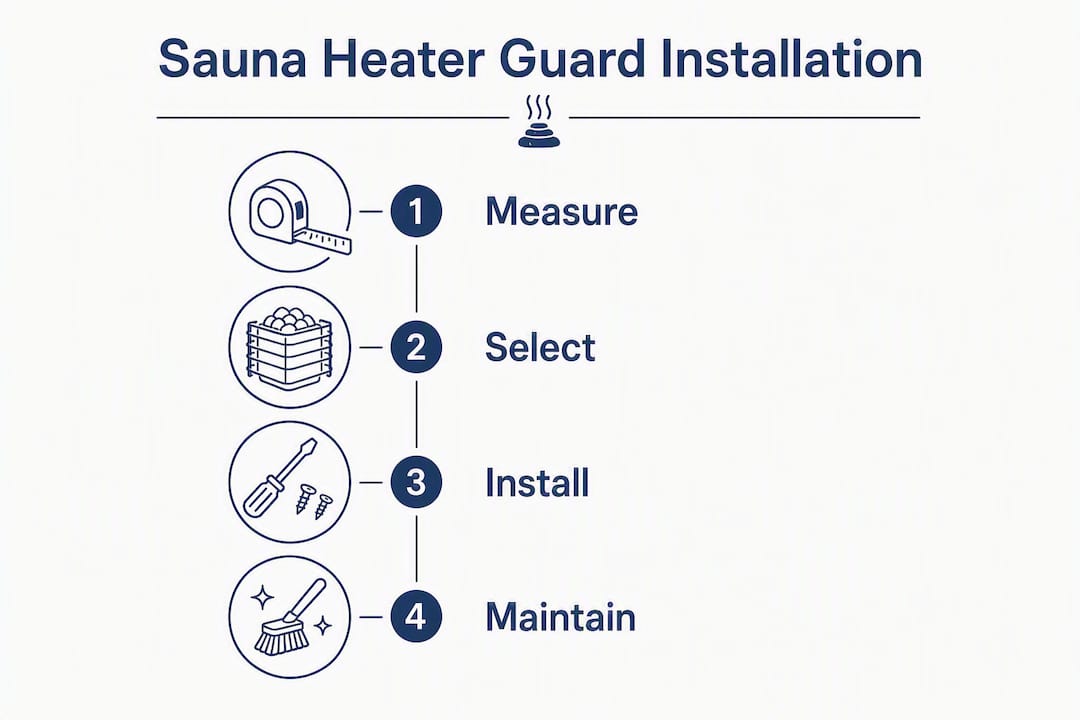
The safest approach is to fit a model-approved sauna heater guard sized specifically for your heater, or a manufacturer-rated universal guard when a model-specific option is not available. Before you buy, take two steps:
- Confirm your heater model and measure clearances. Pull up your heater manual, note the exact model number, and record the distance from the heater to each wall, the door, and any combustible surface. These numbers determine which guard fits safely.
- Choose a model-specific guard or a qualified universal guard, then schedule installation. Model-specific guards from the same manufacturer are the most reliable fit. If yours is not available, select a universal guard rated for your heater’s wattage and footprint.
Saunaheatersupply carries the Harvia HL4S and other model-matched guards, along with 5-Year Total Protection Warranty options that cover your purchase from day one. Contact the team for a compatibility check before ordering.
Table of Contents
- What is a sauna heater guard and why does it matter?
- What types of sauna heater guards are available?
- How do you choose the right sauna heater guard?
- How do you install a sauna heater guard and keep it maintained?
- What U.S. safety standards and red flags should you know?
- Why correct guard selection and maintenance prevent failures
- Key Takeaways
- The case for model-approved guards over generic alternatives
- Saunaheatersupply has the guards, compatibility checks, and warranty coverage you need
What is a sauna heater guard and why does it matter?
A sauna heater guard is a physical safety barrier placed around a heater to prevent accidental contact with hot surfaces. Harvia’s safety guidance describes guards as a core safety measure for both private households and high-usage commercial facilities, reducing burn risk for anyone who shares the sauna space.
The barrier sits at a set distance from the heater body, leaving the stone area and ventilation paths open. This matters because blocking airflow around the stones can cause localized overheating, which trips the heater’s built-in fault detectors or, in a worst case, contributes to a fire. A properly fitted guard protects users without interfering with the heater’s thermal performance.
Guards reduce burns but do not replace correct installation, regular maintenance, or a firm “no drying clothes in the sauna” policy. They are one layer of protection in a broader safety setup.
Who benefits most from a heater guard:
- Households with small children or elderly users
- Vacation rentals and short-term rental properties where guests are unfamiliar with the equipment
- High-traffic commercial saunas, spas, and gym facilities
- Any sauna where the heater is positioned near a bench, door, or high-traffic path
What types of sauna heater guards are available?
Guard styles vary by material, configuration, and how they attach to the heater or surrounding structure. Choosing the wrong type can restrict airflow, reduce clearances incorrectly, or simply not fit your heater’s footprint.
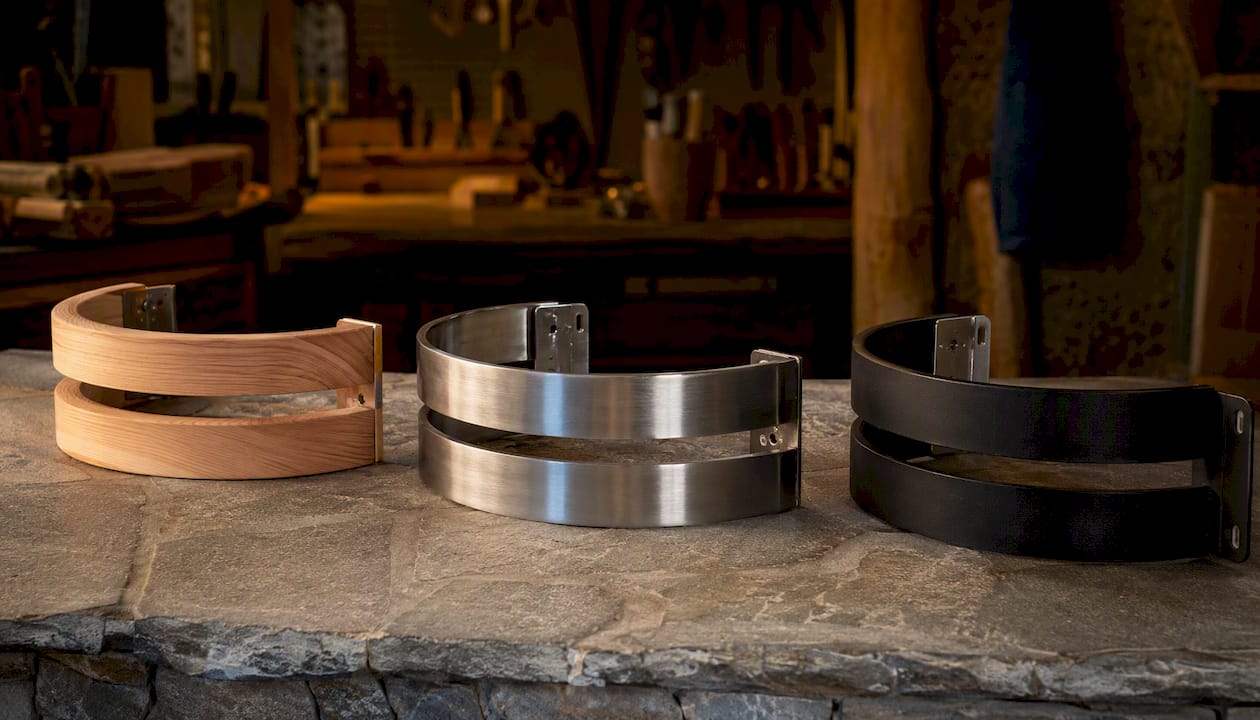
| Guard Type | Best For | Key Consideration |
|---|---|---|
| Wooden rail / fence | Residential saunas, aesthetic match with cedar interiors | Requires regular refinishing; check for heat-related warping |
| Metal safety railing | Commercial or high-traffic saunas | Durable and low-maintenance; confirm stainless grade for corrosion resistance |
| 2-sided guard | Corner heater installations | Covers two exposed sides; confirm the open sides meet clearance specs |
| 3-sided guard | Freestanding or wall-mounted heaters with three exposed sides | Most common residential configuration |
| Model-specific protective sheath | Tight installations near combustible walls | Attaches directly to the heater and can reduce required safety clearances where the manufacturer permits |
| Cover protection rail | Remote-operated or Wi-Fi controlled heaters | Includes an integrated switch that cuts heater power if an object is placed on the rail |
Protective sheaths stand apart from standard guards because they mount directly to the heater body. This design can reduce the required distance to combustible walls, which is useful in compact sauna rooms. Standard wooden or metal rails maintain the original clearance distances specified in the heater manual.
Manufacturer-tailored safety railings are designed to match specific heater models, so the guard contours fit the heater’s shape without blocking the stone area.
Red flags to avoid when evaluating any guard:
- Mesh or slat spacing too narrow to allow adequate heat and steam circulation
- Flimsy fasteners or mounting hardware that could loosen under repeated thermal expansion
- Guards that sit so close to the stones they restrict airflow to the top of the heater
- No model compatibility information from the manufacturer or seller
How do you choose the right sauna heater guard?
Start with measurements, then verify compatibility, then consider materials and cost. Skipping the measurement step is the most common reason a guard arrives and does not fit.
Measurement checklist:
- Record your heater’s exact model number from the nameplate or manual.
- Measure the heater’s footprint: width, depth, and height including the stone basket.
- Note the distance from each side of the heater to the nearest wall, bench, and door.
- Identify thermostat and sensor locations so the guard does not cover them.
- Check the heater manual for the manufacturer’s minimum clearance distances to combustible surfaces.
Compatibility and safety checks:
- Confirm the guard is listed as compatible with your specific heater model, or that the manufacturer approves it as a universal fit.
- Verify that the guard leaves the full stone area and all ventilation openings unobstructed.
- For Wi-Fi or remote-operated heaters such as the Saunum AIR 5 CSB WiFi package, check whether a cover protection rail or door interlock is also required.
- Ask the seller about UL listing or equivalent recognized safety certification for the guard hardware.
- Confirm the return policy and warranty before purchasing.
Material considerations: Cedar and thermo-wood guards blend naturally with traditional sauna interiors and handle heat well, but they need periodic cleaning and light refinishing to prevent surface degradation. Stainless steel guards are more durable in high-humidity environments and require less upkeep, though they cost more upfront. For commercial settings, stainless is generally the practical choice.
Cost factors: Guard pricing varies based on material, number of sides, custom fit versus universal sizing, and whether mounting hardware is included. Shipping weight for metal guards can add to the total. Saunaheatersupply’s 5-Year Total Protection Warranty is available at purchase and covers the heater and accessories, which changes the long-term cost calculation significantly.
How do you install a sauna heater guard and keep it maintained?
Installation is straightforward for most standard guards, but a few steps determine whether the result is safe or just cosmetic.
Installation steps:
- Power off the heater completely and allow it to cool before any work begins.
- Lay out all hardware and confirm the guard dimensions match your measurements.
- Mark mounting positions on the floor or wall, keeping the guard at the manufacturer’s specified distance from the heater body.
- Secure the mounting brackets to the floor or wall framing using the provided hardware. Do not anchor into drywall alone.
- Attach the guard panels or rails to the brackets and check that no panel contacts the heater or stone basket.
- Verify all clearances match the heater manual’s specifications before restoring power.
- Schedule an electrical inspection if your installation involved any wiring changes or if local code requires it.
Most homeowners complete a standard three-sided wooden guard installation within a few hours. Metal guards with floor anchors may take longer depending on the subfloor material.
DIY vs. professional installation: A guard that mounts to the floor or wall without touching electrical components is a reasonable DIY project for a handy homeowner. Any work that involves the heater’s wiring, sensor placement, or electrical panel connections requires a licensed electrician. Some jurisdictions require a permit and inspection for sauna electrical work regardless of whether you change the wiring. Check sauna electrical requirements for your area before starting.
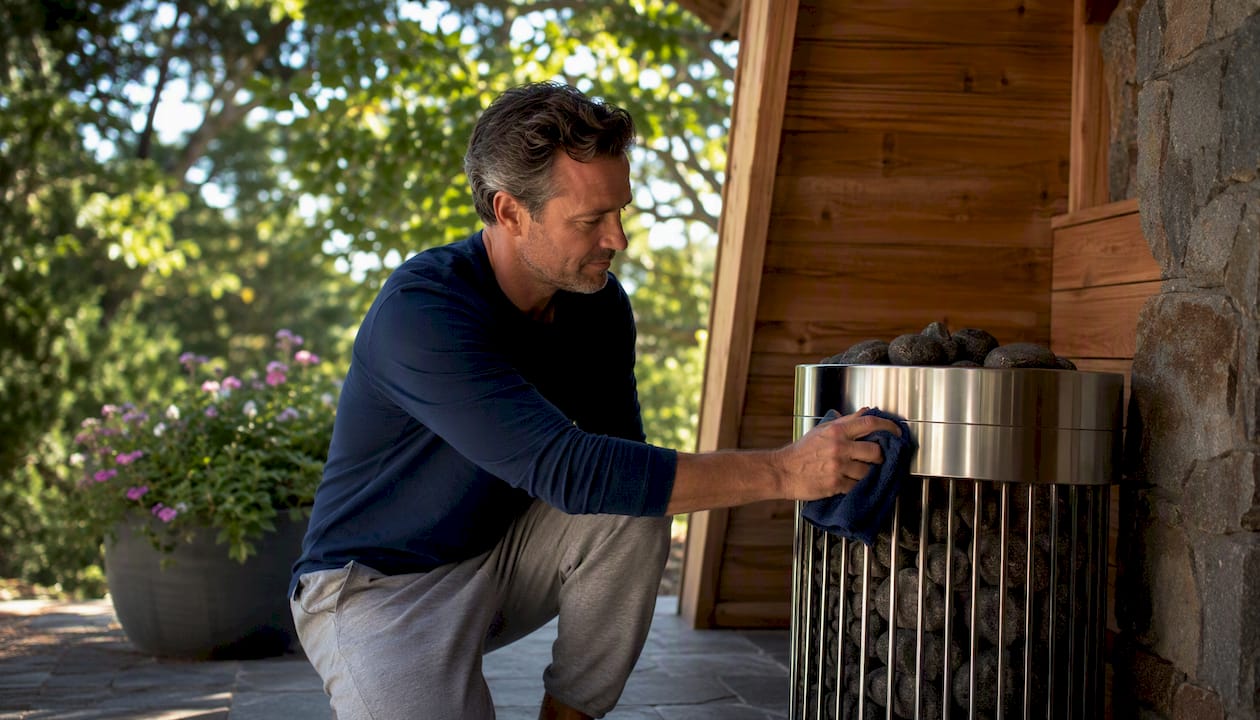
Pro Tip: Before tightening the final fasteners, place a straightedge across the top of the guard and confirm it is level. An uneven guard can shift over time and close the gap to the heater on one side.
Maintenance checklist:
- Inspect heater stones every six months; replace any that are cracked, crumbling, or discolored, since degraded stones can block airflow and cause overheating even with a guard in place.
- Check all guard fasteners seasonally for loosening caused by thermal expansion and contraction.
- Clean wooden guards with a dry or lightly damp cloth; apply a sauna-safe wood treatment annually.
- Confirm that sensors and thermostats remain fully visible and unobstructed after any cleaning or adjustment.
- Test the heater’s high-limit switch function annually or have it verified by a qualified technician.
What U.S. safety standards and red flags should you know?
No single federal standard governs residential sauna heater guards in the United States, but several layers of guidance apply. The heater manufacturer’s clearance specifications are the baseline. Local electrical codes, typically based on the National Electrical Code (NEC), govern the wiring and circuit requirements. Your local fire marshal or authority having jurisdiction (AHJ) may have additional requirements, particularly for commercial installations.
EN 60335-2-53 is the international standard for electric sauna heater safety, covering timers, remote operation interlocks, and testing requirements. Its 2023 amendment added specific clauses for remote-operated and recessed heaters. While this is a European standard, many U.S. manufacturers reference it in product design, and UL-listed heaters are tested against comparable criteria.
| Safety Layer | What It Covers | Who to Contact |
|---|---|---|
| Manufacturer manual | Clearances, stone load, timer limits, sensor placement | Manufacturer or authorized dealer |
| NEC / local electrical code | Circuit sizing, wiring, GFCI requirements | Licensed electrician or local building department |
| UL listing / recognized listing | Component safety testing | Verify on the product label or UL’s online database |
| Local fire marshal / AHJ | Occupancy rules, commercial inspections | Local fire department or building authority |
Safety statistic: The Electrical Safety Authority (ESA/OFMEM) reported three fatalities over a ten-year period linked to sauna electrical failures, with incorrect wiring and disconnected or tampered sensors identified as common causes.
Red flags that indicate a safety risk:
- Sensors, thermostats, or high-limit switches that have been bypassed, taped over, or disconnected
- Clothes, towels, or other combustibles placed on or draped near the heater or guard
- A guard installed so close to the heater that it visibly restricts airflow around the stone basket
- Exceeding the manufacturer’s recommended continuous heating time, which can cause overheating even when all sensors are intact
- Guards with no model compatibility documentation or sourced from sellers who cannot confirm fit
Why correct guard selection and maintenance prevent failures
The connection between guard selection, maintenance, and safety outcomes is direct. Harvia’s guidance links regular stone inspection and replacement to the reliable function of built-in fault detectors. When stones break down and block airflow, the heater’s temperature rises beyond normal operating range. A guard that was correctly fitted at installation can become a contributing factor if it was later shifted or if stone debris has accumulated against it.
A double sensor system, where one sensor acts as a primary thermostat and a second serves as a fail-safe high-limit cutoff, is the professional standard for residential and commercial heaters. When installing or replacing a guard, confirm that both sensors remain fully exposed and that the guard does not create a thermal shadow over either one.
Annual safety checks worth scheduling:
- Full stone inspection: remove stones, check for cracks and crumbling, replace as needed
- Visual inspection of all guard fasteners, panels, and mounting points
- Sensor and thermostat function test, performed by a qualified technician if you are not confident doing it yourself
- Timer and remote-operation interlock test for Wi-Fi controlled heaters
- Review of clearance distances to confirm nothing has shifted since original installation
For hospitality and commercial sauna operators, facilities like Altai Mountains Resort treat guard maintenance as part of a regular facility safety protocol, not a one-time installation task.
Key Takeaways
A model-approved sauna heater guard, correctly measured and installed with clearances verified against the manufacturer’s manual, is the most reliable way to prevent burns and support heater safety in any residential or commercial sauna.
| Point | Details |
|---|---|
| Measure before you buy | Record heater model, footprint, and all wall clearances before selecting any guard. |
| Model-specific fit is safest | Manufacturer-matched guards preserve required clearances and leave stone airflow intact. |
| Maintenance is not optional | Inspect stones and fasteners every six months; degraded stones can cause overheating even with a guard fitted. |
| Sensors must stay clear | Never install a guard that covers thermostats, high-limit switches, or fault-detection sensors. |
| Saunaheatersupply for guards and warranty | Saunaheatersupply carries model-compatible guards, the Harvia HL4S, and 5-Year Total Protection Warranty options with expert compatibility support. |
The case for model-approved guards over generic alternatives
Most sauna owners underestimate how much the guard choice affects the heater’s long-term performance, not just immediate burn prevention. A guard that fits the heater’s exact profile keeps airflow patterns consistent, which means the fault detectors and high-limit switches operate within the conditions they were calibrated for. A generic guard that sits too close to the stone basket, or one that creates an uneven thermal envelope around the heater, can cause the heater to cycle incorrectly or trip the high-limit switch prematurely.
Warranty coverage is the other factor that rarely gets enough attention at the point of purchase. A guard that is not approved for your heater model can void the heater manufacturer’s warranty in some cases. Pairing a model-matched guard with a purchase warranty from the outset removes that risk entirely.
Saunaheatersupply has the guards, compatibility checks, and warranty coverage you need
Saunaheatersupply takes the guesswork out of guard selection by pairing expert compatibility checks with a curated product lineup built for homeowners and contractors alike. Rather than sorting through generic options and hoping for a fit, you get direct guidance on which guard works with your specific heater model, what clearances to verify, and how to protect your purchase from day one.
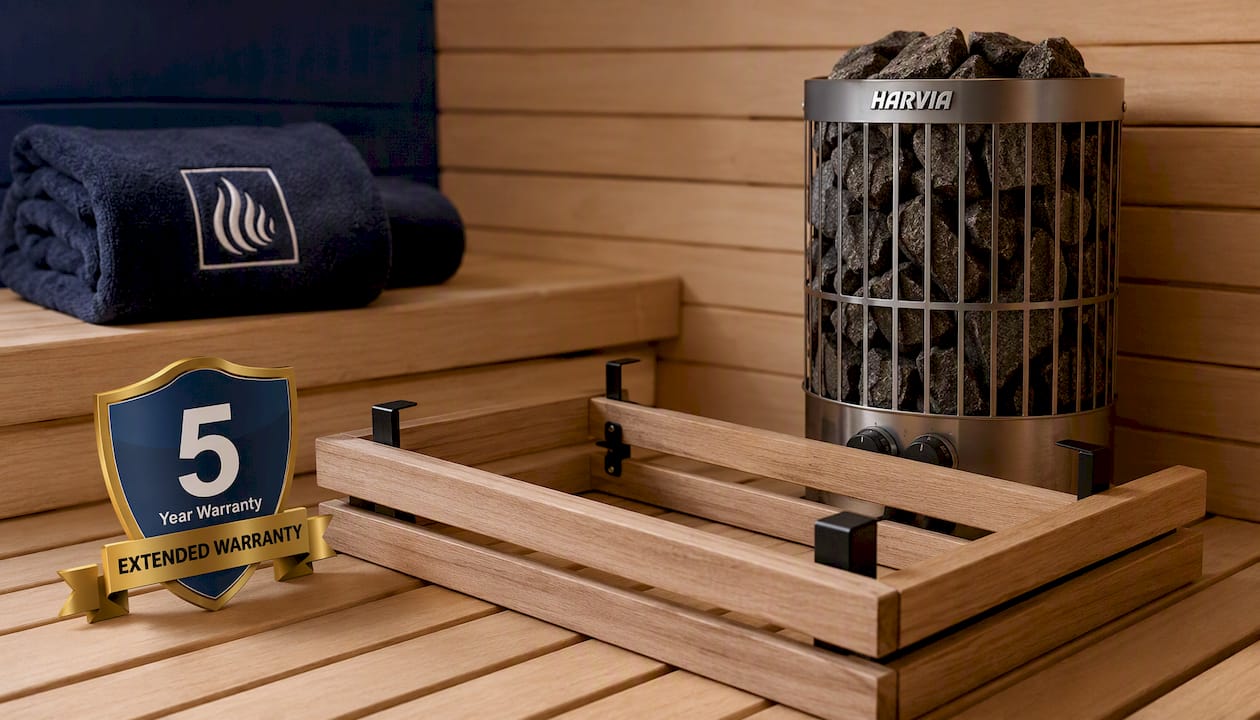
The shop carries the Harvia HL4S and a range of compatible accessories, along with the 5-Year Total Protection Warranty that covers your heater and guard investment against defects and failures. Fast shipping, a price match guarantee, and a knowledgeable support team mean you are not left figuring out compatibility after the box arrives. Browse the full selection at Saunaheatersupply or contact the team directly to confirm guard fit for your heater before you order.
Recommended
- Sauna Heater Installation: Step-by-Step Guide for Homeowners — Sauna Heater Supply
- Best Home Sauna Kits for Easy Install and Heater Fit — Sauna Heater Supply
- SaunaLife Model G11 Outdoor Home Sauna Kit — Sauna Heater Supply
- Steam Room vs Sauna: What Homeowners & Contractors Should Choose — Sauna Heater Supply