











3 Aroma System Errors That Cost Steam Room Installers and Homeowners
The right approach for steam room aroma options is a commercial-grade metering or dispensing system paired with steam-safe, manufacturer-approved fragrance concentrates, never household essential oils improvised into a steam line. Every installation needs a check valve between the injector and the supply line to stop backflow into the generator, and every operator should start at the factory-recommended setting before adjusting upward. Skip either step, and you risk equipment damage or an unpleasant, overpowering steam session.
TL;DR:
- Use only manufacturer-approved steam-safe concentrates and ensure a check valve is installed to prevent backflow damage.
- Choose between integrated modules for control, standalone pumps for retrofit flexibility, and avoid external diffusers unsuitable for commercial settings.
- Position the injector tee within 5 to 10 feet of the steam head and mount dispensers away from humidity and condenser zones to ensure proper dispersion and maintenance.
- Start with the lowest factory setting on the system and increase gradually, logging any adjustments to avoid guest discomfort and equipment issues.
- Keep safety data sheets, installation manuals, and technical contacts readily available to ensure compliance and effective troubleshooting.
Table of Contents
- What Types of Commercial Aroma Delivery Systems Work Best?
- How Do You Choose Steam-Safe Fragrance Concentrates?
- What Are the Installation Essentials for Aroma Systems?
- How Do You Tune and Maintain an Aroma System?
- What Allergy and Sensitivity Risks Should You Plan For?
- Does Aroma Use Affect Different Steam Room Materials Differently?
- What Regulations Govern Aroma Use in Commercial Steam Rooms?
- Where Installers Go Wrong on Aroma Systems
- Where to Buy Aroma Systems and Compatible Concentrates
- Essential Documents to Keep on File
- Sources
- FAQ
What Types of Commercial Aroma Delivery Systems Work Best?
Steam room aroma delivery breaks into three practical categories, and picking the wrong one causes most of the compatibility complaints installers hear about.
Integrated dispenser modules work directly with a matched steam generator line, such as MrSteam’s AromaSteam-style systems. These give you tight control because the generator’s control board and the dispenser talk to each other, and factory presets take the guesswork out of dosing. The tradeoff is flexibility: you’re locked into whatever generator brand the module was built for.
Standalone metering pumps, like AromaFlo-style dispensers, sit apart from the generator and inject fragrance into the steam line through a dedicated port. They’re the better choice for retrofit jobs where the generator predates the aroma system, and they’re generally easier to service since the pump head is accessible without touching the generator housing. Compatibility with the existing steam piping still matters, so check the injector port spec before buying.
External or ambient diffusers don’t belong in a commercial steam room at all. They disperse fragrance into open air rather than dosing it directly into the steam line, which means no accurate control over concentration and no way to guarantee even distribution across the room. For a spa serving multiple guests a day, that’s an unacceptable failure mode.
When you’re comparing systems for a project, weigh:
- Control integration: does the dispenser talk to your generator’s control panel, or does it run independently?
- Dosing accuracy: can you set and repeat a precise concentration, or are you eyeballing it?
- Maintenance access: can a technician reach the pump head, hoses, and check valve without shutting down the whole system for an hour?
Contractors sourcing for multiple client sites tend to prefer standalone pumps for exactly this reason. One pump design across several installs simplifies training and parts inventory, even when the generators themselves vary from job to job.
How Do You Choose Steam-Safe Fragrance Concentrates?
Fragrance concentrates for commercial steam rooms come in two formats, and the difference affects how often you’re servicing the pump.
Oil-based concentrates are the traditional choice and deliver a strong, immediate scent throw. They also carry more risk of residue buildup in hoses and injector tees over time, especially with heavier profiles like eucalyptus.
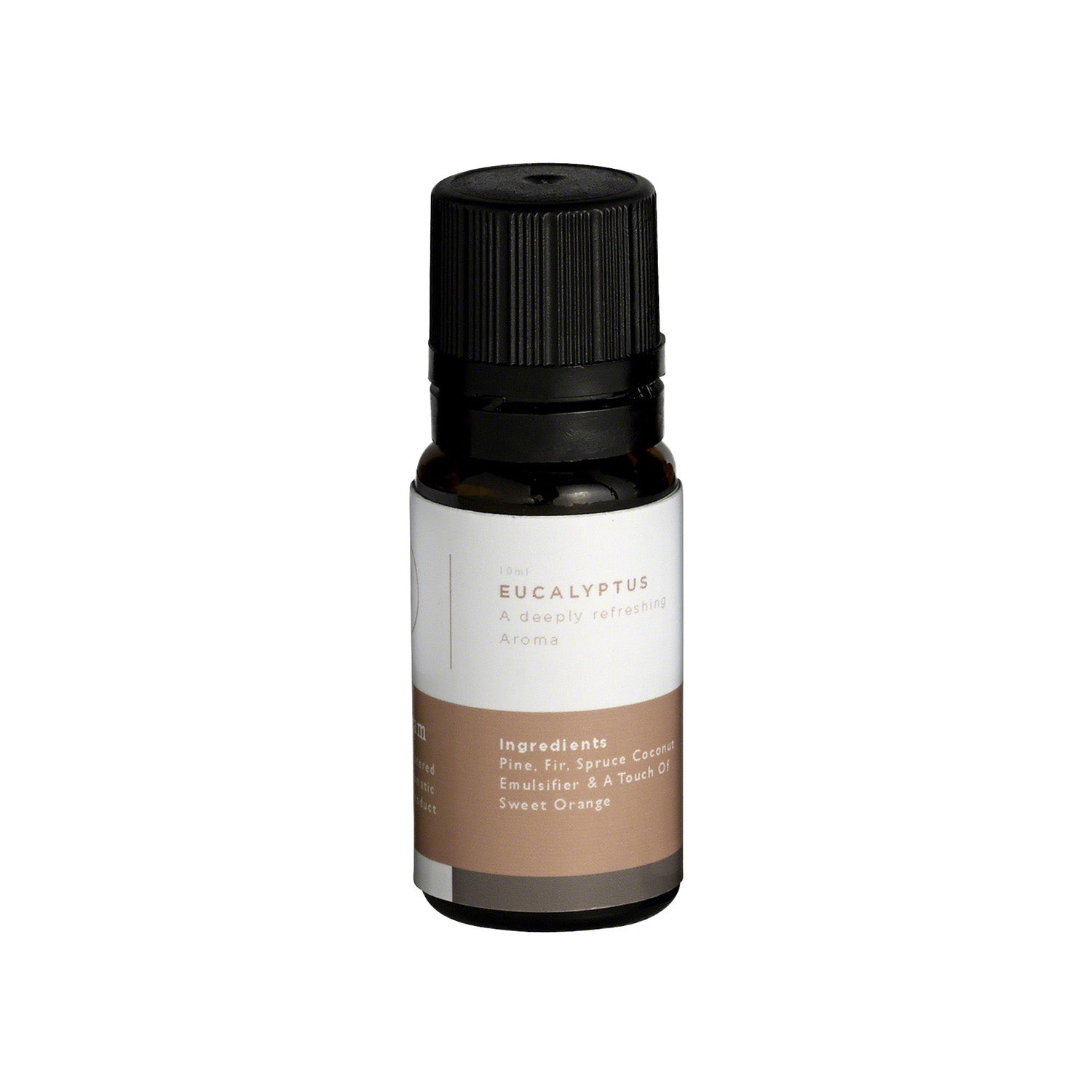
Water-soluble emulsions, often labeled “essence milk,” are formulated to vaporize cleanly without leaving oily residue behind, which cuts down on clogging and extends the interval between hose replacements. That’s part of why essence milk concentrates have become common in hospitality settings where uptime matters more than any single scent’s intensity.
A few rules keep you out of trouble here:
- Use only the concentrate formulation your dispenser or generator manufacturer specifies. Mixing an oil-based blend into a pump designed for emulsions (or vice versa) is a common cause of premature pump failure.
- Never cross-load concentrates between different pump brands, even if the bottle looks similar.
- Expect commercial fragrance oils to ship in bulk, typically one-liter or gallon containers with dilution ratios printed on the label. Eucalyptus, lavender, and “breathe” style blends are the most requested profiles across spa and hotel installs.
Pro Tip: Keep the Safety Data Sheet (SDS) for every concentrate you stock, not just the one currently loaded. If a guest reports irritation, you need to identify the exact product and its hazard data immediately, not dig through a supplier’s website later.
The SDS also tells you disposal requirements and allergy warnings specific to that formulation. Skipping that document isn’t just a compliance gap. It’s the first thing an inspector or insurer asks for after an incident.
What Are the Installation Essentials for Aroma Systems?
Getting the plumbing and placement right the first time saves you a return trip and protects the warranty on both the dispenser and the generator.
- Install a downward-facing injector tee in the steam supply line, positioned within 5 to 10 feet of the steam head. The downward orientation matters more than most installers expect, since an upward or sideways tee lets fragrance pool inside the fitting instead of dispersing evenly into the steam.
- Fit the check valve between the injector and the supply line without exception. This single component prevents concentrated fragrance from flowing backward into the generator, where it can damage internal components that were never designed to handle undiluted concentrate.
- Mount the dispenser or caddy on a dry, accessible vertical surface, away from the generator itself and clear of any zone that collects condensation. Technicians need to reach the pump head and hoses without climbing around equipment or working in a damp corner.
- Confirm wiring and control compatibility against the generator manufacturer’s instructions before final hookup. Integrated modules often require a specific low-voltage connection to the control board, and skipping that spec sheet is how installers end up with a dispenser that never syncs to the generator’s cycle.
Pro Tip: If you’re retrofitting an older steam room, check the injector port location relative to a similar-style device before committing to your tee placement. A backflow-style injector fitting illustrates the same downward-flow logic used in steam aroma tees, just at a smaller, decorative scale.
Every one of these steps traces back to the same principle: the aroma system has to protect the generator as much as it serves the guest.
How Do You Tune and Maintain an Aroma System?
Start every new install at the factory-set, low-volume setting and hold it there for the first several sessions. Manufacturers are consistent on this point: begin at the lowest recommended setting and increase gradually rather than dialing in a “strong” scent on day one. Over-aromatization isn’t just an unpleasant surprise for guests. It’s a documented cause of irritation, nausea, and breathing discomfort, which is exactly why the setting exists as a hard ceiling rather than a suggestion.
Keep the installation manual and SDS packet with whoever operates the system day to day, and log any setting changes in writing. That record matters if a guest complaint comes in weeks later and you need to trace what changed.
A short recurring maintenance routine catches most problems before they become service calls:
- Inspect the pump, hoses, and fittings for residue buildup or visible wear.
- Confirm the check valve is still stopping backflow. It’s cheap to test and expensive to skip.
- Check for leaks at every connection point along the injector line.
- Schedule a full servicing pass on a set calendar rather than waiting for a failure.
If a guest reports dizziness or a strong odor, reduce the dosing setting first and investigate the cause second. A clogged hose usually announces itself through weak scent throw. Troubleshooting steam generator issues before assuming the aroma pump is at fault often saves an unnecessary parts order.
What Allergy and Sensitivity Risks Should You Plan For?
Fragrance sensitivity is one of the most underplanned variables in commercial steam room design, and it’s a different risk than the irritation warnings tied to over-concentration. Someone can react to a properly dosed, correctly diluted eucalyptus blend simply because their airway is sensitive to that specific compound, not because anything went wrong with the equipment.
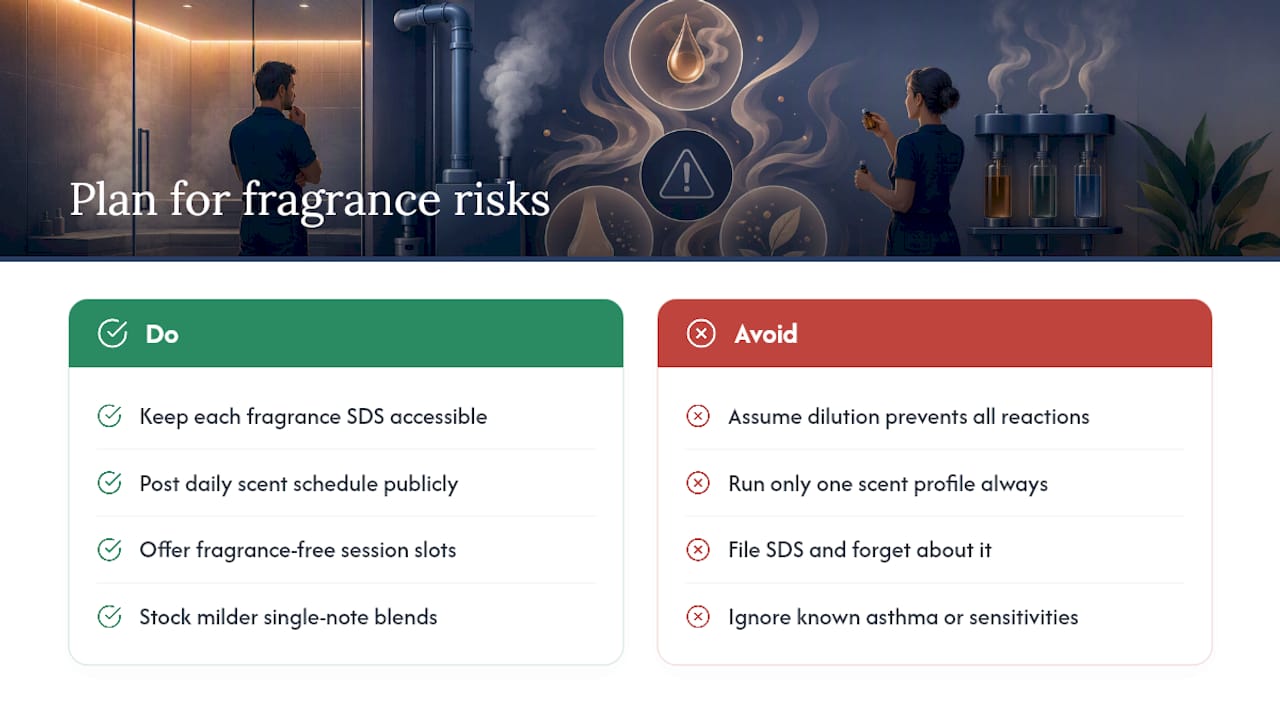
This is where the SDS earns its place as a permanent fixture in your operator binder rather than a document you file once and forget. Every fragrance concentrate’s SDS lists the specific compounds present, and that’s the information a guest’s physician or an on-site staffer needs if a reaction occurs mid-session.
Spa and gym operators serving the public should treat fragrance-free windows or clearly posted scent schedules as a practical accommodation, not an inconvenience. Posting which blend is running that day, and offering an unscented session slot, costs nothing and heads off most complaints before they start. Eucalyptus and mint-forward blends tend to draw the most reaction reports among respiratory-sensitive guests, which is part of why operators often stock a milder, single-note eucalyptus option alongside stronger multi-fragrance blends rather than running only one profile across every session.
Homeowners installing a personal system have more flexibility, but the same logic applies to household members. If anyone in the house has asthma or a known fragrance sensitivity, start with the lightest concentrate dilution the manufacturer allows and monitor the first few sessions closely before assuming the default setting works for everyone using the room.
Does Aroma Use Affect Different Steam Room Materials Differently?
Fragrance concentrates interact with steam room surfaces in ways that go beyond the immediate safety warning against certain materials. Tile and glass surfaces tolerate fragrance exposure well over time, since both are non-porous and don’t absorb concentrate residue the way softer materials can.
Acrylic and fiberglass are a different story. Manufacturers explicitly advise against fragrance use in acrylic or fiberglass rooms unless the product is specifically approved for that surface. The concern isn’t only immediate safety. Repeated exposure to concentrated fragrance oils can degrade the surface finish on acrylic over months of use, leading to dulling, discoloration, or micro-cracking that shows up long after the room was installed.
Grout and natural stone sit somewhere in between. Porous stone can absorb concentrate residue over repeated sessions, which sometimes shows up as faint discoloration around the injector tee or steam head if the system has been over-dosed for a long stretch. This is another argument for staying within the factory-recommended setting rather than treating it as a floor to build upward from.
If you’re specifying materials for a new steam room build and you know an aroma system is part of the plan from day one, factor that into the material selection rather than retrofitting fragrance into a room already finished in acrylic. Reviewing steam room waterproofing and material options before the build starts gives you room to choose a surface that tolerates both moisture and fragrance exposure over the life of the installation.
What Regulations Govern Aroma Use in Commercial Steam Rooms?
Commercial steam room operators fall under a layered set of obligations that most homeowners never encounter. Fragrance concentrates are chemical products, and SDS documentation exists specifically because OSHA’s Hazard Communication Standard requires employers to make that hazard information available to any employee who handles or works near the product. A spa that stocks eucalyptus and lavender concentrates without SDS on file isn’t just missing paperwork. It’s out of compliance with a federal workplace safety requirement.
Local health departments that inspect spas, gyms, and hotel wellness facilities often fold aroma systems into the same review as pool and steam room sanitation, checking that concentrates are stored properly, labeled correctly, and disposed of according to the SDS instructions rather than poured down a drain. Disposal rules vary by concentrate and by municipality, which is exactly why the SDS’s disposal section isn’t optional reading.
Ventilation standards also intersect with aroma use, since a steam room that already runs close to code minimums for air exchange has less margin for a heavily concentrated fragrance session. Facility managers adding an aroma system to an existing room should confirm the room’s ventilation was sized with that added air quality demand in mind, not just the base steam load.
None of this requires a compliance department. It requires keeping the right paperwork on file and treating the SDS as a working document rather than a formality.
Where Installers Go Wrong on Aroma Systems
The three mistakes I see repeated most often are skipping the check valve, loading a non-approved oil into a pump built for a different formulation, and mounting the caddy too close to the boiler where humidity ruins the pump head within a season. Every one of these is preventable with a five-minute check before the job is called done.
Commercial clients should use manufacturer-approved concentrates and integrated dispensers precisely because compatibility failures often trace back to a mismatched part, not a defective one. A simple print-and-check list covers it: injector tee facing down, check valve installed, manual and SDS on file with the operator, and dosing set to the lowest factory level before the first guest walks in.
— Teddy
Where to Buy Aroma Systems and Compatible Concentrates
If you’re specifying equipment rather than researching theory, the setup requires components that work together rather than fighting each other. The Saunum Air 7 Sauna Heater Package is a strong starting point for buyers who need a matched heater and accessory set specified for compatibility from the outset, rather than assembling parts from three different sources and hoping they align.

For fragrance, the Multi Essential Aroma Oil Package gives spa operators and homeowners a pre-curated set of steam-safe concentrates without the guesswork of sourcing individual blends from separate suppliers. If your priority is a single respiratory-friendly profile, the Eucalyptus Essential Aroma Oil covers the most requested commercial blend on its own.
Pre-sales guidance often includes checking pump, generator, and concentrate compatibility before ordering, to reduce the risk of installation failure. Contacting a supplier with your generator model and room dimensions can help confirm which dispenser and concentrate pairing fits your specific job before purchase.
Essential Documents to Keep on File
Every commercial steam room aroma installation needs three documents on hand at all times: the manufacturer installation and operation manual for both the dispenser and steam generator, the current fragrance SDS with disposal instructions, and direct technical support contacts for each piece of equipment.
Sources
- Fragrance Metering Pump System for Commercial Steam Rooms — MrSteam installation manual
- Steam Room Essence Milk — Topline Pools and Wellness
FAQ
Can I use regular essential oils in a commercial steam room aroma system?
No. Commercial dispensers and generators are engineered for specific steam-safe, manufacturer-approved concentrates, and household essential oils can clog injector lines or damage generator components not built to handle them.
Why does an aroma system need a check valve?
The check valve stops concentrated fragrance from flowing backward into the steam generator, protecting internal components that would otherwise be exposed to undiluted concentrate.
What’s the difference between oil-based and water-soluble fragrance concentrates?
Oil-based concentrates deliver stronger scent throw but risk residue buildup, while water-soluble essence milk formulations vaporize cleanly with less clogging, which suits high-use hospitality settings.
How far from the steam head should the injector tee sit?
Manufacturer guidance places the injector tee within 5 to 10 feet of the steam head, oriented downward to prevent fragrance pooling in the fitting.
Can I run aroma fragrance in an acrylic or fiberglass steam room?
Check the manufacturer’s approval first. Many fragrance systems explicitly warn against use in acrylic or fiberglass rooms unless the product is specifically rated for that material, since repeated exposure can degrade the surface over time.