










Steam Room Waterproofing: Materials, Perms, and Methods
Steam room waterproofing requires a bonded, steam-rated membrane assembly across the ceiling, walls, benches, and floor, not just the shower pan. For continuous-use commercial rooms, that means a membrane rated at 0.5 perms or lower per the Mapei perm rating guidance that governs how TCNA details treat steam applications. Residential intermittent-use rooms can use a slightly higher-perm membrane, but only when paired with a vapor retarder behind the substrate.
Here’s what to confirm before you buy a single sheet of membrane:
- Full coverage, no exceptions: ceiling, walls, floor, benches, and niches all need the same steam-rated treatment. A steam room with one waterproofed wall and three that aren’t isn’t waterproofed at all.
- Check the perm number and test method: look for ASTM E96 on the product’s technical data sheet, and confirm the perm rating fits your use case (0.5 perms or below for continuous/commercial).
- Line up your equipment order alongside your materials list: if you’re installing a steam generator and control, pair your membrane purchase with a compatible steam shower control and steamhead so the rough-in and waterproofing happen in the same pass.
Do this first: pull the technical data sheet for whatever membrane you’re considering and check its perm rating and continuous-use claim before you order boards, banding, or drains. Everything downstream depends on that one number.
Key Takeaways
Steam room waterproofing succeeds when a single-manufacturer, steam-rated bonded system covers every surface and every seam gets the same sealing discipline as the drain.
| Point | Details |
|---|---|
| Cover every surface | Ceiling, walls, benches, and floor all need the same steam-rated membrane, with no gaps. |
| Match perm rating to use | Continuous-use rooms need 0.5 perms or below, tested to ASTM E96; residential can run higher with a vapor retarder. |
| Stick to one system | Using one manufacturer’s membrane, band, sealant, and drain avoids compatibility and seam mismatch problems. |
| Seal every penetration | Steam inlets, lights, and cable holes need system-approved seals, treated with the same care as the drain. |
| Pair materials with equipment | Saunaheatersupply supplies steam controls, steamheads, and heater packages to round out a waterproofed build. |
Table of Contents
- Which Membrane System Is Best for Steam Room Waterproofing?
- What Are the Steps to Waterproof a Steam Room?
- Why Does Perm Rating Matter for Steam Waterproofing?
- Choosing the Right Substrate for a Steam Room Build
- How Do You Seal Steam Inlets, Lights, and Seams?
- What Does Steam Room Waterproofing Cost and How Long Does It Take?
- Why System Compatibility Prevents Most Steam Room Failures
- Sources
Which Membrane System Is Best for Steam Room Waterproofing?
The right system depends almost entirely on how often the room runs. A home steam shower used a few times a week has different requirements than a spa or gym steam room running most of the day, and picking the wrong category is the single most common budgeting mistake we see from first-time buyers.
Bonded sheet membranes, like KERDI-DS, are built specifically for continuous-use commercial steam showers. This 20-mil membrane reaches a water vapor permeance of about 0.19 perms, well under the 0.5 threshold that commercial steam rooms need. Standard KERDI membrane runs around 0.90 perms, which is fine for intermittent residential steam showers but not for a room that runs all day.
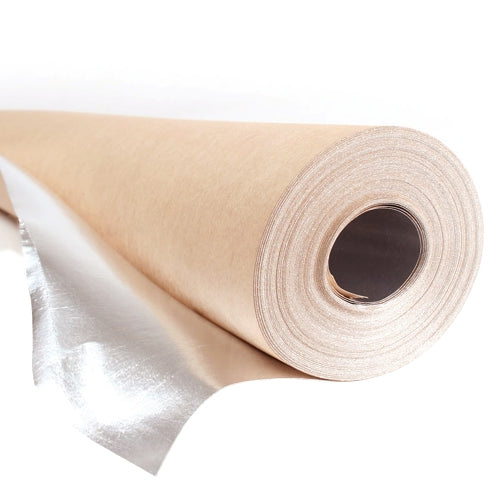
Bonded panel systems, such as KERDI-BOARD, function as both substrate and waterproofing layer when installed with matching band and corner accessories. Liquid-applied membranes, similar to Mapelastic-type products, trowel or roll on and can conform well to irregular shapes like curved benches, though cure times run longer than sheet membranes.
| Best For | System Type | Perm Rating | Continuous-Use Rated | DIY vs Pro |
|---|---|---|---|---|
| Residential, intermittent | Bonded sheet membrane | ~0.90 perms | No | DIY-friendly with practice |
| Commercial, continuous | Bonded sheet membrane (DS) | ~0.19 perms | Yes | Pro recommended |
| Residential/light commercial | Bonded panel system | Varies by manufacturer | Depends on model | DIY-friendly |
| Complex shapes, benches | Liquid-applied membrane | Varies by product | Check TDS | Pro recommended for seams |
A few notes worth flagging before you order:
- Preformed corners, banding, and drains matter as much as the membrane itself. Mismatched accessories are a common seam failure point.
- Sticking with one manufacturer’s full system (membrane, band, sealant, drain) preserves warranty coverage and avoids chemical incompatibility between products.
- DIYers can usually source and install sheet membranes and boards; continuous-use commercial rooms with complex drain tie-ins are worth handing to a licensed pro.
What Are the Steps to Waterproof a Steam Room?
Work through these steps in order. Skipping ahead, especially on floor pitch or penetration sealing, is where most steam rooms start leaking within the first year.
- Inspect and demo. Confirm framing is sound, dry, and free of movement before anything else goes on the wall.
- Pre-pitch the floor. Slope the mortar bed toward the drain before any membrane touches it.
- Install a vapor retarder if required. Needed behind the substrate whenever your chosen membrane exceeds 0.5 perms.
- Attach the substrate. Cement board or a proprietary board like KERDI-BOARD, fastened per the manufacturer’s spacing.
- Apply the membrane. Cover ceiling, walls, benches, and floor as one continuous system, no gaps.
- Seal seams and penetrations. Band every seam and treat the steam inlet, lights, and cable holes with system-approved sealant.
- Tie into the drain. Integrate the membrane directly with the drain flange, not just around it.
- Verify before tiling. Flood test the floor and visually inspect every seam and corner.
Ceiling slope gets overlooked constantly, and a flat steam room ceiling drips condensation straight back down on bathers instead of shedding it to the walls. Unsealed cable penetrations for lights or speakers are the other repeat offender.
Pro Tip: Photograph every penetration and seam location before you tile over it. When a valve or light needs service five years from now, that photo saves hours of guesswork.
Pro Tip: Treat the steam inlet fitting with the manufacturer’s specific seal, not a generic sealant. This one fitting sees more direct vapor pressure than anywhere else in the room.
Have these on hand at each stage: KERDI-BAND or equivalent, preformed corners, RTV sealant rated for the penetration type, and steam inlet-specific seals.
Why Does Perm Rating Matter for Steam Waterproofing?
A perm measures how much water vapor passes through a material, and steam rooms behave differently from a regular shower because the generator pushes vapor into wall cavities under pressure instead of letting gravity carry water down a drain. That distinction is why a membrane that works fine in a normal shower can fail in a steam room.
TCNA detail methods (SR613 and SR614) call for a bonded membrane rated at 0.5 perms or below for steam applications, or a secondary vapor retarder behind the substrate if the primary membrane runs higher, tested to ASTM E96.
- KERDI-DS: rated significantly below 0.5 perms and continuous-use rated.
- Standard KERDI: rated higher and suited for residential/intermittent use only.
- Membranes exceeding 0.5 perms require use of a vapor retarder behind them for steam applications.
Choosing the Right Substrate for a Steam Room Build
Framed walls and benches generally take a proprietary board like KERDI-BOARD or standard cement backer board, paired with a vapor retarder positioned per manufacturer instructions. Concrete or mortar bed construction usually calls for a low-perm membrane applied directly, since the substrate itself doesn’t need the same fastening considerations as framed assemblies.
- Framed walls/benches: KERDI-BOARD or cement backer board plus vapor retarder as specified.
- Concrete/mortar bed: Low-perm membrane or vapor retarder per the design manual’s requirements.
- Complex benches and niches: Prefabricated foam substrates simplify corners and curves that are hard to waterproof with flat board alone.
Both tile and natural stone bond well to these substrates once the membrane cures, but check compatibility notes on the tile-setting mortar. Before applying any membrane, the substrate needs to be clean, dry, structurally stable, and free of movement, with insulation and vapor retarder placement following LATICRETE’s technical design manual.
How Do You Seal Steam Inlets, Lights, and Seams?
Every penetration in a steam room is a weak point unless it’s treated with the system’s approved seal. The steam inlet, control wiring, light fixtures, and speaker cables each need a fitting-specific seal, not a bead of whatever caulk happens to be in the truck.
- Never rely on general-purpose caulk for steam inlet penetrations. Manufacturers specify dedicated seals for a reason.
- Never leave a cable hole “mostly” sealed. Vapor finds the gap you didn’t notice.
- Band every seam with the same product line as your membrane to avoid compatibility problems.
Pro Tip: Treat every single penetration with the same care you’d give the drain assembly, and log each location. Steam pressure doesn’t discriminate between a big gap and a pinhole.
What Does Steam Room Waterproofing Cost and How Long Does It Take?
Material costs vary by product line and region, but plan in bands rather than exact figures. Membrane and board costs typically run low to medium for a residential steam shower, while continuous-use commercial rooms trend toward the higher end once you add commercial-grade drains and accessories.
- Small residential steam shower: a few days for substrate and membrane work, plus standard tile cure time before use.
- Commercial continuous-use room: longer prep and cure windows, plus extra time for drain integration and inspection.
- Prioritize spend on membrane quality, proper drain tie-in, and seam treatment before splurging on finish tile. A cheap tile choice is forgivable; a cheap membrane isn’t.
- Commercial jobs with complex drain routing or code inspections are usually worth hiring a licensed contractor for, even if you’re comfortable with DIY tile work elsewhere.
Why System Compatibility Prevents Most Steam Room Failures
Most steam room leaks trace back to a seam or penetration detail, not a defective membrane. Industry guidance backs this up directly.
Steam rooms function as vapor chambers, and failures are usually the result of seam and penetration errors rather than a flaw in the membrane itself. Continuous, vapor-managing waterproofing across every surface, paired with strict seam and penetration treatment, is what separates a steam room that lasts from one that doesn’t.
That’s according to the PlaceForPros steam shower waterproofing guide, and it lines up with what manufacturer technical data sheets emphasize repeatedly.
- Read the full TDS for your membrane, not just the marketing page.
- Confirm the substrate, banding, sealant, and drain are all from a system the manufacturer explicitly approves together.
- Follow installation instructions exactly. Deviating voids warranty coverage and often creates the exact seam mismatch that causes leaks.
Standards and TDS to Check Before You Buy
- TCNA detail methods SR613 and SR614 for steam shower assemblies.
- ASTM E96 for perm rating test methodology.
- Manufacturer TDS from Schluter, MAPEI, or LATICRETE, confirming perm rating, continuous-use claims, and approved accessories.
A Practical Recommendation From the Field
Choose a steam-rated bonded system built for your use case, then treat every seam and penetration with the same discipline you’d give the drain. For continuous-use commercial rooms, pull the manufacturer’s TDS and strongly consider a professional installer.
Equipment and Expert Help for Your Steam Room Build
Waterproofing is only half the job. Once your membrane and substrate are locked in, you still need a steam generator, control, and steamhead that match your room’s size and vapor output. Saunaheatersupply carries the iSteamX Steam Shower Control and Steamhead for readers wiring up a new steam enclosure, along with the temperature probe for iSteam, AirTempo, iTempo, and iTempoPlus controls for accurate readings during commissioning.
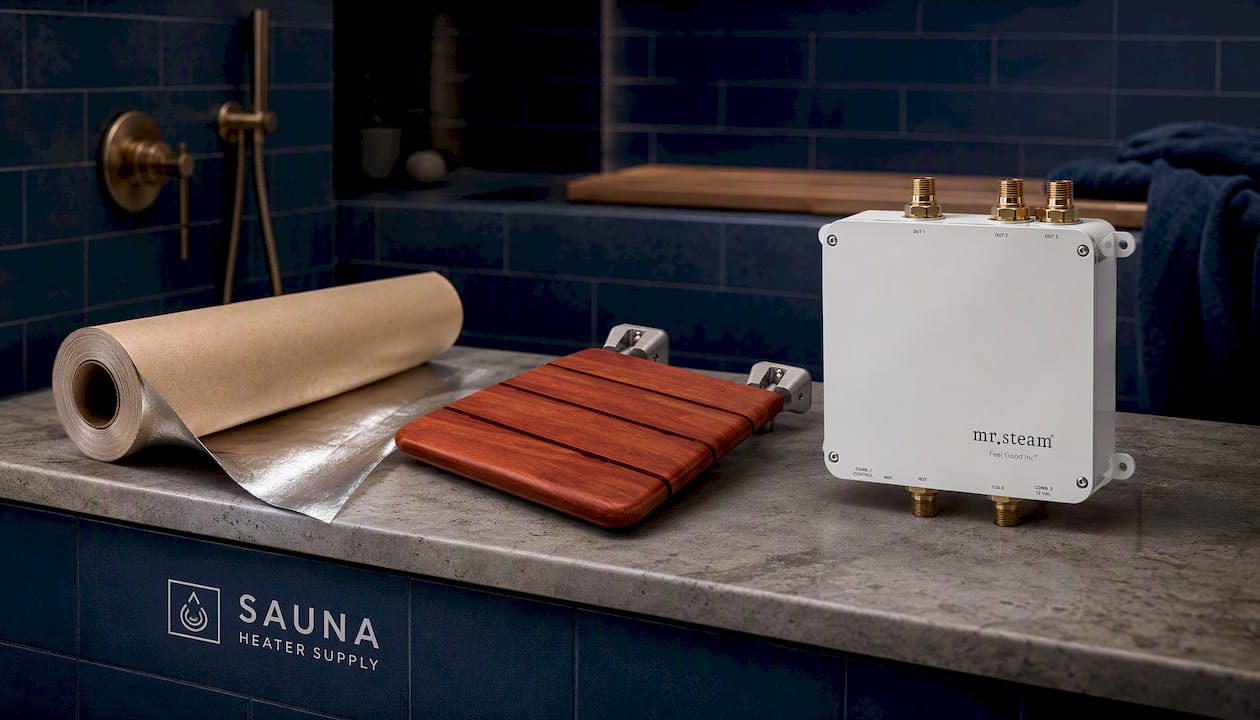
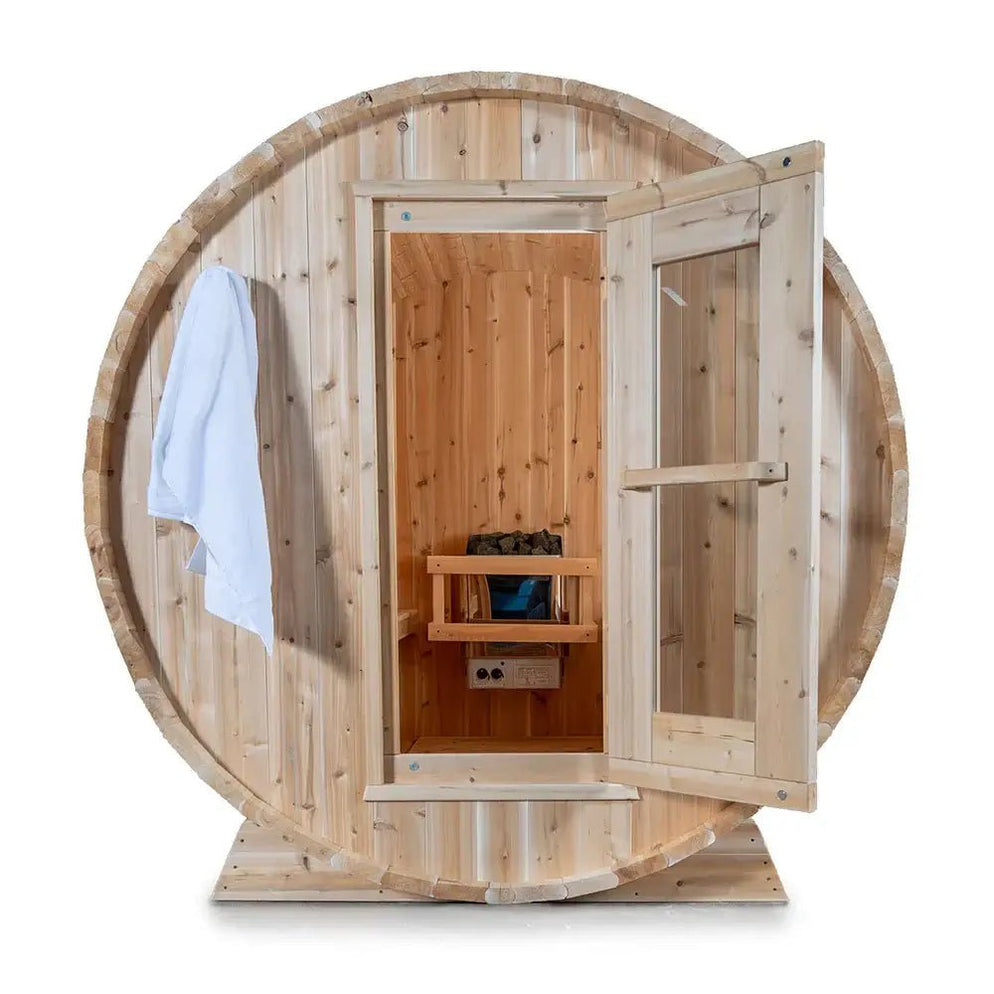
If your project also includes a heater package for an adjoining sauna, the Harvia Kip45W Heater Package and the Finnmark Thermo-Aspen Combination Barrel Sauna FD-7 are both stocked and ready to ship. Whether you’re a contractor sourcing for a client build or a homeowner planning a single steam room, reach out to Saunaheatersupply for help matching your waterproofing plan to the right steam control, heater, and accessory list before you place your order.
Sources
- #MAPEITechTip: Perm Rating-why it is important to consider in a steam room/shower?
- Tiled Steam Room and Steam Shower – Technical Design Manual
- ASTM E96 - Standard Test Methods for Water Vapor Transmission of Materials
- Steam Shower Waterproofing: Pro Guide | PlaceForPros
Recommended
- Steam Room vs Sauna: What Homeowners & Contractors Should Choose — Sauna Heater Supply
- How to Insulate Your Sauna for Maximum Efficiency — Sauna Heater Supply
- Can You Pour Water on an Electric Sauna? Best Practices Guide — Sauna Heater Supply
- Finnmark FD-4 Trinity Infra-Steam Sauna — Sauna Heater Supply