









Sauna High Limit Switch: What It Does and How to Fix It
The sauna high limit switch is a safety cutoff that shuts off heater power the moment internal temperatures cross a dangerous threshold, protecting the heater and the room from fire risk. If yours has tripped, power down the heater, let it cool fully, then follow the reset steps below. If it trips again after a proper reset, stop resetting it. That’s a sign of a failing part or a wiring problem, and it calls for a replacement switch or a licensed electrician, not a workaround.
TL;DR:
- Properly matching the high limit switch’s trip temperature, amperage, capillary length, and connector type is critical for safety and correct operation.
- Most trips result from airflow issues, incorrect thermostat settings, or wiring problems, not a faulty switch, so thorough troubleshooting before replacing is essential.
- Once a switch trips repeatedly during normal conditions, it indicates an underlying fault in wiring, the heating element, or airflow, requiring repair rather than continued resets.
- External safety switches are separate from internal high limit switches and are mandatory for remote-controlled sauna installations to ensure safety.
- Using the correct replacement part from the start prevents delays, reduces safety risks, and ensures long-term reliability of the sauna heater.
Table of Contents
- What Is a Sauna High Limit Switch, and How Does It Differ From a Safety Switch?
- How Can You Tell If the High Limit Switch Is Bad?
- How Do You Reset and Troubleshoot a Tripped High Limit Switch?
- How Do You Choose the Right Replacement High Limit Switch?
- What Are the Safety Rules for Installing a Sauna Safety Switch?
- How Do You Prevent Repeat High Limit Trips?
- What Sauna Heater Supply Sees Most Often in Service Calls
- Editorial Perspective: What Actually Matters When a Switch Trips
- Get the Right Replacement Switch Without the Guesswork
- Sources
What Is a Sauna High Limit Switch, and How Does It Differ From a Safety Switch?
A high limit switch is a small, self-contained device built into the heater housing that monitors internal temperature and cuts power the instant it exceeds a safe ceiling. It works independently of the thermostat. Where the thermostat regulates day-to-day heat and cycles the element on and off to hold a setpoint, the high limit switch only activates during a fault condition. Some manufacturers describe it as functioning “like a thermostat,” but it isn’t one. It has a single job: stop the heater before an over-temperature event becomes a fire hazard, a purpose confirmed in Senasys’s technical breakdown of sauna limit switches.
Most heaters use one of two designs. Manual-reset switches trip and stay open until a person physically presses a reset button, which is the safer default for unattended installations because the heater can’t restart itself after a fault. Automatic-reset switches close again once the unit cools, resuming normal operation without intervention. Manual-reset units with pigtail wire connections are widely available replacement parts sold by heater specialists and OEM parts distributors, as shown in Saunacore’s HTR012C product listing.
A lot of owners confuse this internal component with the external safety rocker switch mounted on the wall near the heater. They’re not the same device:
- The internal high limit switch sits inside the heater and reacts to temperature.
- The external safety switch is a wall-mounted rocker that cuts power if something physically falls onto the heater, and it’s required for certain remote-controlled installations under the DIN EN 60335-2-53 standard.
You’ll find the exact switch specification, including its trip temperature and reset type, printed on the heater’s data plate or listed in the control unit manual that shipped with your sauna.
How Can You Tell If the High Limit Switch Is Bad?
A failing switch usually announces itself in one of four ways: the heater trips well before reaching the temperature you’d expect, the reset button does nothing when pressed, you can see scorching or melted plastic around the housing, or the heater won’t power on at all even on a cold start.
Before you assume the switch itself is bad, run through this sequence:
- Check the thermostat setpoint. Confirm it’s not set unrealistically high for your room size, which can push the heater into limit territory during normal use.
- Inspect airflow around the heater. A blocked vent, a towel draped too close, or rocks piled wrong on a wood-fired unit can trap heat and trigger a legitimate trip that has nothing to do with a defective switch.
- Look at the switch housing and wiring. Discoloration, a burnt smell, or loose pigtail connectors point to heat damage or a poor connection rather than a worn-out cutoff.
- Check for corrosion at the terminals, especially in a sauna room where moisture and heat cycle repeatedly.
If those checks come back clean, a multimeter test can confirm the switch itself. With the heater fully powered down and cool, a qualified installer can check for continuity across the switch terminals. A working manual-reset switch should show continuity at room temperature and open (no continuity) once it reaches its rated trip point. If it shows no continuity even when cold, or it never opens under heat, the switch has failed internally.
Pro Tip: Don’t test a switch that’s still warm from a recent trip. Give it at least 20 to 30 minutes to fully cool, otherwise you’ll get a false open reading that looks like failure but is actually the switch doing exactly what it’s supposed to do.
If you’re not comfortable opening the electrical panel or working near heater wiring, stop here and call a licensed electrician or your sauna’s service line. Misdiagnosing a wiring fault as a switch problem, or vice versa, wastes money and can mask a real hazard.
How Do You Reset and Troubleshoot a Tripped High Limit Switch?
Start by isolating power at the breaker, not just at a wall switch. Opening a heater panel while it’s still live risks a shock, and it also risks damaging test equipment if you’re checking continuity. Flip the dedicated breaker off and confirm with a non-contact voltage tester before touching anything inside the panel.
Once power is confirmed off, follow this sequence:
- Let the heater cool completely. This generally takes several minutes depending on heater size and how hot it ran before tripping.
- Locate the reset mechanism. On most residential units it’s a small red or black button on the switch housing itself, though some models route it through a separate control box.
- Press the reset button firmly until you hear or feel a click.
- Restore power at the breaker.
- Run a short, monitored session. Stay in or near the room initially and watch for a repeat trip.
If the heater runs clean through that monitored session, the trip was likely a one-time event, probably caused by a blocked vent, an overly aggressive thermostat setting, or a brief power surge. If it trips again during that window, you’re dealing with something more serious than a random fault.
Work through fault isolation in this order:
- Confirm the thermostat is actually controlling the element and not stuck calling for heat continuously.
- Feel for uneven heat across the heater rocks or element, since hotspots often mean a wiring or element issue rather than a switch problem.
- Check the wiring path between the control unit and the switch for loose or corroded connections.
- Confirm any external safety switch in the circuit is closed and not itself the source of the interruption.
Modern control units like the Harvia Fenix FX110 list dedicated inputs for temperature sensors and safety devices, which makes it easier to isolate whether a trip originates at the control board or at the switch itself. A single reset that holds is an acceptable short-term fix. A pattern of repeat trips, especially within the same session, means the switch or a connected component needs replacement. Don’t keep resetting a switch that won’t hold. That’s the exact behavior the device is designed to prevent.
How Do You Choose the Right Replacement High Limit Switch?
Get four numbers before you order anything: the trip temperature rating, the voltage and amperage rating, the capillary or bulb length if your model uses a sensor tube, and the connector type. All four need to match your existing heater’s specification exactly, not approximately. A switch rated for a lower amperage than your heater draws is a fire risk, not a cost-saving substitution.
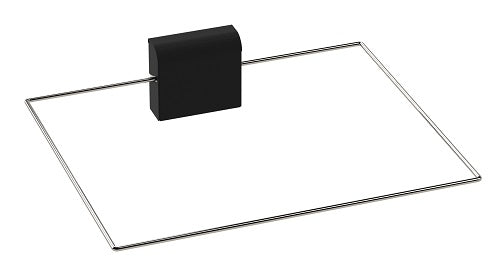
Capillary-based switches, which use a sensor bulb connected to the switch body by a thin tube, need that tube length matched to how far the sensor sits from the switch housing inside your heater. CapillarySwitch’s spec listings treat bulb length and type as the primary spec buyers should check, right alongside the temperature rating.
Deciding between manual and automatic reset comes down to where the heater lives and who’s using it:
- Manual reset is the better default for home saunas and any unattended installation, since it forces a human to confirm the fault before the heater runs again.
- Automatic reset suits some commercial or continuous-duty setups where a brief cooldown and self-restart is acceptable, though it should never replace a functioning external safety switch in a remote-controlled room.
Run this compatibility checklist before you buy:
- Match the switch to your exact heater model, not just the brand.
- Confirm the electrical rating meets or exceeds your heater’s draw.
- Never substitute a lower-rated switch to save a few dollars.
- Check whether your control unit needs a specific connector or pigtail configuration.
Replacement reset switches are widely available through heater specialists, with pricing that varies based on capillary length, amperage rating, and manual versus automatic design, as shown in Superior Saunas’s high-limit and reset parts catalog. A properly matched switch, installed correctly, typically lasts the life of the heater under normal use. Note too that most electrical parts, including limit switches, are sold as non-returnable once installed, so confirming compatibility before ordering matters more than it would for a non-electrical accessory. Saunaheatersupply offers part-matching help for exactly this reason, along with the Harvia SFE-350400 safety switch for buyers who need a compatible external device alongside their internal replacement.
What Are the Safety Rules for Installing a Sauna Safety Switch?
Never bypass a high limit switch or an external safety device to get a heater running again. That’s the single fastest way to turn a minor electrical fault into a house fire. Every wiring change should follow the manufacturer’s diagram exactly, using the correct wire gauge and heat-rated components specified for the heater’s amperage draw. Saunaheatersupply’s guide to traditional sauna electrical requirements covers the wire and breaker sizing details that apply here.
External safety rocker switches belong on the wall directly above the heater, positioned so they’ll cut power if an object, a towel, a bucket, a person, falls onto the unit. Harvia’s documentation for its wall-mounted rocker switch specifies this mounting location and confirms the device satisfies remote-operation requirements under DIN EN 60335-2-53. If your sauna uses any kind of app or remote control to start the heater, this external switch typically isn’t optional.
A few grounding and clearance notes matter more than most installers expect:
- Confirm proper grounding at the heater and at the control unit, not just at the panel.
- Route wiring through conduit rated for the heat and moisture inside a sauna enclosure.
- Maintain the manufacturer’s specified clearance between the heater and combustible surfaces, including wood benches and walls.
Roughly one in three residential electrical fires traces back to wiring or connection faults rather than a failed appliance component, which is exactly why loose connections at a switch or terminal deserve the same attention as the switch itself, per general electrical fire data. Commercial installations, and many residential ones depending on local code, require a licensed electrician and a permit for any new circuit or heater installation. Saunaheatersupply’s installation walkthrough covers when a DIY install is reasonable and when it isn’t.
How Do You Prevent Repeat High Limit Trips?
A short seasonal inspection catches most problems before they cause a trip. Check wiring connections for looseness or discoloration, inspect capillary tubes for kinks or damage, look over pigtail connectors for corrosion, and confirm the element and ventilation path are both in good condition.
A few operating habits cut trip frequency more than any single repair:
- Preheat the room instead of cranking the thermostat higher to speed things up.
- Never drape towels or clothing over the heater or the external safety switch.
- Keep the room’s stated safe temperature range in mind rather than pushing well past it.
- Avoid overloading the heater with oversized rock loads not rated for the unit.
Pro Tip: If you’re resetting the same switch more than once a month, stop treating it as routine. That frequency means something upstream, wiring, airflow, or the switch itself, needs a real fix, not another reset.
Replace the switch rather than continuing to reset it once you’ve confirmed repeat trips aren’t caused by airflow or thermostat settings.
What Sauna Heater Supply Sees Most Often in Service Calls
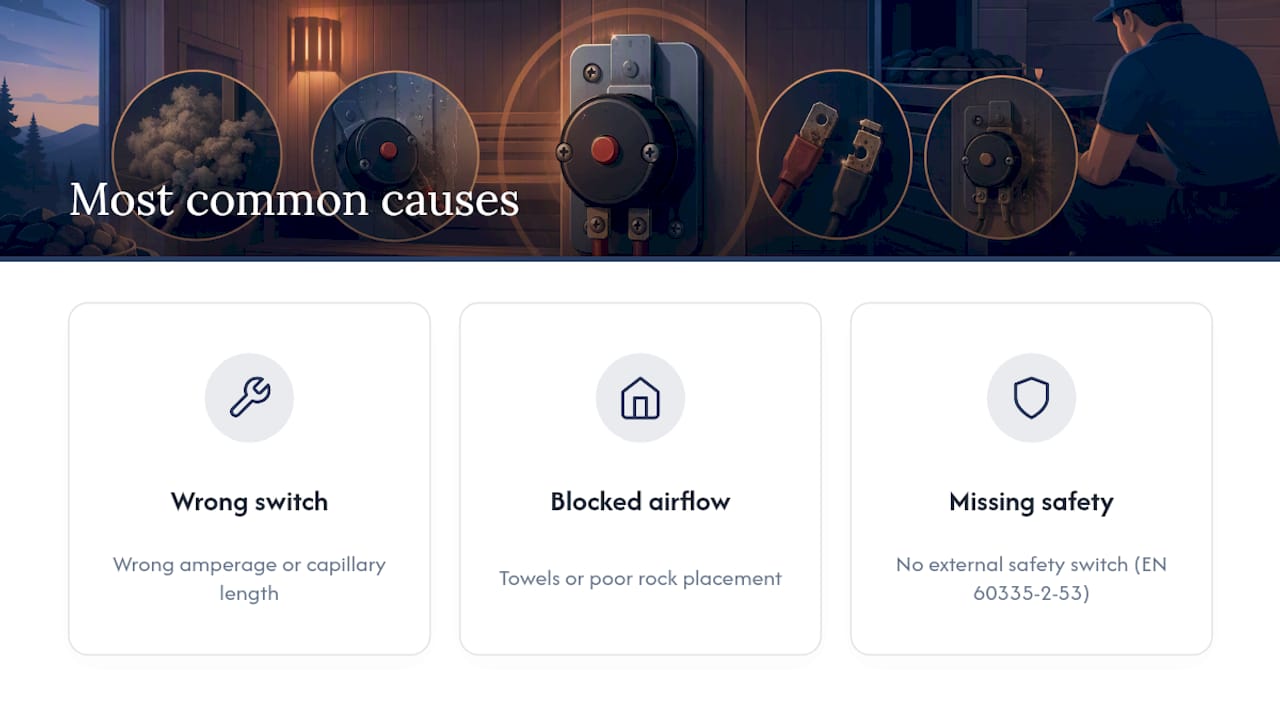
The three causes we see repeatedly: a replacement switch ordered with the wrong amperage or capillary length, blocked airflow around the heater from towels or poor rock placement, and remote-controlled installations missing the external safety switch that DIN EN 60335-2-53 requires. All three are preventable with the right part match up front.
Saunaheatersupply built its parts guidance around solving exactly that first problem. Every switch order gets checked against the customer’s heater model and control unit before it ships, backed by a price match guarantee and fast shipping that keeps a broken sauna offline for days instead of weeks. That combination of expert guidance and dependable delivery is what’s built the company’s base of repeat homeowners and contractors.
Editorial Perspective: What Actually Matters When a Switch Trips
Most troubleshooting advice treats every trip as an emergency requiring immediate replacement. That’s backwards. A single trip after a blocked vent or an aggressive thermostat setting is the switch doing its job correctly, not evidence of failure. The mistake I see most often isn’t people ignoring a real problem, it’s people replacing a perfectly good switch because they never ran the basic airflow and setpoint checks first.
The opposite mistake is just as common and more dangerous: repeated resetting of a switch that keeps tripping, treating persistence as a virtue instead of a warning sign. A high limit switch that won’t hold after a proper cooldown and reset isn’t asking for patience. It’s telling you something downstream, wiring, the element, or the switch itself, has already failed.
If there’s one thing worth prioritizing over everything else in this guide, it’s matching the replacement part correctly the first time. Amperage, capillary length, and connector type aren’t details to approximate. Get those wrong and you’ve traded a safety device for a liability that looks like one.
— Teddy
Get the Right Replacement Switch Without the Guesswork
Ordering the wrong high limit switch means a second shipment, a second delay, and a sauna that sits unusable in the meantime. Saunaheatersupply confirms compatibility against your exact heater model before your order ships, so the part that arrives is the part that fits.
The Harvia SFE-350400 safety switch is in stock for readers who need a compatible external safety device alongside an internal switch replacement, and our team confirms fit against your control unit before you check out. For added confidence on any heater purchase, the 5-Year Total Protection Warranty covers component failures well beyond a standard manufacturer term, and the extended warranty option for sauna heaters extends that same protection to full heater replacements. Reach out to our support team with your heater model and control unit details, and we’ll match the exact switch specification before you place the order.
Sources
- HTR012C Manual Reset High-Limit Switch | Saunacore – The Sauna Place
- CapillarySwitch product listings and spec guidance
Recommended
- Sauna Heater Guard: Safe Fit and Install for Homeowners — Sauna Heater Supply
- Sauna Heating Element Replacement: Find the Right Part Fast — Sauna Heater Supply
- HUUM Electric Sauna Heater Warming Up Too Slowly: Complete Guide To Fi — Sauna Heater Supply
- Sauna Temperature Range: Safe Zones and Health Benefits — Sauna Heater Supply