








50–55°F Works: Cold Plunge Temperature Plan for Homeowners
Set your cold plunge in the range that balances recovery benefit and comfort, with most people finding the sweet spot around 50 to 55°F (10 to 15°C). Beginners should start somewhat warmer and gradually adjust to colder temperatures over several weeks. Anyone with cardiac conditions or history of cold shock should consult a doctor before lowering the temperature significantly.
TL;DR:
- Cold water immersion at 10 to 15°C (50 to 59°F) for 10 to 15 minutes offers the best balance for reducing muscle soreness without excessive cardiovascular strain.
- Water colder than 10°C (50°F) increases discomfort and cardiovascular risk without providing proportional recovery benefits.
- Beginners should start at 55 to 60°F for 2 to 3 minutes, gradually lowering temperature over weeks, especially if aiming for recovery or mental toughness.
- Post-immersion risks like cold shock and afterdrop require proper safety measures, including gradual rewarming and never plunging alone with heart risk factors.
- Using a dedicated chiller correctly sized for the tub and maintaining water temperature within about 1°F ensures consistent, safe, and effective cold plunge experiences.
Table of Contents
- What Research Says About Cold Plunge Temperature
- Cold Plunge Temperature Ranges From Beginner to Advanced
- How Long and How Often Should You Cold Plunge?
- Cold Shock, Afterdrop, and When to Stay Out of the Water
- Keeping Your Cold Plunge at the Right Temperature
- My Take: The Simplest Protocol Actually Works Best
- Finding the Right Chiller for Your Cold Plunge Setup
- Sources
What Research Says About Cold Plunge Temperature
The research on cold water immersion points to one consistent range: A temperature range around 10 to 15°C (50 to 59°F) for about 10 to 15 minutes is generally effective for reducing delayed onset muscle soreness (DOMS). A Cochrane-style review published on PMC found that cold water immersion in this range outperformed passive recovery for soreness reduction after strenuous exercise, though the certainty of evidence varies by outcome measured.
Colder water doesn’t necessarily mean better results. A network meta-analysis of temperature protocols found that while 10 to 15°C ranked best for reducing muscle soreness, protocols in the 5 to 10°C range ranked higher for shifting certain biochemical markers, such as inflammatory signaling. The tradeoff: those colder sessions came with more discomfort and a steeper cardiovascular load, which matters if you have any underlying heart risk.
The physiology behind this is well documented. Cold exposure triggers vasoconstriction and a spike in catecholamines like noradrenaline, according to research on cold exposure physiology. This is what drives the alertness effect people feel after a plunge, and it’s also why very cold water accelerates heart rate and breathing faster than moderate cold does. Below roughly 50°F, that cardiovascular strain increases faster than the added recovery benefit does, which is the core reason most protocol guides converge on 50 to 59°F rather than pushing toward extreme cold.
Here’s what the current evidence base actually supports:
- 10 to 15°C (50 to 59°F) for 10 to 15 minutes shows the strongest, most consistent support for reducing muscle soreness after intense exercise.
- 5 to 10°C (41 to 50°F) may shift biochemical recovery markers more, but discomfort and cardiovascular demand both rise.
- Below roughly 10°C, benefits plateau while risk climbs. That’s a diminishing return, not a bonus.
- Ongoing controlled trials, including one registered at ClinicalTrials.gov, are still refining how these protocols affect specific physiological endpoints.
Research callout: The 2025 network meta-analysis behind much of today’s protocol guidance identified 10 to 15°C sessions of 10 to 15 minutes as the most effective, evidence-backed combination for reducing DOMS, ahead of both warmer and colder alternatives.
The practical takeaway isn’t “colder is more serious recovery.” It’s that 10 to 15°C hits the point where soreness reduction is strongest and risk is still manageable for most healthy adults.
Cold Plunge Temperature Ranges From Beginner to Advanced
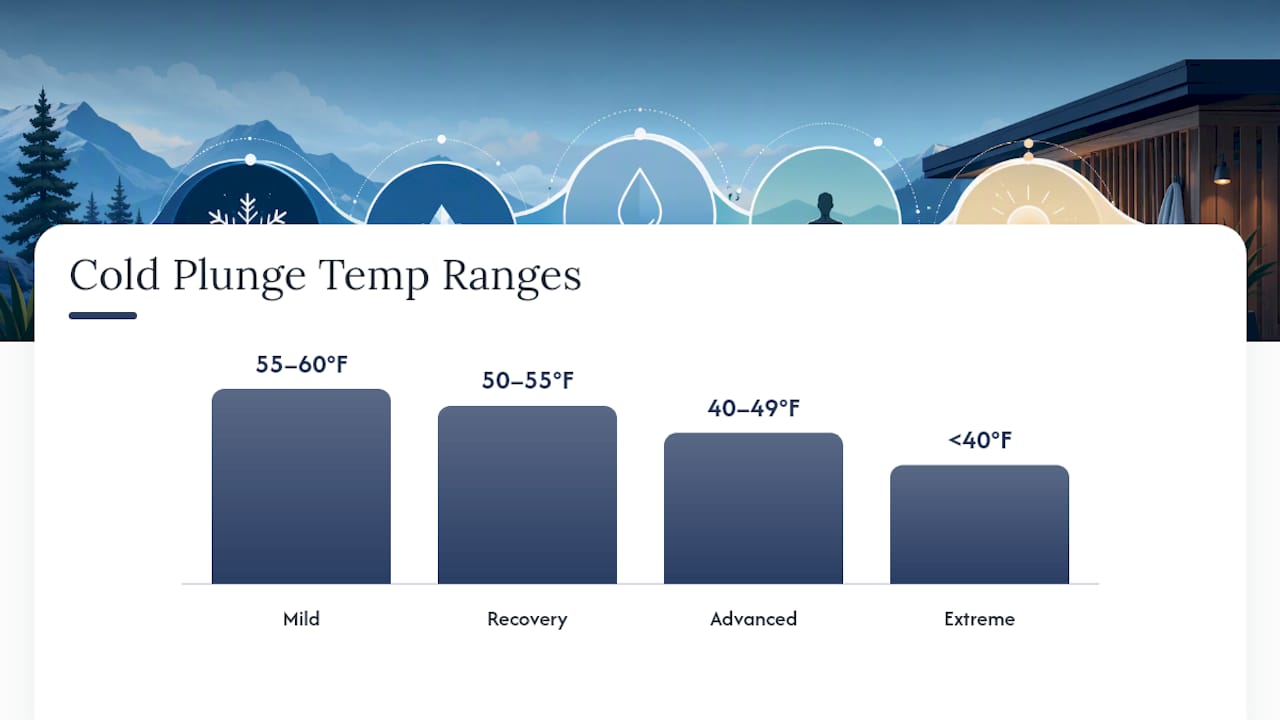
Temperature ranges break down cleanly by experience level and goal, and matching the right band to your stage matters more than chasing the coldest number you’ve seen online.
- Mild (55 to 60°F / 13 to 15°C): Best entry point for new users. Comfortable enough to build a consistent habit without triggering panic responses.
- Recovery (50 to 55°F / 10 to 13°C): The sweet spot most research points to for muscle soreness and general recovery once you’ve adapted.
- Advanced (40 to 49°F / 4 to 9°C): Reserved for experienced users chasing biochemical or mental toughness benefits, ideally under medical clearance.
- Extreme (below 40°F / below 4°C): Rarely necessary. Reserved for highly experienced individuals, and only with supervision or a spotter present.
A safe ramp protocol looks like this:
- Weeks 1 to 2: Start at 58 to 60°F for 2 to 3 minutes, two to three times per week.
- Weeks 3 to 4: Drop to 53 to 57°F, extend to 5 minutes, same frequency.
- Weeks 5 to 6: Move to 50 to 53°F for 8 to 10 minutes if you’re tolerating sessions well.
- Beyond week 6: Consider the 40 to 49°F range only if your goal specifically calls for it, and only in short increments.
Stanford Lifestyle Medicine’s overview of cold water immersion frames this well: the goal is controlled stress, not panic. Starting warmer and prioritizing breath control matters more than hitting an impressive number on the thermometer in week one.
Pro Tip: Breathe out slower than you breathe in during the first 30 seconds of immersion. Fighting the urge to gasp is the single biggest factor separating a controlled plunge from a stressful one, and it’s a skill you build with reps, not willpower.
How Long and How Often Should You Cold Plunge?
Duration and frequency depend entirely on what you’re after, and colder water always means a shorter effective session.
- Muscle soreness (DOMS): 10 to 15 minutes at 50 to 59°F, ideally within a few hours of intense training.
- Mood and alertness: 2 to 5 minutes at around 57°F is often enough to trigger the noradrenaline response tied to feeling sharper.
- Weekly volume: A widely referenced guideline from physiologist Susanna Søberg suggests roughly 11 minutes of total cold exposure per week, split across multiple short sessions rather than one long one.
Colder temperatures compress how long you should stay in. A 5 to 10°C plunge might only call for 3 to 5 minutes, while a 55°F session can safely stretch to 10 or 15. Sessions longer than 15 to 20 minutes rarely add benefit, regardless of temperature. The soreness reduction and alertness effects plateau well before that mark, while cardiovascular strain keeps climbing. There’s no prize for staying in longer than your body needs to.
Cold Shock, Afterdrop, and When to Stay Out of the Water
Cold water immersion carries real risks, and the two most important to recognize are cold shock and afterdrop.
Cold shock hits in the first 30 to 60 seconds: gasping, hyperventilation, and a spike in blood pressure and heart rate. For anyone with an undiagnosed cardiac condition, that spike can trigger arrhythmia. Cleveland Clinic’s guidance on cold plunges is direct about this: people with heart disease, uncontrolled high blood pressure, or a history of cardiac events should talk to a doctor before ever getting in.
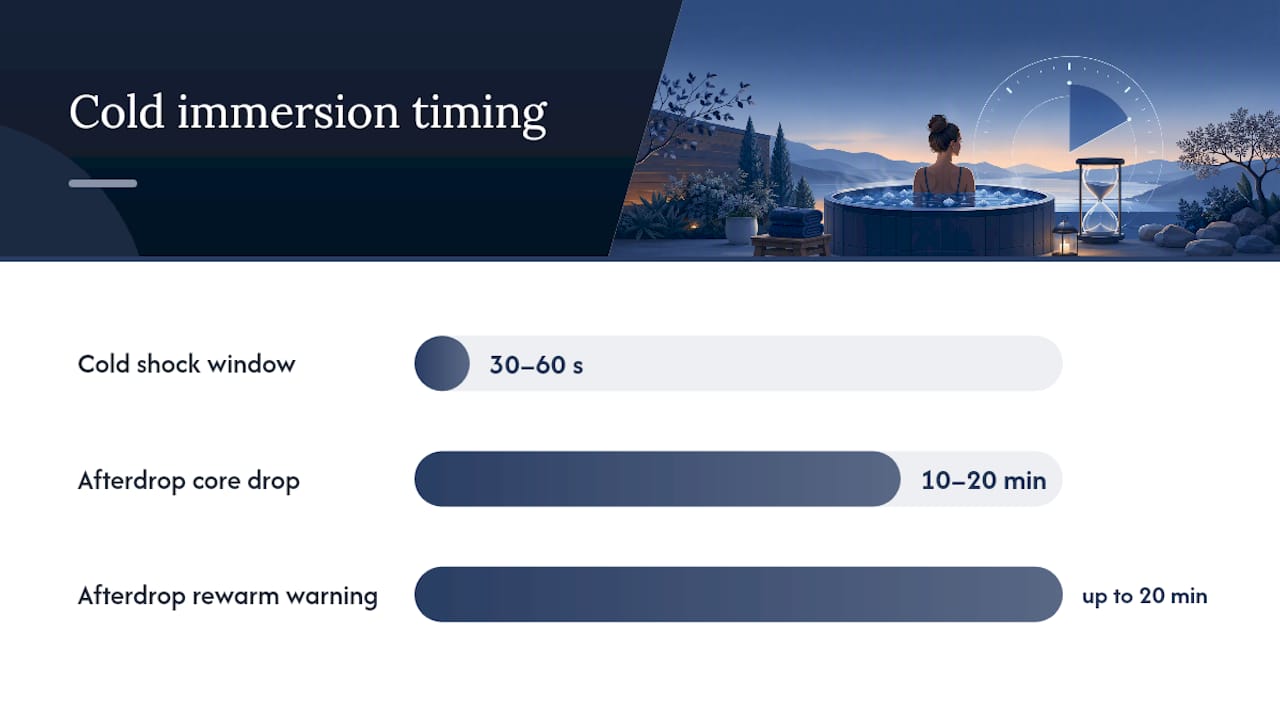
Afterdrop is the second risk, and it’s often overlooked. Your core temperature keeps dropping for 10 to 20 minutes after you exit the water, even while you feel like you’re warming up. Staying in until you’re shivering uncontrollably makes afterdrop worse, not better.
Safety steps worth building into every session:
- Use an accurate thermometer. Don’t guess based on how the water feels.
- Never plunge alone if you have any cardiac risk factors or are new to cold exposure.
- Skip alcohol before a session. It blunts your ability to sense how cold you actually are.
- Start with shorter durations than you think you need. You can always extend next time.
Safety note: Afterdrop may lower core temperature for up to about 20 minutes after immersion; gradual passive rewarming using dry clothing or blankets is safer than immediate hot showers to restore body temperature.
Keeping Your Cold Plunge at the Right Temperature
Hitting the right number once is easy. Holding it there session after session is where equipment matters.
A dedicated chiller earns its keep the moment you’re plunging more than once or twice a week. Ice works for occasional use, but it melts unevenly, dilutes the water, and forces you to guess at the actual temperature. A chiller sized correctly for your tub volume holds steady within about 1°F, which is the difference between a repeatable protocol and a coin flip every time you get in.
- Match chiller capacity to tub volume. Undersized units struggle to recover temperature between sessions.
- Check stability, not just capacity. A unit rated for a certain volume should still hold within roughly ±1°F under regular use.
- Don’t skip circulation and filtration. Stagnant cold water develops temperature layering, which throws off your thermometer reading.
- Place your thermometer mid-depth, not at the surface, where readings run warmer than the water you’re actually sitting in.
| Setup type | Volume range | Stability need | Best-fit approach |
|---|---|---|---|
| Single-user home tub | Small to medium | ±1°F | Compact chiller with steady recovery time |
| Shared household tub | Medium to large | ±1°F under daily use | Mid-capacity chiller with filtration |
| Commercial or hospitality tub | Large, frequent turnover | Tight tolerance, high recovery speed | High-capacity chiller built for continuous use |
For anyone pairing cold exposure with heat therapy, our guide on combining sauna and cold plunge sessions covers safe sequencing and rewarming between rounds.
My Take: The Simplest Protocol Actually Works Best
If you’re just starting, here’s the routine worth trying: 55 to 58°F for 3 minutes, three times a week, for the first two weeks. That’s it. No extreme cold, no daily commitment, no performance pressure.
The biggest mistake I see people make isn’t picking the wrong temperature. It’s treating cold plunging like a competition instead of a repeatable habit. The evidence backs a moderate, consistent range over sporadic extreme exposure, and that’s the harder sell because it sounds boring compared to a viral ice bath video. Boring is what works. Consistency at 50 to 55°F, done three times a week for a month, will do more for your recovery than one brutal 39°F session you dread and skip next week.
Whatever temperature you land on, stay consistent and never skip the safety basics.
— Teddy
Finding the Right Chiller for Your Cold Plunge Setup
Picking a temperature target is only half the equation. Holding it reliably is where the right chiller makes the difference between a routine you stick with and a headache you eventually give up on. Chillers sized for a full range of home and commercial setups are available, enabling equipment to be matched to actual tub volume instead of guessing.
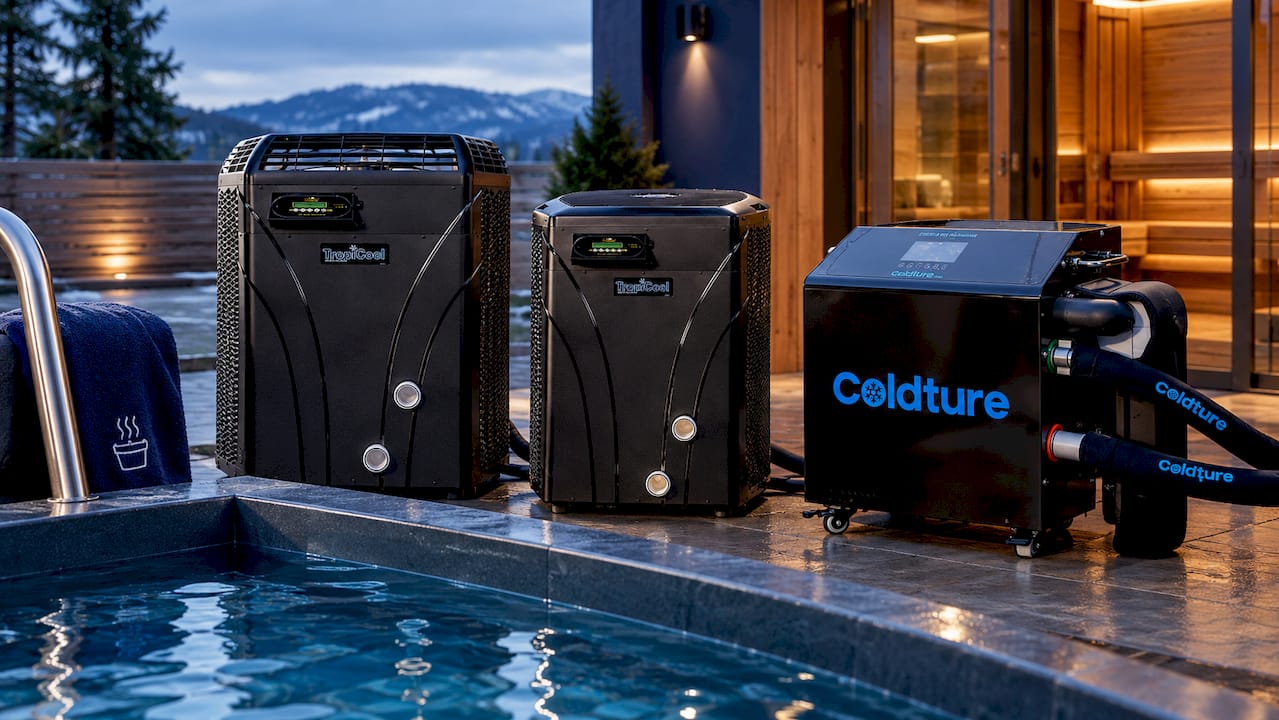
For a single-user home tub, the AquaCal TropiCool TC1000 Water Chiller covers common residential volumes without overpaying for capacity you won’t use. If you’re running a larger tub, a shared household setup, or a commercial space with frequent turnover, the AquaCal TropiCool TC1500 Water Chiller handles the higher recovery demand. For a compact, budget-conscious option that still holds a stable target temperature, the Coldture Water Chiller is worth a look. Before you buy, check your tub volume, how often you’ll plunge, and how tight you need your temperature tolerance. Contractors and hospitality operators managing shared cold plunge facilities can also review our notes on structuring guest sessions for practical staff guidance. Browse the current lineup and get expert help matching a chiller to your tub at Sauna Heater Supply today.
This article is general information, not a substitute for advice from a qualified doctor. Consult a qualified healthcare professional about your own circumstances before acting on anything here.
Sources
- Cold water immersion for preventing and treating muscle soreness after exercise (Cochrane-like review) — PMC
- PubMed article on cold exposure physiology (2019)
- What to know about cold plunges — Cleveland Clinic
- Jumping into the ice bath trend: mental health benefits of cold-water immersion — Stanford Lifestyle Medicine