









Best Home Sauna Kits for Easy Install and Heater Fit
For most homeowners, the best starting point is Saunaheatersupply.com, which curates U.S.-ready electric, wood-fired, and gas heaters alongside compatible kit components, spec sheets, and sizing support. If you want a complete outdoor cabin, the SaunaLife CL5G is the strongest all-around pick for 2–4 person households. For infrared indoors, Auroom’s compact cabins deliver plug-and-play convenience. For budget entry, Costco kits and portable steam tents get you sweating at affordable prices.
Quick-pick shortlist:
- Best overall source for heater-compatible kits: Saunaheatersupply.com, curated U.S.-ready heaters and components with expert sizing support
- Best outdoor cabin kit: SaunaLife CL5G, cube-style, 2–4 person, thermally modified wood, ~$4,000–$7,000
- Best premium large-group outdoor sauna: SaunaLife CL12G, 8-person capacity, ~$10,000+
- Best infrared indoor kit: Auroom compact cabin, plug-and-play, 1–2 person, ~$2,000–$4,000
- Best budget / portable option: Costco home sauna kits or portable steam tents, under $500–$1,500
- Best DIY modular build: Thermory Sauna Squares, thermally modified wood panels for custom builds
Price bands for home sauna kits range from under $500 for portable blankets and steam tents to $15,000 or more for premium outdoor cabin kits, so matching your budget to the right category matters before you compare individual models.
Table of Contents
- Best home sauna kits compared at a glance
- Detailed reviews of the top home sauna kits
- How to choose the right home sauna kit for your space
- How to match the right heater to your sauna kit
- Final recommendation and next steps
- Delivery options and shipping times within the United States
- Safety features and certifications to look for in home sauna kits
- Key Takeaways
- Why heater compatibility is the part most buyers get wrong
- Saunaheatersupply.com: U.S.-ready heaters and kit support
- Useful sources and further reading
Best home sauna kits compared at a glance
| Kit / Source | Best For | Typical Price Band | Heater Type | Capacity | Material | Indoor / Outdoor | Install Ease | Warranty |
|---|---|---|---|---|---|---|---|---|
| Saunaheatersupply.com | Expert heater matching + U.S. support | Varies by heater | Electric, wood-fired, gas | Any kit size | N/A (heater + components) | Both | DIY or pro | Per manufacturer |
| SaunaLife CL5G | Stylish outdoor cabin, 2–4 persons | ~$4,000–$7,000 | Electric or wood-fired | 2–4 persons | Thermally modified wood | Outdoor | DIY-friendly | 1–2 years |
| SaunaLife CL4G | Couples / small families | ~$4,000–$7,000 | Electric or wood-fired | 2–4 persons | Thermally modified wood | Outdoor | DIY-friendly | 1–2 years |
| SaunaLife CL3G | Compact 2-person, lower cost | ~$2,000–$4,000 | Electric / infrared compatible | 1–2 persons | Thermally modified wood | Outdoor | DIY-friendly | 1–2 years |
| SaunaLife EE6G | 4+ person volume, lie-down capable | ~$3,000–$9,000 | Electric | 4–6 persons | Thermally modified wood | Outdoor | DIY or pro | 1–2 years |
| SaunaLife CL7G | Large family / social sessions | ~$10,000+ | Electric or wood-fired | 6 persons | Thermally modified wood | Outdoor | Pro recommended | 1–2 years |
| SaunaLife CL12G | High-capacity group sauna | ~$10,000+ | Electric or wood-fired | 8 persons | Thermally modified wood | Outdoor | Pro recommended | 1–2 years |
| Thermory Sauna Squares | DIY builders, custom builds | $3,000–$9,000 | Heater not included | Custom | Thermally modified wood | Both | DIY modular | Per supplier |
| Almost Heaven | Traditional barrel / cabin aesthetics | ~$3,000–$9,000 | Electric or wood-fired | 2–6 persons | Western red cedar | Outdoor | DIY or pro | 1–5 years |
| Finnleo | Established manufacturer kits | $4,000–$10,000+ | Electric | 2–6 persons | Cedar / spruce | Indoor / outdoor | Pro recommended | 1–5 years |
| Auroom | Plug-and-play indoor infrared | $2,000–$4,000 | Infrared | 1–2 persons | Spruce / aspen | Indoor | DIY plug-and-play | 1–2 years |
| Plunge | High-design indoor / outdoor | ~$3,000–$7,000 | Electric / infrared | 1–3 persons | Cedar / composite | Both | DIY or pro | 1–2 years |
| Sisu | Classic barrel, outdoor | $4,000–$7,000 | Electric or wood-fired | 2–4 persons | Cedar | Outdoor | DIY or pro | 1–2 years |
| Costco kits | Value, easy returns | ~$500–$3,000 | Infrared or electric | 1–4 persons | Hemlock / cedar | Indoor / outdoor | DIY | Varies |
| Finnmark FD-2 | Compact footprint installs | ~$2,000–$4,000 | Electric | 1–2 persons | Cedar | Indoor / outdoor | DIY-friendly | 1–2 years |
Notable trade-offs:
- SaunaLife cube models offer modern aesthetics and thermally modified wood durability, but larger models (CL7G, CL12G) typically require a licensed electrician for the 240V circuit.
- Thermory Sauna Squares give you full design control, but you source the heater separately, which is where Saunaheatersupply.com’s compatibility guidance becomes especially useful.
- Costco kits win on price and return policy, but spec documentation and long-term parts support are thinner than dedicated sauna brands.
Detailed reviews of the top home sauna kits
Saunaheatersupply.com: the heater-first approach
If you are buying a kit that does not include a heater, or upgrading the heater in an existing cabin, Saunaheatersupply.com is the most practical U.S. resource. The site carries electric models like the Saunum AirSolo 70 for compact 1–2 person cabins, the Saunum Air 7 for mid-size 2–4 person builds, and higher-output units for larger outdoor cabins. Spec sheets, electrical requirements, and chimney kit accessories are listed per product, which removes the guesswork that trips up most first-time buyers.
- Heater types: electric, wood-fired, gas
- Capacity match: 1-person through 8+ person kits
- Electrical specs: 120V and 240V models available
- Chimney kits: available for wood-fired barrel installs
- Support: expert sizing guidance, price match guarantee
SaunaLife CL5G: best outdoor cabin for most homeowners
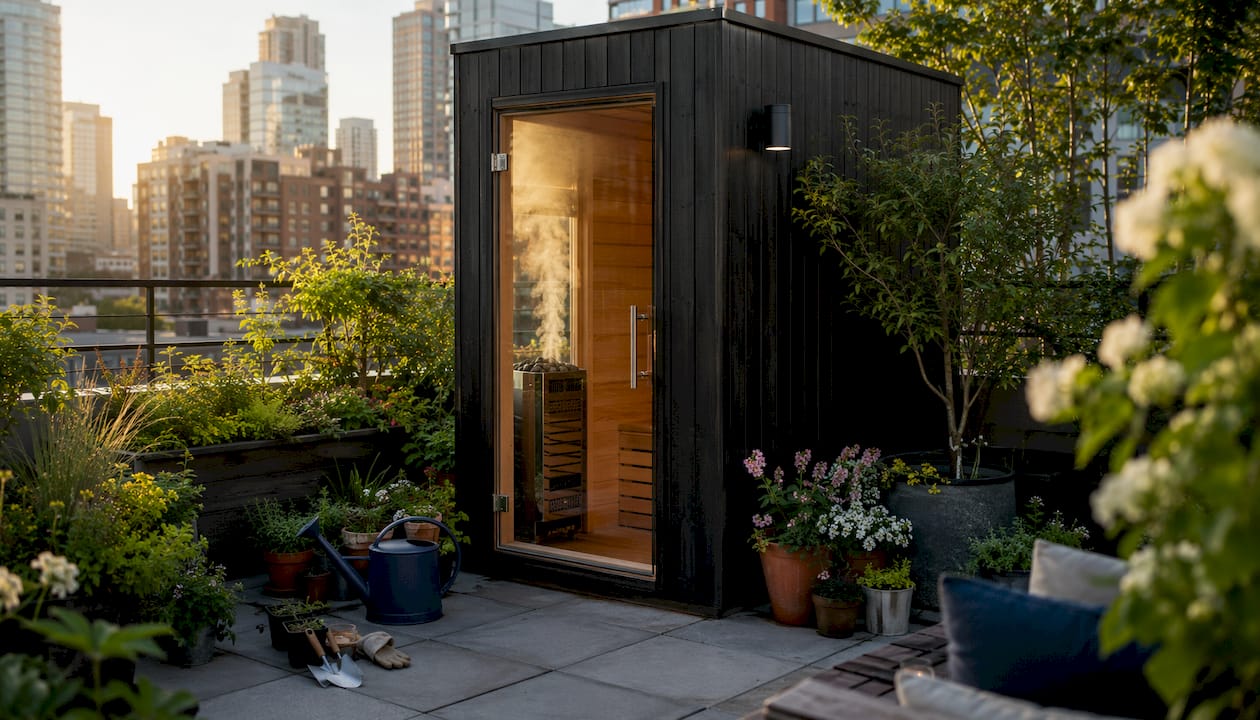
The CL5G is the sweet spot in SaunaLife’s cube lineup. Its cube geometry maximizes interior bench space relative to its outdoor footprint, and the thermally modified wood resists moisture and warping better than untreated cedar over time. Most buyers can assemble it over a weekend with two people and basic tools. It accepts a standard electric heater in the 6–9 kW range and is compatible with most 240V single-phase circuits.
- Capacity: 2–4 persons
- Typical price: ~$4,000–$7,000
- Heater: electric or wood-fired compatible
- Material: thermally modified wood
- Suitability: outdoor
- Install: DIY-friendly with included hardware
SaunaLife CL4G and CL3G: compact cube options
The CL4G suits couples or small families who want the cube aesthetic without the larger footprint of the CL5G. The CL3G is the entry point in the lineup, optimized for two people and priced lower, making it one of the more accessible outdoor cabin kits in the SaunaLife range. Both accept electric or infrared-compatible heaters and use the same thermally modified wood construction.
SaunaLife EE6G, CL7G, and CL12G: when you need more capacity
The EE6G scales the cube form to 4–6 persons and adds enough interior volume for a lie-down bench layout, which is a meaningful upgrade for recovery-focused users. The CL7G handles six people comfortably for social backyard sessions. The CL12G, at 8-person capacity, is the largest model in the SaunaLife family and suits buyers who entertain regularly or want a near-commercial setup at home. Both the CL7G and CL12G typically require professional electrical installation given their heater kW demands.
Thermory Sauna Squares: best for custom DIY builds
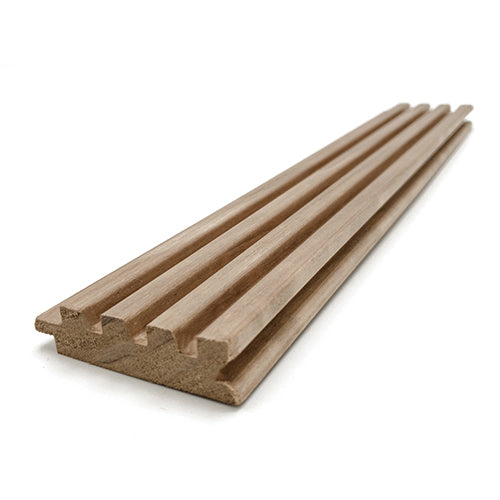
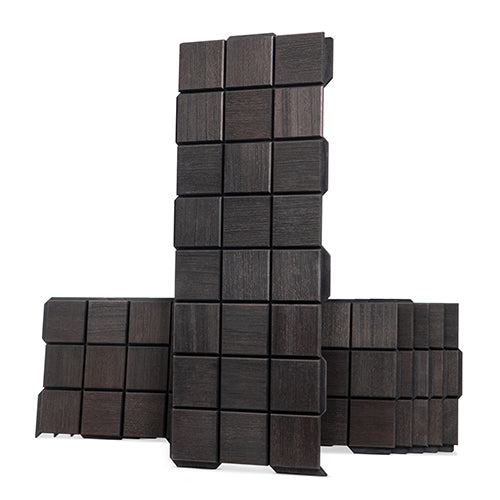
Thermory’s modular panel system uses thermally modified ash or spruce, which offers better dimensional stability and longevity than standard kiln-dried wood in outdoor conditions. Panels interlock for straightforward assembly, and the system works for both indoor and outdoor builds. Because no heater is included, you select your own, which is where matching kW output to your finished cubic footage becomes critical. Saunaheatersupply.com’s Saunum AirSolo 80 or the Saunum Air L 10 are well-suited to mid-size Thermory builds.
Almost Heaven: traditional barrel and cabin kits
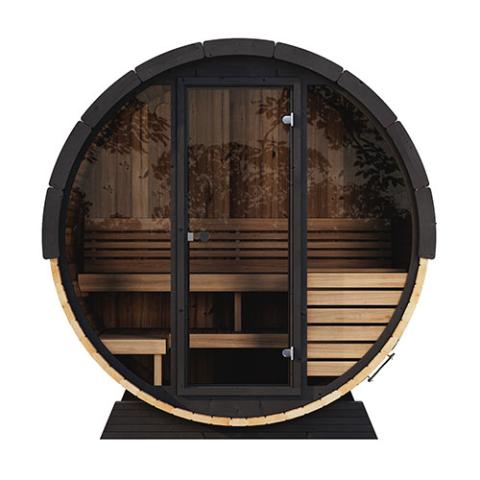
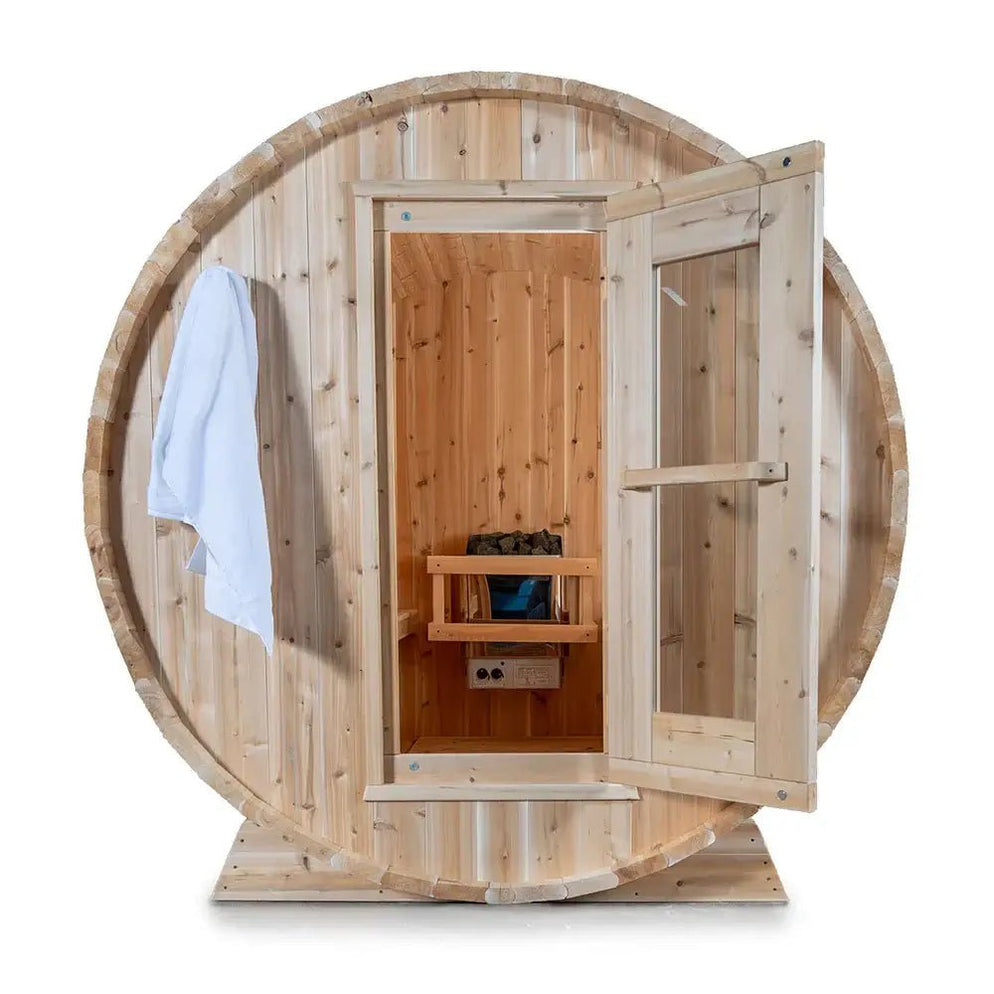
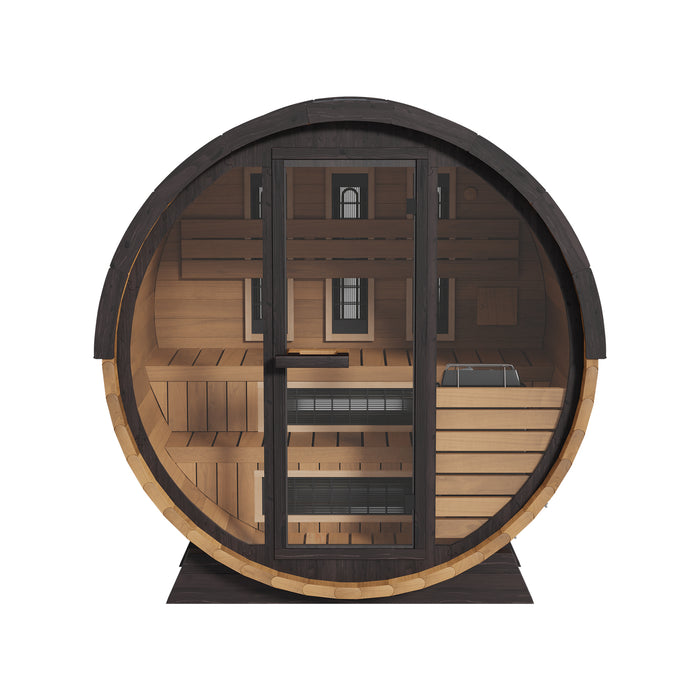
Almost Heaven has a long track record in the U.S. market for cedar barrel and cabin saunas. Their kits ship with pre-cut cedar staves or panels, stainless hardware, and clear assembly instructions. Barrel saunas from Almost Heaven heat efficiently because the curved interior reduces dead air volume, and the high-heat wood-fired or electric experience is closer to a traditional Finnish session than most infrared options. Expect a typical price range of $3,000–$9,000 depending on size and heater package.
Finnleo: established manufacturer with broad dealer support
Finnleo manufactures both traditional electric kits and prefab cabin saunas, with a dealer network that spans most U.S. states. Their documentation on heater compatibility and electrical requirements is among the clearest in the industry, which matters when you are pulling permits or working with a contractor. Kits typically use cedar or spruce interiors and are available in indoor and outdoor configurations.
Auroom: plug-and-play infrared for indoor spaces
Auroom’s compact infrared cabins are designed specifically for indoor use in smaller footprints, typically 1–2 persons. Most models run on a standard 120V or 240V circuit depending on size, and assembly requires no special tools. The infrared heat experience differs from traditional steam: lower ambient temperatures (typically 120–150°F) with deeper radiant penetration, which suits users who prefer a gentler, longer session. Infrared vs. traditional heat is as much a personal preference as a technical one.
Plunge: design-forward indoor and outdoor options
Plunge has built a reputation for saunas that look as good as they perform, with clean lines that fit modern backyards and interior spaces. Their models span electric and infrared options and are available in configurations for 1–3 persons. Plunge is a strong fit for urban homeowners who prioritize aesthetics alongside function.
Sisu: classic barrel form with weather-ready construction
Sisu barrel saunas use cedar construction and a traditional barrel shape that promotes even heat circulation from floor to ceiling. The rounded interior means less wasted volume to heat, so a smaller heater reaches target temperature faster. Sisu is a solid outdoor pick for buyers who want the classic barrel look and high-heat sessions.
Costco home sauna kits: best value entry point
Costco carries a rotating selection of infrared and electric sauna kits, with most portable steam tents and blankets available for under $500 and larger kits ranging up to $3,000. The return policy is a genuine advantage for buyers who are uncertain about fit or quality. Spec documentation and long-term parts support are thinner than dedicated brands, but for a first sauna purchase, the value and low-risk return window are hard to match.
Finnmark FD-2: compact footprint for tight spaces
The Finnmark FD-2 is referenced consistently in buyer guides for installations where space is the primary constraint. Its focused interior layout fits 1–2 persons and works for both indoor and outdoor placement. It is a practical choice when a larger cabin simply will not fit the available space.
How to choose the right home sauna kit for your space
The single most common mistake buyers make is choosing a kit before confirming heater compatibility and electrical capacity. Start with these six criteria in order:
- Measure your space accurately. Interior cubic footage determines heater kW requirements. A 2-person indoor cabin typically has an interior volume suitable for two occupants; a 4-person outdoor cabin generally has a significantly larger interior space.
- Pick your heater type. Traditional electric or wood-fired heaters deliver high ambient heat and löyly (steam from water on stones). Infrared panels run cooler but penetrate deeper. Your preference for the heat experience should drive this decision before price does.
- Check your electrical capacity. Most electric sauna heaters above 3 kW require a dedicated 240V circuit. Plug-and-play infrared models for 1–2 persons can run on 120V, but larger units always need 240V and a licensed electrician in most U.S. jurisdictions.
- Confirm materials and durability. Thermally modified wood outperforms standard kiln-dried cedar for outdoor installs in humid or variable climates. For indoor builds, spruce and aspen are common and cost-effective.
- Plan your total installed cost. Purchase price is only part of the budget. Add shipping (often $200–$600 for freight), electrical work ($300–$1,500 depending on panel distance), a concrete pad or gravel foundation for outdoor kits ($500–$2,000), and any weatherproofing or staining.
- Verify warranty and support. A kit with a clear warranty and available replacement parts costs less over five years than a cheaper kit with no parts support.
Red flags that should disqualify a kit:
- No stated electrical specifications or heater kW recommendation
- Missing or vague installation instructions
- No warranty documentation or warranty shorter than one year
- Unclear shipping policy or no freight carrier named
- No customer support contact for pre-sale technical questions
Questions to ask before you buy:
- What heater kW range does this kit require, and is a heater included?
- What electrical circuit does the heater need (120V or 240V, single or three-phase)?
- Does the kit include a foundation or require a specific base type?
- What is the lead time and freight carrier for delivery to my zip code?
- Are replacement parts (heating elements, controls, door seals) available?
- What does the warranty cover, and who handles claims?
- Is professional installation required to keep the warranty valid?
- What is the return or exchange policy if the kit arrives damaged?
For outdoor installs, the all-in budget generally includes the kit, heater, electrical work, and foundation. Indoor infrared installs tend to cost less when using existing electrical infrastructure, but total costs vary by project.
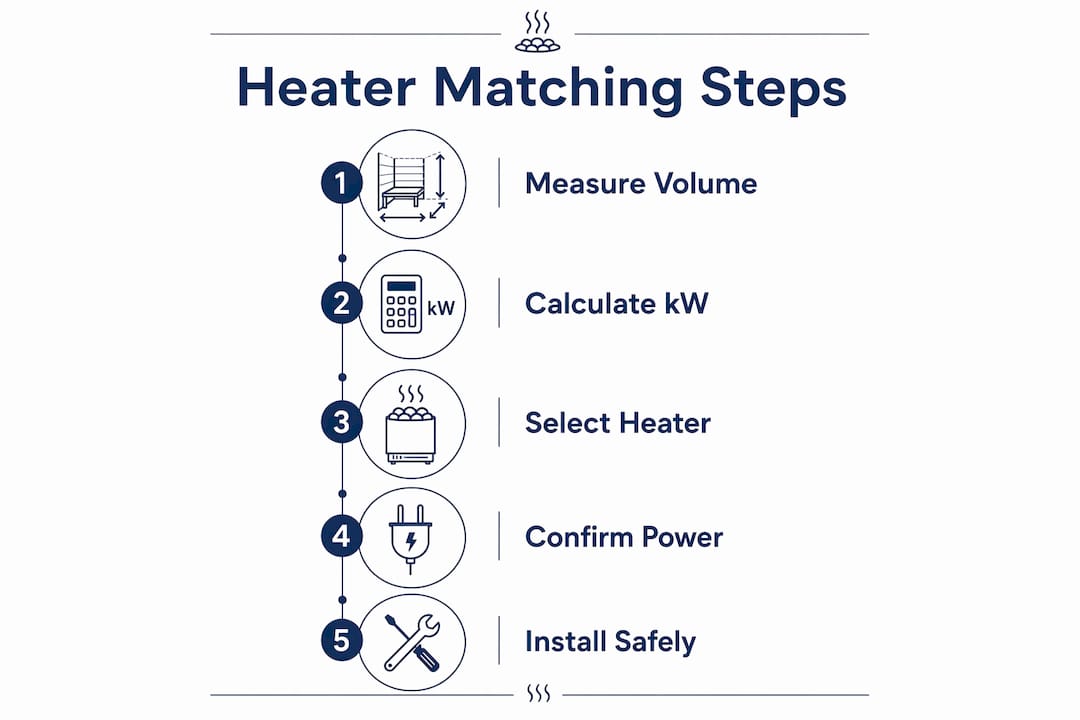
How to match the right heater to your sauna kit
The heater is the most consequential component in any sauna build. Get it wrong and the cabin never reaches temperature; oversize it and you waste energy and money on every session.
The basic mapping:
- Traditional cabin or barrel sauna → electric stone heater or wood-fired stove
- Infrared cabin → far-infrared or full-spectrum infrared panels (built into the cabin)
- Portable tent or blanket → infrared mats or steam generator (included in most kits)
kW sizing by cabin size:
- 1–2 person cabin (100–200 cu ft): 3–6 kW electric heater, such as the Saunum AirSolo 70
- 2–4 person cabin (200–400 cu ft): 6–9 kW, such as the Saunum Air 7
- 4–6 person cabin (400–600 cu ft): 9–12 kW, such as the Saunum Air L 10
- 6–8 person cabin (600+ cu ft): 12–18 kW; check manufacturer specs for your specific model
Calculating heater kW from room volume before purchasing is the step most buyers skip, and it is the primary cause of undersized-heater regret.
Electrical requirements in the U.S.:
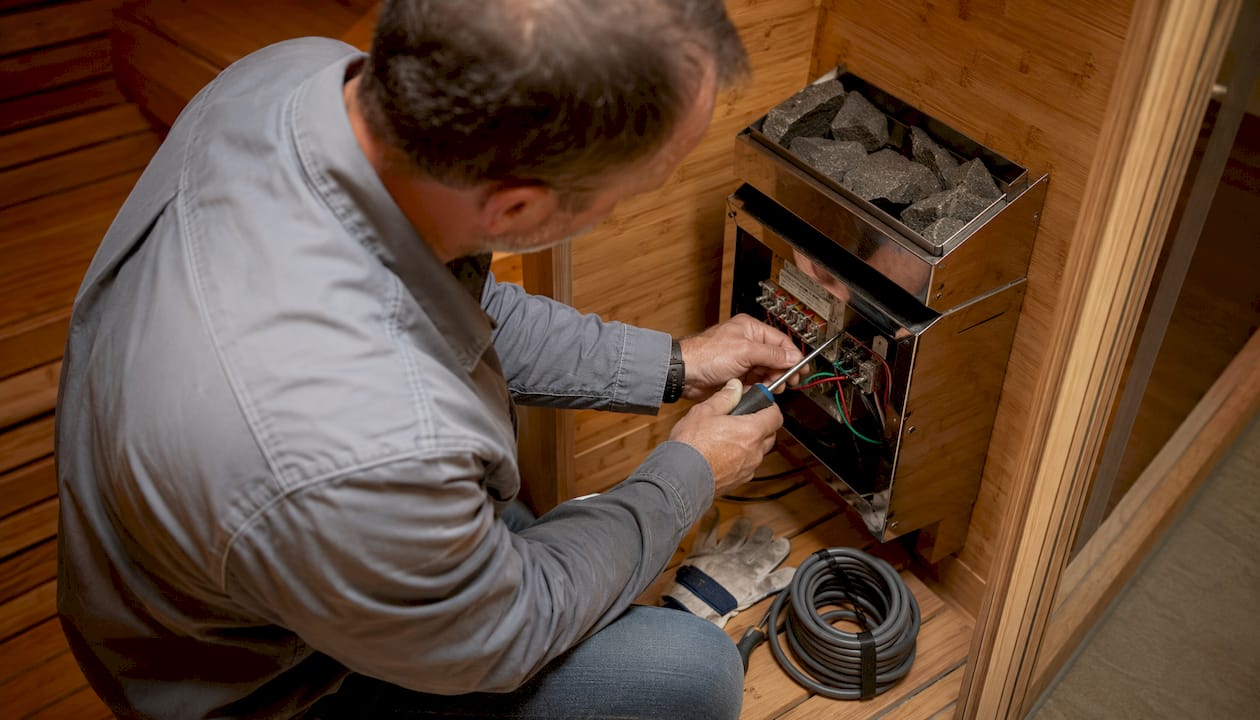
Most electric sauna heaters above 3 kW require a dedicated 240V, single-phase circuit with a 30–60 amp breaker depending on kW. Running a new circuit from your main panel typically costs $300–$1,500 in labor, more if the panel is at distance from the sauna location. Infrared cabins for one person can run on 120V, but check the spec sheet before assuming.
Wood-fired and chimney considerations:
Wood-fired barrel saunas require a proper chimney kit for safe venting. Saunaheatersupply.com stocks the HUUM barrel sauna chimney kit with installation notes. Clearance from combustibles, roof penetration flashing, and local fire codes all apply, so confirm requirements with your local building department before ordering.
Smart controls:
App-enabled heater controls, such as the Saunum AirIQ Wi-Fi, add pre-heat scheduling and remote monitoring. They require a Wi-Fi connection at the sauna location and typically add to the installation complexity, but they are worth considering for outdoor cabins where pre-heating from inside the house is a practical benefit.
Pro Tip: Choose a heater with replaceable heating elements and a U.S.-based parts supply. A heater that cannot be serviced domestically will cost you more in downtime and shipping than the initial savings justify. Saunaheatersupply.com’s product pages list element availability and service notes for each model.
Final recommendation and next steps
For most U.S. homeowners, the SaunaLife CL5G paired with a correctly sized electric heater from Saunaheatersupply.com is the strongest combination of build quality, installation practicality, and long-term value. Buyers who want infrared indoors should look at Auroom’s compact cabins; buyers on a tight budget should start with a Costco kit or a portable steam tent to validate the habit before committing to a permanent install.
Three clear next steps:
- Measure your space and calculate interior cubic footage before looking at any specific kit or heater model.
- Confirm your heater type (electric, wood-fired, or infrared) based on your heat preference and electrical capacity.
- Contact Saunaheatersupply.com for a heater compatibility check, spec sheet review, and sizing guidance before you place any order.
Delivery options and shipping times within the United States
Most full cabin kits ship via LTL (less-than-truckload) freight, not standard parcel carriers. Delivery timelines vary by brand and origin point. SaunaLife and Almost Heaven typically quote 2–6 weeks for in-stock models, with curbside delivery as the default. White-glove or threshold delivery costs more but is worth requesting for heavy multi-pallet shipments. Thermory Sauna Squares panels ship flat and are generally more manageable for standard freight. Costco kits often ship faster through their retail fulfillment network, sometimes within 1–2 weeks.
Before ordering, confirm the freight carrier, delivery method (curbside vs. inside), and whether a liftgate is included. A standard freight delivery to a residential address without a loading dock requires a liftgate truck; failing to request one can result in delivery refusal and redelivery fees. Saunaheatersupply.com ships heaters and accessories across the U.S. with standard carrier options and publishes shipping details at checkout.
Safety features and certifications to look for in home sauna kits
Electrical sauna heaters sold in the U.S. should carry ETL or UL certification, which confirms the unit has been tested to North American safety standards. These marks matter for homeowner’s insurance coverage and for passing local electrical inspections. Wood-fired stoves should be tested for clearance-to-combustibles ratings; confirm the minimum clearance distances in the product documentation before installation.
For infrared cabins, look for low-EMF certification if electromagnetic field exposure is a concern. Many modern infrared panels are designed to minimize EMF output, and reputable brands publish test results. Sauna tents and portable formats should use flame-retardant interior linings; the CPAI-84 standard is a recognized benchmark for flame resistance in tent materials.
Ventilation is a safety requirement, not an option. All traditional saunas need a fresh-air intake near the floor and an exhaust vent near the ceiling to prevent oxygen depletion during extended sessions. Most kit instructions specify vent sizing; follow them precisely. For traditional banya-style steam experiences, resources like the Altai Mountains Resort banya illustrate how proper ventilation and heat management work in a purpose-built steam environment.
Finally, confirm that your kit’s door opens outward or is not lockable from the inside. This is a standard safety requirement in most building codes and is a non-negotiable feature for any permanent installation.
Key Takeaways
The strongest home sauna kit purchase starts with heater compatibility and electrical capacity, not aesthetics or brand name.
| Point | Details |
|---|---|
| Heater sizing comes first | Calculate interior cubic footage before choosing a kit; undersized heaters are the most common buyer regret. |
| Electrical planning is non-negotiable | Most electric heaters above 3 kW need a dedicated 240V circuit; budget $300–$1,500 for electrical work. |
| Material choice affects longevity | Thermally modified wood outperforms standard cedar for outdoor installs in variable climates. |
| Total installed cost exceeds kit price | Add shipping, electrical, foundation, and weatherproofing; outdoor installs typically run $4,000–$15,000 all-in. |
| Saunaheatersupply.com for heater matching | Saunaheatersupply.com offers U.S.-ready electric, wood-fired, and gas heaters with spec sheets and expert sizing support. |
Why heater compatibility is the part most buyers get wrong
Most sauna kit roundups focus on the cabin: the wood species, the bench layout, the door glass. Those details matter, but they are secondary to a question that determines whether your sauna actually works: does the heater match the volume, and can your home’s electrical panel support it?
The cabin is essentially a well-insulated box. What transforms it into a functional sauna is a correctly sized heater with the right electrical supply and, for wood-fired builds, a properly installed chimney. Buyers who skip the heater compatibility step often end up with a beautiful outdoor cabin that takes 90 minutes to reach temperature, or worse, one that trips the breaker every session.
The other overlooked factor is serviceability. A heater with replaceable elements and a domestic parts supply will outlast a cheaper unit that requires international shipping for a $40 component. That is the practical case for working with a U.S.-based specialist rather than ordering the lowest-priced heater on a general marketplace.
Saunaheatersupply.com: U.S.-ready heaters and kit support
Buying a sauna kit is straightforward. Getting the heater right, the electrical spec confirmed, and the chimney kit ordered before the cabin arrives is where most buyers need support. Saunaheatersupply.com exists specifically for that step.
The company stocks electric heaters from compact 3 kW units for 1–2 person indoor cabins up to high-output models for 8-person outdoor builds, plus wood-fired stoves, gas heaters, chimney kits, controls, and replacement parts. Every product page includes electrical specs, kW-to-volume guidance, and installation notes. If you are pairing a heater with a SaunaLife, Thermory, Almost Heaven, or any other kit, the team can confirm compatibility before you order. Saunaheatersupply.com also offers a price match guarantee and ships across the United States. Browse the full heater and kit selection or go directly to the Saunum Air 7 for a popular mid-range electric option suited to most 2–4 person builds.
Useful sources and further reading
- Garage Gym Reviews: Best Home Saunas (2026), Personally Tested — Hands-on testing methodology, category winners, and infrared vs. traditional trade-offs from a team that has evaluated 30+ saunas.
- Garage Gym Reviews: Best Portable Saunas (2026) — Detailed portable sauna testing including blankets, tents, and compact cabins with temperature and assembly data.
- Men’s Fitness: Best Home Saunas for 2026, Tested and Reviewed — Category-by-category picks with price bands and build quality assessments.
- Doug Kilgore: Best Portable Saunas (2026) — Portable format comparison table with max operating temperatures and price ranges across blankets, tents, and cabins.
- Saunaheatersupply.com: Shop Premium Sauna Heaters — Product pages with spec sheets, kW sizing guidance, and electrical requirements for U.S. residential and commercial installs.
- Altai Mountains Resort: Traditional Banya Experience — Reference point for traditional steam sauna construction and ventilation practices in a purpose-built setting.
Consult manufacturer spec pages for final electrical and dimensional specifications before purchasing. Specifications can change between model years, and local electrical codes vary by jurisdiction.