










Infrared 15–25 Min, Electric 30–45 Min: When a Sauna Is Truly Ready
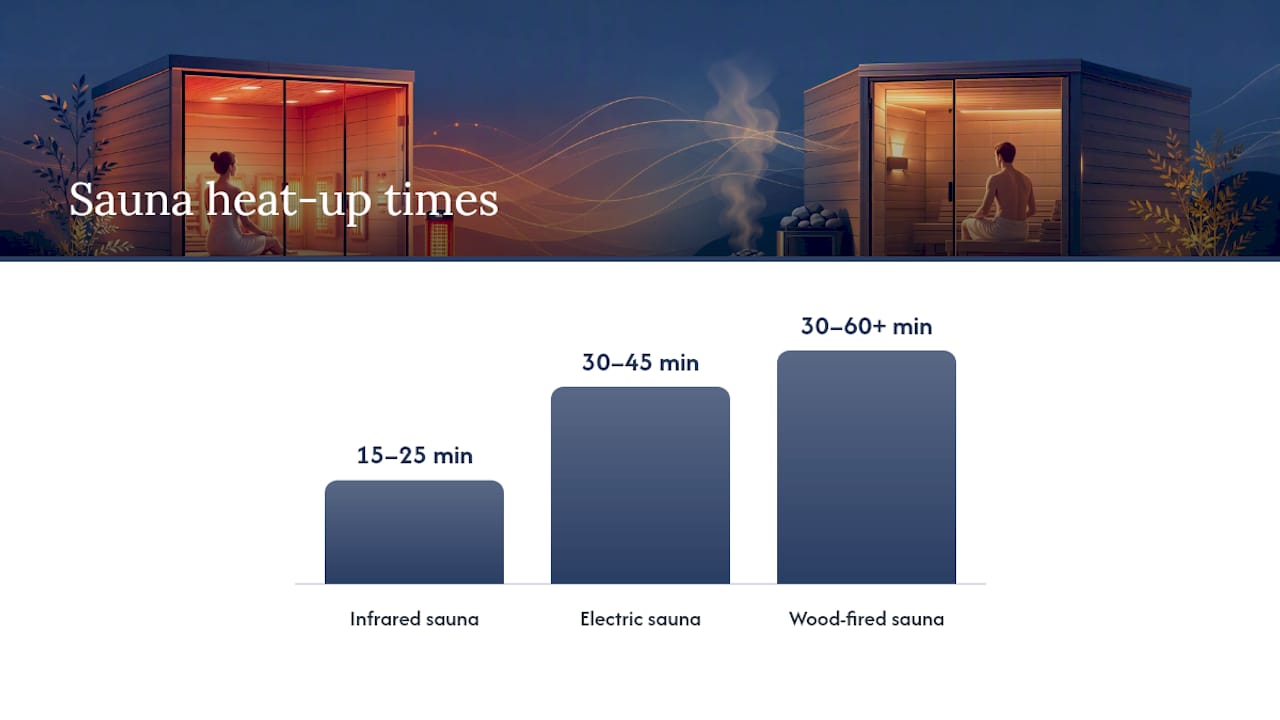
Most home electric saunas reach working temperature in about 30 to 45 minutes, infrared cabins get there in roughly 15 to 25 minutes, and wood-fired units can run anywhere from 30 minutes to over an hour depending on the operator. Portable and barrel saunas typically split the difference, landing between 20 and 40 minutes outdoors. Correct heater sizing and a sealed door during warm-up control that timeline more than any other single factor, and true “ready” means both air temperature and fully heat-soaked stones, not just a thermostat reading; spa operators can find helpful tips for optimizing facility operations with Spa SEO Services.
TL;DR:
- An electric sauna typically reaches full temperature in 30 to 45 minutes when properly sized and insulated, with an open door reducing efficiency.
- Infrared saunas heat faster, often within 15 to 25 minutes, because they warm the body directly without relying solely on air temperature.
- Proper heater sizing based on room volume is the most crucial factor; an undersized heater prolongs warm-up, while an oversized one wastes energy.
- Insulation quality, especially ceiling insulation, significantly impacts warm-up time and overall heating efficiency in home saunas.
- Using timers, WiFi remote start, sealing the door, and limiting vent intake during warm-up can cut total heating time by several minutes.
Table of Contents
- How Long Does It Take to Heat a Sauna by Type?
- What Actually Controls How Fast a Sauna Heats?
- How to Get a Sauna Hot Faster: A Step-by-Step Routine
- Sauna Won’t Heat Up? A Troubleshooting Checklist
- Choosing the Right Heater Size for Faster Warm-Up
- What I’ve Learned About Chasing Faster Sauna Sessions
- Get the Right Heater the First Time
- Sources
- FAQ
How Long Does It Take to Heat a Sauna by Type?
Sauna warming time depends almost entirely on how the heat source works and how well the room holds onto what it generates. A correctly sized electric heater in a well-insulated residential sauna typically hits full temperature in 30 to 45 minutes, assuming the door stays shut and the room isn’t oversized for the unit installed.
Infrared cabins move faster because they skip the step of heating the air at all. The panels warm your body directly with radiant energy, which is why infrared units often reach a usable session temperature in a fraction of the time a traditional electric or wood-fired heater needs. The room itself may only reach 120 to 140°F, well below the 150 to 195°F range of a steam sauna, but the panels are already doing their job.
Wood-fired saunas are the wild card. A skilled operator with dry, well-split wood and a properly drafting stove can get a small sauna hot in 30 to 40 minutes. A novice with damp wood, poor airflow, or a stove that’s undersized for the room can easily push past an hour. Wood-fired heat-up time is less about the equipment and more about fuel quality, fire management, and how often the door gets opened to check progress.
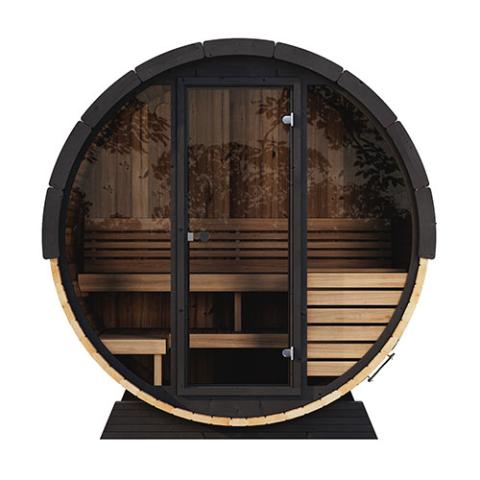
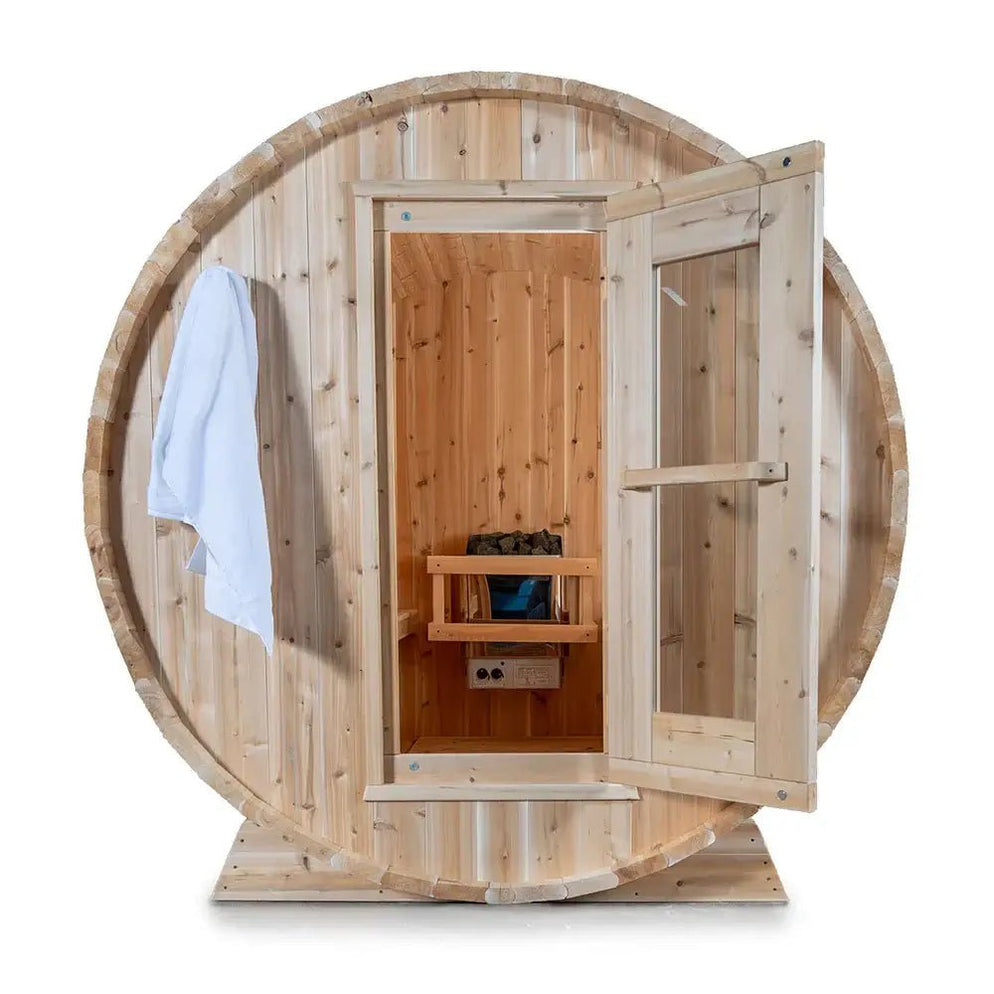
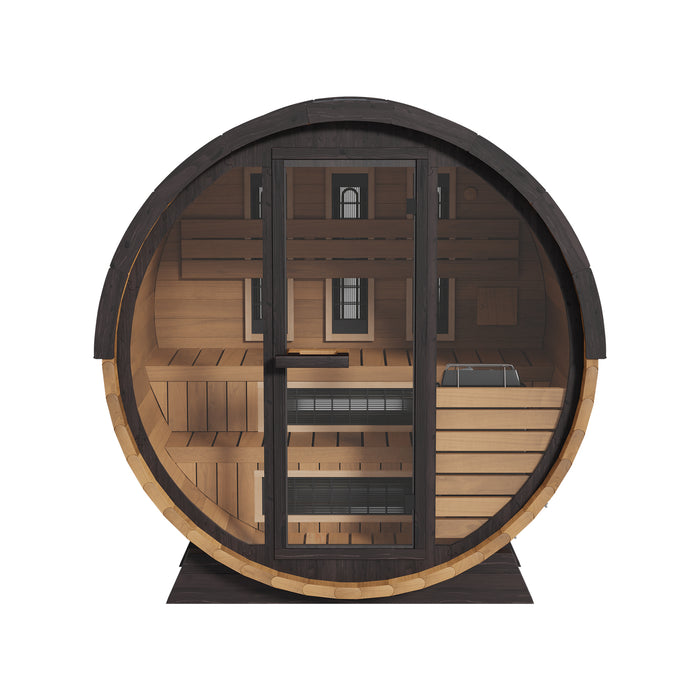
Portable and barrel saunas add another variable: ambient temperature. An outdoor barrel sauna in a Minnesota winter behaves very differently than the same unit in a Georgia backyard in October. Typical heat-up times vary accordingly and generally fall in a lower-to-upper range of tens of minutes under normal conditions, with longer times possible when outdoor temperatures drop below freezing.
Here’s how the four main types stack up:
- Electric sauna: 30 to 45 minutes, driven by heater wattage and room volume
- Infrared sauna: 15 to 25 minutes, because panels heat the body, not the air
- Wood-fired sauna: 30 minutes to over an hour, highly dependent on operator skill
- Portable/barrel sauna: 20 to 40 minutes, with outdoor temperature as a major swing factor
None of these numbers tell the whole story for traditional saunas, though. Air temperature and stone temperature are not the same thing. A sauna can read 170°F on the thermometer while the stones sitting in the heater are still working through their own heat-soak cycle. Stones need sustained exposure to full heater output before they hold enough thermal mass to produce good löyly, the burst of steam you get when water hits them. Throw water on stones too early and you get a thin, short-lived puff instead of the deep steam traditional sauna bathers expect. That’s a strong argument for giving your heater the full warm-up cycle rather than rushing in the moment the air feels hot enough.
What Actually Controls How Fast a Sauna Heats?
Heater sizing is the single biggest lever you have. Industry sizing guidance uses a kilowatt-to-room-volume rule of thumb, and getting this number wrong is the most common cause of a sauna that never seems to warm up properly. A heater that’s too small for the cubic footage it’s serving will run continuously, straining to reach a temperature it was never built to hit efficiently. One that’s oversized wastes energy and can make the room feel uneven, hot near the heater and cooler in the corners. Sauna Heater Supply’s heater sizing guide breaks this down by exact cubic footage, but the short version is simple: measure your room in cubic feet, match it against manufacturer kW recommendations, and don’t guess.
Insulation quality runs a close second. Heat rises, and a poorly insulated ceiling lets your heater’s output escape before it ever builds up in the room. Ceiling insulation delivers the highest return of any retrofit you can make to a sauna that heats slowly, according to guidance from Energy on thermal efficiency in enclosed spaces. If you’ve already confirmed your heater is sized correctly and warm-up still drags, check the ceiling before you check anything else. Sauna Heater Supply’s insulation guide covers foil vapor barriers and R-value targets for cedar and hemlock builds.
Ceiling heat loss is the single most overlooked drain on heating efficiency in home saunas, and it’s often invisible until you’re standing in a room that never quite gets hot enough despite a heater rated for the space.
A few other factors worth checking in order of impact:
- Door seals and gaps, which cumulatively leak more heat than most owners assume
- Stone mass and arrangement, since a shallow stone bed heat-soaks faster but holds less thermal reserve
- Intake and exhaust vent position, which governs how much warm air escapes during preheat
- Heating element condition, since a worn element draws power without producing full output
One safety note before you start troubleshooting electrical issues yourself: sauna heaters draw significant dedicated amperage, and wiring work should follow NFPA electrical code requirements for the circuit size your heater specifies. If you’re not confident reading a heater’s electrical spec plate, that’s a job for a licensed electrician, not a weekend project.
How to Get a Sauna Hot Faster: A Step-by-Step Routine
A few habits, applied consistently, shave real minutes off every warm-up cycle without spending a dollar on new equipment.
- Start the heater and shut the door immediately. Every minute the door sits open during preheat is heat escaping into the room outside.
- Partially restrict the intake vent during warm-up. Closing gaps and dialing back the intake vent while the sauna heats reduces how much warm air escapes before you step in.
- Reopen the vent to normal position before you enter. This step matters for air exchange and safety once you’re actually inside, so don’t skip it.
- Use a timer or WiFi remote start. Setting your heater to finish warming up 15 minutes before you plan to use it means you’re never standing around waiting.
- Check a wall-mounted thermometer/hygrometer combo, not just the heater’s built-in display. Heater displays sometimes read the element temperature rather than true room air temperature.
Pro Tip: Restrict the intake vent only during warm-up, and always return it to its normal open position before anyone enters the sauna. Sealing the room too tightly during actual use cuts into the air exchange your body needs during a session.
Maintenance matters as much as technique. Stones lose thermal efficiency over years of use as mineral buildup and cracking reduce their heat-holding capacity, so inspect them each season and replace any that are chipped or coated in residue. Check heater elements and wiring connections annually for corrosion or looseness, since a degraded element pulls power without delivering full heat output. Door seals compress and wear over time, so run your hand around the frame while the heater is on. Any spot where you feel warm air escaping is a spot worth resealing.
Timing your preheat around your schedule also helps more than people expect. If you know you use the sauna most evenings around 7:00 PM, a scheduled remote start at 6:15 PM means the room and stones are both ready when you walk in, rather than you waiting on a heater you just switched on.
Sauna Won’t Heat Up? A Troubleshooting Checklist
Start with math, not guesswork. Measure your sauna’s length, width, and height in feet, multiply for cubic footage, and compare that number against your heater’s rated kW using the sizing guide. An undersized heater is by far the most common root cause of chronic slow warm-up, and it’s the first thing to rule out before you replace parts.
If sizing checks out, work through this sequence:
- Inspect stones for cracking, mineral buildup, or an uneven bed that’s blocking airflow through the heating element
- Test the thermostat by comparing its setpoint against an independent thermometer reading
- Check wiring connections at the heater terminal for corrosion, looseness, or discoloration
- Run your hand around the door frame and vents while the heater runs, feeling for escaping warm air
Three red flags mean it’s time to call a professional rather than keep troubleshooting yourself. A heater that never cycles off, running continuously without ever reaching or holding its setpoint, usually signals either a failed thermostat or a heater that’s undersized for the room it’s serving, distinct from ordinary element wear. Any burning smell during operation is an immediate stop-and-inspect situation. Repeated element failures, especially if you’re replacing the same component more than once a season, point to a wiring or voltage issue that needs a licensed electrician, not another replacement part.
Choosing the Right Heater Size for Faster Warm-Up
Getting warm-up time right starts with matching heater output to room volume, which is the core principle behind every effective sizing recommendation. This approach, paired with competitive pricing and expert guidance, is why many homeowners and contractors lean on professional advice rather than guessing at heater specs alone.
Three practical mapping points for common room sizes:
- Small sauna rooms (roughly 2 to 4 person capacity) pair well with a compact WiFi-controlled package like the Saunum AIR 5 CSB WiFi Sauna Heater Package, suited to quicker preheat cycles in smaller cubic footage.
- Mid-to-large rooms often call for higher output, which is where the Saunum AIR L 10 WiFi Sauna Heater Package fits, giving larger rooms the same remote-start convenience without sacrificing warm-up speed.
- Standalone installations in larger residential or light commercial spaces can use the Saunum Air L 10 Sauna Heater on its own when a full WiFi package isn’t needed.
What I’ve Learned About Chasing Faster Sauna Sessions
Timers and WiFi remote starts are the most underrated upgrade in this whole topic. They don’t just save you from waiting around, they cut wasted energy from heaters left running before anyone’s ready to use them. The trade-off between infrared’s quick 15 to 25 minute readiness and a traditional sauna’s slower steam-based löyly isn’t really about which is “better.” It’s about which experience you’re actually after that day. What I’d push back on is treating a chronically slow sauna as normal. If warm-up keeps dragging past an hour on a unit rated for your room, that’s not bad luck. That’s a sizing or insulation problem asking to be fixed.
— Teddy
Get the Right Heater the First Time
Guessing at heater size wastes money twice: once on the unit, and again on every wasted kilowatt-hour heating a room it was never built for. Sauna Heater Supply’s advantage is straightforward expert curation, personalized to your actual room dimensions, backed by a price match guarantee and fast shipping so you’re not stuck waiting weeks for the right part.
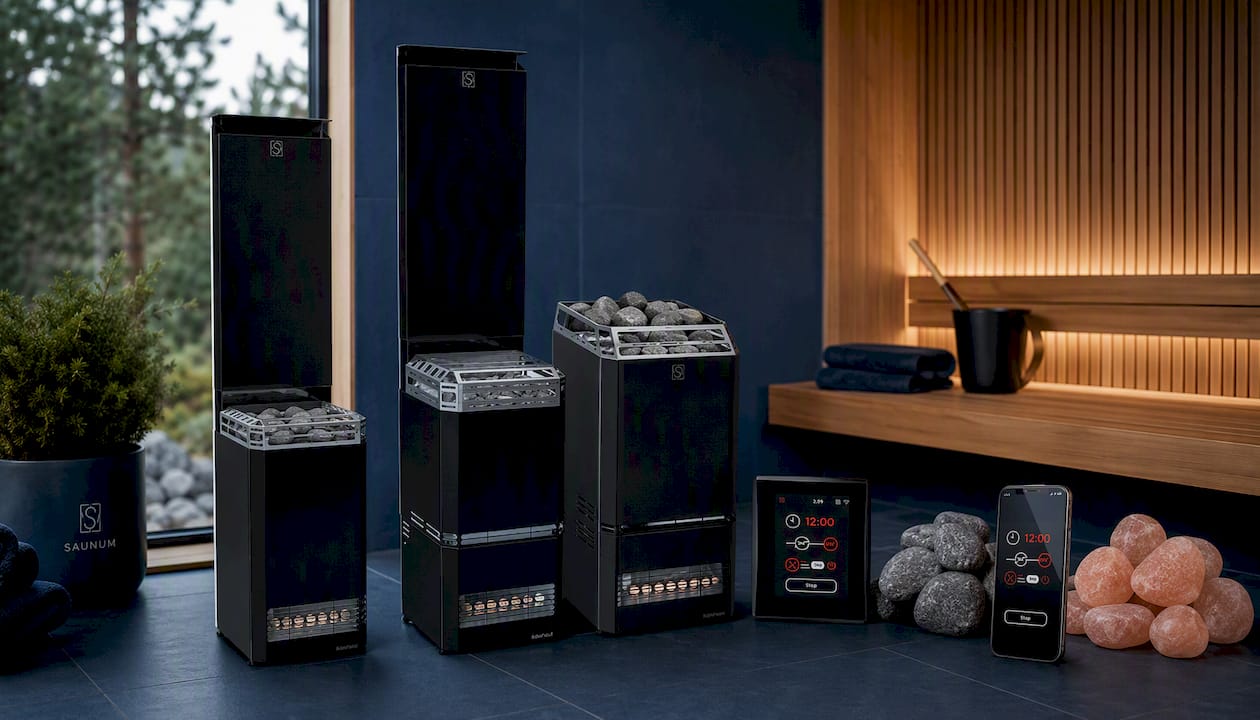
If you’re outfitting a smaller room, start with the Saunum AIR 5 CSB WiFi Sauna Heater Package for quick, efficient warm-up cycles. Larger rooms do better with the Saunum AIR L 10 WiFi Sauna Heater Package, which keeps preheat times reasonable even at higher cubic footage. Not sure which fits your space? Browse the full sauna heater collection or explore complete sauna packages, and reach out through Sauna Heater Supply for a sizing consultation or a quote on professional installation before you buy anything.
Sources
These references informed the sizing, safety, and physiological points covered above:
- How Long Does a Sauna Take to Heat Up? Real Heat-Up Times – The Sauna Place
- How to Heat a Sauna Faster | Home Sauna
- Mayo Clinic sauna FAQ
FAQ
What Is the 200 Rule for Saunas?
The 200 rule is a rough sauna safety guideline sometimes cited regarding exposure limits, but specific combined totals of temperature and time vary widely and depend on individual health and sauna conditions.
What Happens After 20 Minutes in a Sauna?
Past the 20 minute mark, your body has typically shifted into sustained heavy sweating and elevated heart rate as it works to cool itself, and continued exposure raises the risk of dehydration and overheating for most people. Mayo Clinic’s guidance recommends limiting sessions to 15 to 20 minutes for most healthy adults, especially for first-time users.
What Is 30 Minutes in the Sauna Equivalent To?
Thirty minutes in a sauna produces a cardiovascular response comparable to light-to-moderate aerobic activity, including an elevated heart rate and significant fluid loss through sweating, though it isn’t a direct substitute for exercise. The comparison depends heavily on room temperature and individual heat tolerance, so it varies person to person.
How Do I Get My Sauna to Heat Up Faster?
Confirm your heater is correctly sized for your room’s cubic footage first, since an undersized unit is the most common cause of slow warm-up. From there, keep the door closed during preheat, restrict the intake vent partially until you’re ready to enter, and check ceiling insulation and door seals if the problem persists.
How Much Does a Sauna Heater Package Cost?
Pricing depends on the specific package and room size, so current pricing is listed directly on each product page at Sauna Heater Supply. Reach out for a sizing consultation if you’re unsure which package matches your space before comparing prices.