









Infrared vs Traditional Sauna: Which Fits Your Health Goals?
Traditional saunas deliver the strongest long-term cardiovascular evidence and the authentic high-heat ritual that Finnish culture has refined over centuries. Infrared saunas offer a gentler, more accessible daily-use option with lower installation costs and a plug-in setup that works in most American homes. Neither is universally better. The right choice depends on your health goals, heat tolerance, and what your electrical panel can support.
Quick match:
- Cardiovascular longevity and authentic high-heat experience: Traditional (Finnish) sauna
- Daily recovery, pain relief, and easier home installation: Infrared sauna
- Heat-sensitive users, renters, or tighter budgets: Infrared sauna
- Homeowners with 240V capacity and cardio-focused goals: Traditional sauna
Key stat: The Laukkanen cohort study followed a large cohort of Finnish men over many years and found that frequent sauna use was associated with significantly lower risks of fatal cardiovascular events and all-cause mortality. That data applies specifically to high-temperature traditional saunas, not infrared units.
Table of Contents
- How does each sauna type actually heat your body?
- What does the clinical evidence actually say about health benefits?
- Who should not use a sauna, and how do you use one safely?
- What do direct-comparison studies actually show, and where are the gaps?
- How do you choose the right sauna for your goals, home, and budget?
- Practical protocols: temperatures, session length, frequency, and maintenance
- Key Takeaways
- The evidence is clear, but the right choice is still personal
- Saunaheatersupply helps you find the right heater for your setup
- Authoritative sources and further reading
How does each sauna type actually heat your body?
The core difference between infrared and traditional saunas is not just temperature. It is the mechanism by which heat reaches your body, and that mechanism shapes everything from session comfort to physiological effect.
Traditional (Finnish) sauna heating
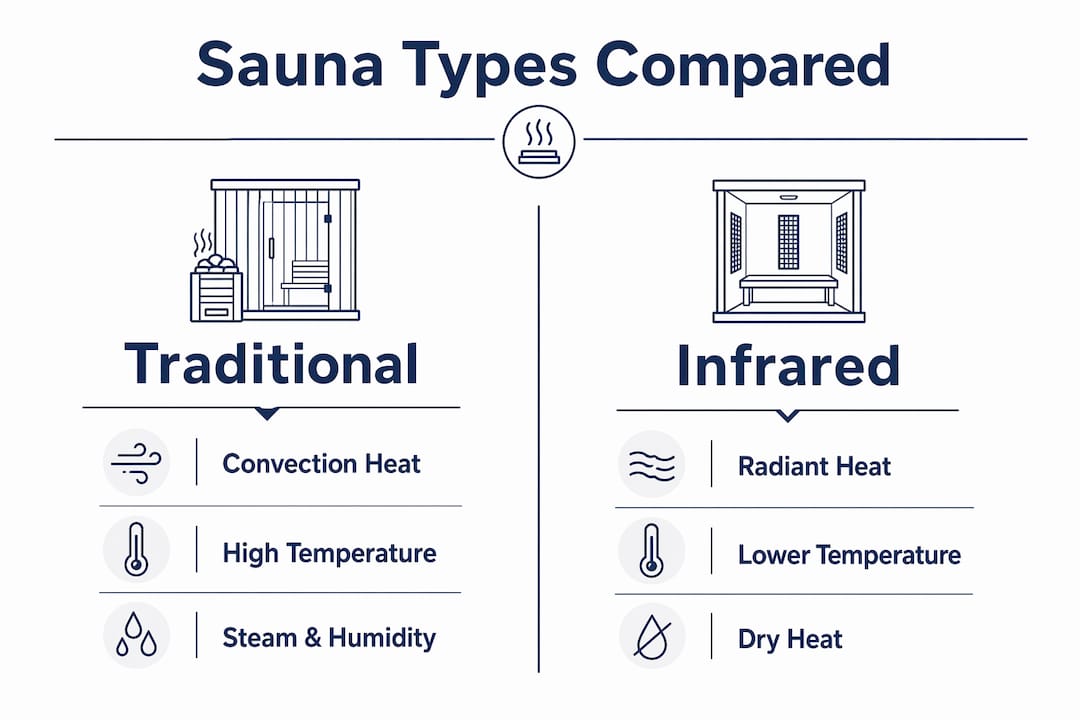
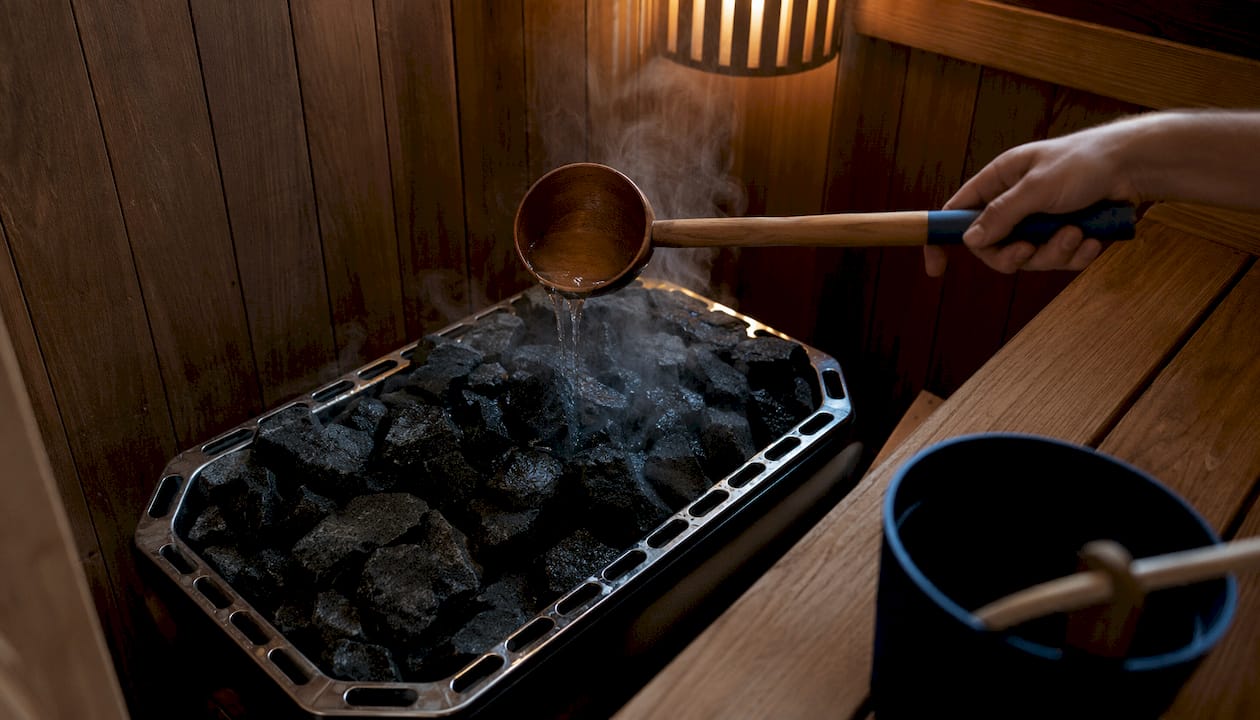
A traditional sauna heats the room air using convective and radiant energy from a rock-loaded heater. The rocks absorb heat from electric elements (or a wood fire), and the hot air surrounds your body at 170–200°F (77–93°C). Electric heaters typically draw 6–9 kW and require a dedicated 240V circuit, which is a hard electrical constraint for many U.S. homes. The defining ritual is löyly: pouring water over the hot stones to create a burst of steam that intensifies the perceived heat without raising the ambient temperature much. That steam experience cannot be replicated in an infrared unit.
Infrared sauna heating
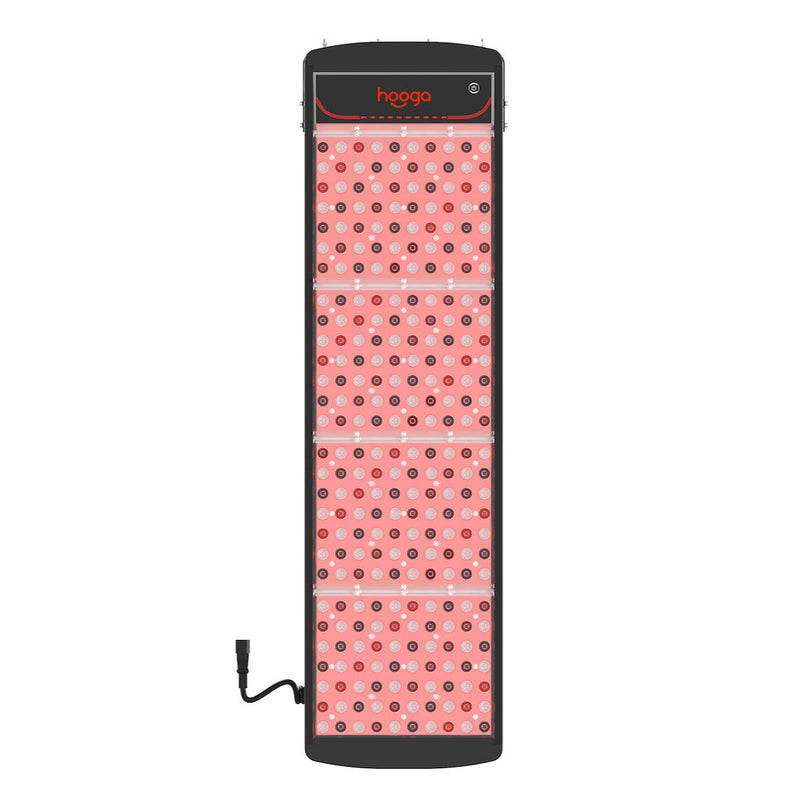
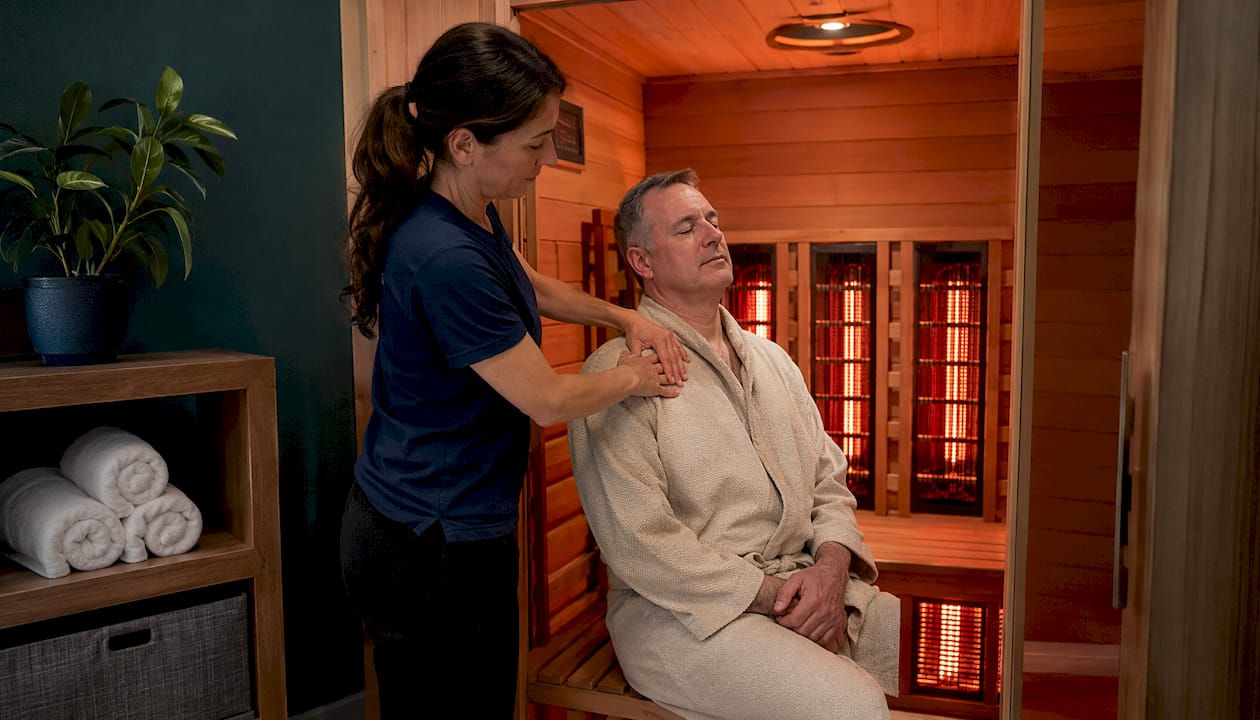
Infrared cabins use panels that emit radiant energy in the far-, mid-, or near-infrared spectrum. Instead of heating the room air first, those wavelengths penetrate skin layers directly, warming tissue from within. Ambient temperatures stay in the 120–140°F range, which feels noticeably milder than a traditional sauna even though your core temperature still rises. Most residential infrared units run on standard 120V outlets, though higher-end models with chromotherapy lighting or sound systems often benefit from a dedicated circuit to avoid nuisance tripping.
Far-infrared (FIR) is the most common and most studied wavelength in clinical settings. Near-infrared (NIR) is promoted for skin and collagen benefits, though the evidence base is thinner. Mid-infrared falls between the two and is less commonly featured as a standalone selling point.
Side-by-side technical specs
| Feature | Traditional sauna | Infrared sauna |
|---|---|---|
| Heating method | Convection + radiant (heated air/rocks) | Direct radiant (FIR/NIR panels) |
| Typical ambient temp | 170–200°F (77–93°C) | 120–140°F |
| Electrical requirement | 240V dedicated circuit, 6–9 kW | 120V standard outlet (most models) |
| Heat-up time | 30–45 minutes | 10–15 minutes |
| Steam (löyly) | Yes | No |
| Typical session length | 10–20 minutes | 20–45 minutes |
What does the clinical evidence actually say about health benefits?
Both sauna types carry legitimate health claims backed by published research. The strength and scope of that evidence, however, differs significantly between modalities.
Cardiovascular health
The most compelling long-term data comes from traditional sauna use. The Laukkanen cohort findings cited above represent two decades of follow-up in a large population, making them the gold standard for sauna-and-longevity research. The mechanism involves repeated cardiovascular stress similar in some ways to moderate aerobic exercise: heart rate rises, blood vessels dilate, and cardiac output increases.
Infrared saunas also show cardiovascular promise in clinical settings. The WAON-CHF trial (Tei et al.) used far-infrared therapy at approximately 140°F in heart-failure patients and found improved cardiac index and reduced biomarkers. That is a meaningful clinical finding, but the study population and design differ substantially from the Finnish cohort work.
Stat callout: Systematic reviews of infrared sauna use show positive effects on blood pressure and vascular function, but no large-scale longitudinal mortality data comparable to the Finnish cohort studies currently exists for infrared modalities.
Recovery, pain relief, and muscle soreness
Infrared saunas tend to be favored for recovery-focused use because the lower ambient temperature allows longer sessions without the physiological strain of high heat. Delayed-onset muscle soreness (DOMS) and chronic pain conditions are common targets. The gentler thermal dose makes daily or near-daily sessions more practical for most people.
Traditional saunas deliver a larger thermal dose per session, which drives stronger heat-shock protein induction and more pronounced cardiovascular adaptation. For athletes prioritizing acute recovery alongside long-term conditioning, traditional sauna use after training is well-supported in the literature.
Skin, stress, and other claimed benefits
Near-infrared wavelengths are frequently marketed for collagen stimulation and skin rejuvenation. Some published research on photobiomodulation supports low-level light therapy for skin, though the evidence specific to NIR sauna panels is less robust than the cardiovascular data for either modality. Both sauna types reliably reduce cortisol and promote parasympathetic recovery, which is the physiological basis for the stress-relief claims.
The “detox” claim: read this before you buy
Sweat is composed primarily of water and electrolytes. Marketing claims about removing heavy metals or systemic toxins through sweating are consistently flagged as exaggerated by wellness practitioners and researchers. Traditional saunas produce roughly 0.8–1.5 liters of sweat in 20 minutes; infrared sessions produce approximately 0.5–1 liter over 30 minutes. Higher sweat volume does not equal greater toxin removal. Focus on the documented cardiovascular, recovery, and stress benefits rather than detox language when evaluating any sauna purchase.
Who should not use a sauna, and how do you use one safely?
Sauna bathing is safe for most healthy adults, but several conditions require medical clearance or outright avoidance.
Contraindications checklist
- Unstable cardiovascular disease (recent heart attack, unstable angina, severe aortic stenosis): avoid until cleared by a cardiologist
- Uncontrolled hypertension: consult a physician before starting any sauna protocol
- Pregnancy: medical guidance varies; consult your OB-GYN before use
- Active alcohol consumption: alcohol impairs thermoregulation and significantly raises the risk of heat-related illness
- Heat-sensitive neurological conditions (e.g., multiple sclerosis): high ambient temperatures can temporarily worsen symptoms
- Certain medications: diuretics, beta-blockers, and some antihypertensives affect heat response; review with your prescriber
Session safety best practices
- Hydrate before and after every session; aim for at least 16 oz of water beforehand
- Start with shorter sessions (10–15 minutes) and lower temperatures, then build tolerance over several weeks
- Exit immediately if you feel dizzy, nauseated, or experience chest discomfort
- Avoid sauna use within two hours of intense exercise if you have not cooled down fully
- Never use a sauna alone if you are new to it or have any cardiovascular history
Pro Tip: For users with heat sensitivity or mild cardiovascular conditions, infrared saunas operating at 120–140°F can be a clinically reasonable alternative to traditional high-heat saunas. Always confirm with your cardiologist or primary care physician before starting a sauna protocol if you have any cardiac history.
What do direct-comparison studies actually show, and where are the gaps?
The research landscape for sauna health benefits is promising but uneven. Understanding the study types helps you weigh the evidence correctly.
| Study type | Primary outcomes studied | Key findings | Limitations |
|---|---|---|---|
| Finnish large cohort (Laukkanen et al.) | Cardiovascular mortality, all-cause mortality | 50% lower fatal CV risk at 4–7 sessions/week | Observational; traditional sauna only; Finnish male population |
| WAON-CHF randomized trial | Cardiac index, BNP biomarkers in heart-failure patients | Improved cardiac function with FIR at ~140°F | Small sample; clinical population; short follow-up |
| Infrared systematic reviews | Blood pressure, vascular function, DOMS | Positive effects across multiple outcomes | Small trial sizes; heterogeneous devices; no mortality data |
| Small clinical trials (both types) | Pain, stress markers, skin outcomes | Generally positive; effect sizes vary | Short duration; limited blinding; self-reported outcomes |
The Finnish cohort data is powerful precisely because of its scale and duration, but it applies to high-temperature traditional sauna use in a specific population. Infrared trials consistently show positive cardiovascular and symptomatic outcomes, but the absence of long-term mortality data means you cannot yet draw equivalent longevity conclusions from infrared use alone.
For longevity and cardiovascular conditioning, the traditional sauna has the stronger evidence base by a wide margin. For recovery, pain management, and daily-use wellness, infrared trials provide solid support even without decades of follow-up data. Choosing between them is partly a question of which goal you are optimizing for and partly a question of what your home and budget can support.
How do you choose the right sauna for your goals, home, and budget?
Decision framework by goal
- Cardiovascular longevity and heat conditioning: Traditional sauna. The cohort evidence is specific to high-temperature sessions. If this is your primary goal and your home can support a 240V circuit, a traditional electric heater is the evidence-backed choice.
- Daily recovery, chronic pain, or muscle soreness: Infrared sauna. Lower temperatures allow longer, more frequent sessions without excessive physiological strain.
- Skin health and photobiomodulation: Near-infrared panels. Look for units that specify NIR wavelengths alongside FIR.
- Mixed goals or budget constraints: An infrared unit covers recovery and stress benefits at lower cost. If you later want traditional high-heat sessions, access a commercial facility or plan a future upgrade.
- Authentic Finnish ritual (löyly): Traditional only. No infrared unit replicates the steam burst from pouring water on hot stones. This is one of the most common buyer regrets when someone purchases infrared expecting that experience.
Electrical and space checklist
- Does your panel have a spare 240V, 30–50A breaker slot? If not, a traditional electric heater requires an electrician to add capacity, which adds cost and permitting.
- Is a 120V outlet available near your intended sauna space? Most infrared units plug in directly, making them practical for finished basements, spare bedrooms, or garage corners.
- How large is your sauna room? Traditional heaters are sized by cubic footage; a typical 6–9 kW unit covers 200–400 cubic feet. Infrared panels are sized by person count.
- Indoor or outdoor installation? Wood-fired traditional heaters like the Harvia Legend 150 are well-suited for outdoor barrel saunas and eliminate the electrical constraint entirely.
Questions to ask before you buy
- What is the heater’s wattage, and does my panel have capacity for a dedicated breaker?
- For infrared: does the unit carry low-EMF certification, and which wavelengths (FIR, NIR, or both) do the panels emit?
- What ventilation is required? Traditional saunas need designed intake and exhaust venting, not just a door gap.
- What is the warranty on heating elements, and are replacement parts available domestically?
- For higher-end infrared units with chromotherapy or audio: does the unit need a dedicated circuit despite the 120V plug?
Practical protocols: temperatures, session length, frequency, and maintenance
Session guidance by modality
Traditional sauna:
- Target ambient temperature: 170–190°F for experienced users; start at 150–160°F if you are new
- Session length: 10–20 minutes per round; exit, cool down for 5–10 minutes, then re-enter if desired
- Frequency for cardiovascular conditioning: 3–4 sessions per week minimum; the cohort data shows the strongest benefit at 4–7 sessions per week
- Beginners: two rounds of 10 minutes with a full cool-down between rounds is a reasonable starting protocol
Infrared sauna:
- Target ambient temperature: 120–140°F; most users find 130°F comfortable for extended sessions
- Session length: 20–45 minutes; the lower heat allows longer exposure without the same physiological stress
- Frequency for recovery: daily use is practical for most healthy adults given the gentler thermal dose
- Beginners: start at 120°F for 20 minutes and increase duration before increasing temperature
Operating costs and installation budget
| Cost factor | Traditional sauna | Infrared sauna |
|---|---|---|
| Electrical installation | — | Minimal (standard outlet) |
| Operating cost per session | Higher (6–9 kW draw, 30–45 min heat-up) | Roughly one-third of traditional per session |
| Ventilation requirement | Designed intake/exhaust venting required | Minimal; standard room ventilation usually sufficient |
Maintenance checklist
Traditional sauna:
- Inspect and clean rocks annually; replace cracked or degraded stones
- Check intake and exhaust vents every season; poor ventilation can cause hidden moisture buildup and rot within 2–3 years
- Wipe benches with a dry cloth after each use; avoid chemical cleaners on wood
- Inspect heater elements and connections annually; a qualified electrician should check wiring every few years
Infrared sauna:
- Wipe panels with a dry or lightly damp cloth; never spray water directly on panels
- Check electrical connections and cord condition periodically
- Inspect wood interior for any moisture intrusion if the unit is in a humid space
- Higher-end units with Wi-Fi controls (such as the Saunum AirIQ Wi-Fi) may require firmware updates for full feature access
Respiratory comfort note: Traditional saunas at high humidity (after löyly) can feel intense for users with respiratory sensitivities. Infrared cabins run dry and are generally more comfortable for people who find steam or very hot air difficult to breathe.
Key Takeaways
Traditional saunas hold the strongest long-term cardiovascular evidence, while infrared saunas offer a practical, lower-cost path to daily recovery and pain relief for most U.S. home setups.
| Point | Details |
|---|---|
| Cardiovascular evidence favors traditional | The Laukkanen cohort links frequent weekly sessions to a substantially lower risk of fatal cardiovascular events. |
| Infrared suits daily recovery and easier installs | Infrared units run at 120–140°F, plug into standard 120V outlets, and cost roughly one-third per session to operate. |
| Electrical capacity often decides the purchase | Traditional heaters require a dedicated 240V circuit (6–9 kW); infrared units typically do not. |
| Detox claims are overstated for both types | Sweat is primarily water and electrolytes; focus on documented cardiovascular and recovery benefits instead. |
| Saunaheatersupply covers both categories | Saunaheatersupply carries electric heaters for traditional installs and expert guidance to match the right unit to your space and goals. |
The evidence is clear, but the right choice is still personal
Most articles frame this as a competition. The honest answer is that the two modalities are not interchangeable, and the evidence does not ask you to pick a winner. It asks you to match the tool to the goal.
The Finnish cohort data is among the most compelling longevity research in wellness. But it was conducted on men using high-temperature traditional saunas multiple times per week, in a culture where sauna bathing is a lifelong habit. Extrapolating that mortality reduction to a 30-minute infrared session three times a week is a stretch the data does not support. If cardiovascular longevity is your primary goal and you can support a 240V install, a traditional electric heater is the evidence-backed choice.
That said, the WAON-CHF trial and the infrared sauna option at Centro House Marbella infrared systematic reviews are not trivial. For someone managing chronic pain, recovering from training, or dealing with heat sensitivity, infrared’s gentler thermal dose and longer session tolerance are genuine clinical advantages. A sauna you actually use four times a week at 130°F will outperform one you use once a week at 190°F because the heat feels overwhelming.
One thing that rarely gets said plainly: if the löyly ritual matters to you, do not buy an infrared unit hoping it will feel similar. It will not. That steam burst, the way the heat changes quality when water hits the stones, is specific to traditional sauna design. Buyers who overlook that detail often regret the purchase within months.
The practical constraint for most American homeowners is electrical. A 240V dedicated circuit adds cost and requires a licensed electrician. For renters or anyone without panel capacity, infrared is not a compromise. It is the only realistic option, and it delivers real, documented benefits.
Saunaheatersupply helps you find the right heater for your setup
Whether you are planning a traditional Finnish sauna with a dedicated 240V heater or evaluating your options before committing to a full installation, Saunaheatersupply has the product range and expertise to match you with the right unit. The catalog covers electric heaters from compact residential models like the Saunum Air 7 to higher-capacity options for larger rooms, plus wood-fired heaters for outdoor builds. Every product is curated for performance and durability, and the team provides personalized guidance so you are not guessing on wattage, circuit requirements, or stone capacity.

Saunaheatersupply also offers a price match guarantee, so you can shop with confidence. Before finalizing any traditional heater purchase, confirm your panel capacity with a licensed electrician and review ventilation requirements for your specific room. Browse the full sauna heater catalog to compare specs, or contact the team directly for a recommendation tailored to your space.
This article is general informational content, not medical advice. Consult a qualified healthcare provider before starting a sauna protocol if you have any cardiovascular, neurological, or other medical conditions.
Authoritative sources and further reading
The claims in this article draw on peer-reviewed research and clinical reviews. For deeper reading or to verify specific findings, the following sources are recommended:
- Laukkanen et al. — Sauna bathing and cardiovascular mortality (JAMA Internal Medicine / PubMed)
- Systematic review: Health effects of sauna bathing (PMC)
- Hussain & Cohen — Clinical effects of regular dry sauna bathing (PMC)
- Photobiomodulation and skin: low-level light therapy review (PMC)
- Cardiovascular and other health effects of sauna bathing (PMC)
- WAON therapy and heart failure (PubMed)
- PubMed — National Library of Medicine for additional peer-reviewed sauna research
The evidence base for sauna health benefits is growing but still has meaningful gaps, particularly for infrared modalities and long-term outcomes. For individual medical questions, consult a licensed clinician rather than relying on any single article or study.