









DIY Cold Plunge Filtration: Match Filters, Sanitizers, and Chillers
Yes, a regular-use cold plunge needs filtration. The practical approach is a cartridge filter paired with a sanitizer routine, or an integrated chiller with built-in filtration for a lower-maintenance setup. Filtration pulls out hair, skin, and debris, but it doesn’t disinfect water on its own, so sanitizer and periodic testing still matter.
TL;DR:
- Cartridge filters with a 20 to 50 micron rating are suitable for most home cold plunges, balancing fine debris removal and flow rate.
- A bypass valve and clear filter housing help simplify maintenance and allow cartridge changes without draining the tub.
- Sanitation methods like chlorine or bromine are essential alongside filtration, with UV or ozone options for reducing manual dosing in larger or shared setups.
- Pump flow rates should match the filter’s pressure drop and your tub’s volume, with a typical turnover time of 1 to 1.5 hours for small systems.
- Regular filter inspections, timely cartridge replacement, and proper pairing of filtration with sanitation prevent cloudiness, odors, and flow issues.
Table of Contents
- What Cold Plunge Filtration Actually Removes
- Filter Housing, Plumbing, and the Parts That Prevent Headaches
- Getting Micron Rating and Pump Sizing Right
- Filter Maintenance: Replacement Schedule and Troubleshooting
- Pairing Filtration With Sanitation
- Choosing the Right Filtration Setup for Your Plunge
- How Water Temperature Changes Filtration Performance
- Contaminants Unique to Cold Plunge Water
- Tub Material and Its Effect on Filter Choice
- Troubleshooting Filtration Problems Specific to Cold Plunges
- Common Installer Mistakes and Quick Wins
- Finding the Right Filtration and Chiller Setup
- Sources
What Cold Plunge Filtration Actually Removes
Cold plunge filtration is a mechanical process. Water passes through a filter medium that traps particles, oils, and organic debris before the water recirculates back into the tub. It’s separate from disinfection, which kills bacteria and other pathogens.
Cartridge filters are the standard choice for home cold plunges. Pleated polyester cartridges offer a large surface area in a compact housing, and they balance longevity with easy replacement, which is why DIY cold plunge builders favor them over other media. Some are washable and reusable; others are designed to be swapped out every few weeks.
Sand and diatomaceous earth (DE) systems show up more often in larger volumes, like commercial plunge pools or multi-user spa installations. They handle higher flow rates well, but they require backwashing equipment and more plumbing complexity than most home setups justify.
A few things to avoid:
- Cheap spun-fiber cartridges that clog fast and shed fibers into the water
- Plastic housings not rated as food-safe or FDA-compliant, since chlorine and other sanitizers can degrade lower-grade plastics over time
- Undersized cartridges crammed into oversized tubs, which forces water through too fast to trap fine particles
For a single-user home plunge, a mid-size pleated cartridge is usually enough. Shared or multi-user setups benefit from either a larger cartridge assembly or a step up toward sand filtration if the volume justifies it.
Filter Housing, Plumbing, and the Parts That Prevent Headaches
The filter media matters, but the housing and plumbing around it determine how much time you’ll spend on maintenance. A clear canister housing lets you see when a cartridge is dirty without opening anything, and pairing it with a bypass or shutoff valve means you can swap a cartridge without draining the tub. DIY guides consistently point to bypass-equipped housings as one of the most overlooked upgrades in a home system.
A strainer or pre-filter ahead of the pump catches larger debris, like hair and skin flakes, before it reaches the impeller. Skip this step and you’re looking at premature pump wear.
- Choose threaded or quick-connect fittings rated for cold water service and compatible with your sanitizer of choice.
- Install a bypass valve so you can isolate the filter housing during service.
- Keep a spare O-ring kit and the housing wrench on hand.
- Leave at least a few inches of clearance around the housing for hands and tools.
Pro Tip: Photograph your plumbing layout before your first filter change. It saves guesswork three months later when you’ve forgotten which valve does what.
Getting Micron Rating and Pump Sizing Right
Micron rating tells you the smallest particle size a filter traps. Lower numbers catch finer debris but clog faster; higher numbers flow more freely but let smaller particles through. Most cold plunge setups land in a 20 to 50 micron range, with 20 microns being a common sweet spot for home use.
Turnover rate, how long it takes to cycle the entire volume of water through the filter, matters just as much as the rating itself. A 1 to 2 hour turnover is the standard target for small plunges, with 1.5 hours a reasonable default.
Here’s the quick math: a 100-gallon plunge with a 1.5-hour turnover target needs roughly 1.1 GPM (100 gallons ÷ 90 minutes). Once you know that number, check it against:
- The pump’s rated flow at your actual plumbing head (not just its maximum rating)
- The filter’s pressure drop at that flow rate
- A 10 to 20% margin above your calculated GPM to account for line losses and future filter buildup
Undersized pumps starve the filter of flow; oversized ones waste energy and stress fittings.
Filter Maintenance: Replacement Schedule and Troubleshooting
How often you replace a cartridge depends on usage. Heavier use often means more frequent cartridge changes, while lighter use can allow less frequent replacement.
- Isolate the filter using the bypass valve.
- Shut off the pump before opening the housing.
- Remove the housing and inspect the O-ring for cracks or flattening.
- Replace the O-ring if it shows wear, then install the new or cleaned cartridge.
- Reopen the bypass and check for leaks before resuming normal operation.
Watch for three warning signs. Decreased flow at the return jet usually means a clogged cartridge. Cloudy water despite a clean-looking cartridge often points to a sanitizer gap, not a filtration problem. Odor typically signals bacterial growth, which filtration alone won’t fix.
Keep spare cartridges, a spare O-ring kit, and the housing wrench stocked year round. If you’re winterizing an outdoor unit, drain the housing fully and store cartridges dry to prevent cracking.
Pro Tip: Set a recurring phone reminder for filter checks rather than relying on visual inspection alone. Cloudy water is a lagging indicator. By the time you see it, you’re already behind.
Pairing Filtration With Sanitation
Filtration and disinfection solve different problems. Filtration removes solid debris; disinfection kills what’s living in the water. Cold plunge filtration removes physical debris and suspended particles but doesn’t disinfect water, which is why pairing the two is standard practice, not an optional upgrade.
Three sanitation approaches show up most often:
- Chlorine or bromine dosing is the simplest and cheapest, but it requires regular testing and manual dosing.
- UV sanitizers neutralize pathogens as water passes through a UV chamber, with no chemical residue, though they add an upfront equipment cost.
- Ozone systems oxidize contaminants effectively but need careful venting and compatible plumbing materials.
Public-health guidance is direct on this point: mechanical filtration doesn’t replace disinfection, and treating filtration as one layer in a broader water-safety approach is the standard recommendation.
For a home plunge, a cartridge filter plus a weekly chlorine or mineral sanitizer routine covers most needs. Small commercial installs often step up to a larger cartridge or sand filter paired with UV. Integrated chiller and sanitation units suit anyone who wants to minimize manual dosing altogether. A basic test kit and a weekly pH check round out the routine no matter which sanitizer you choose.
Choosing the Right Filtration Setup for Your Plunge
Before buying anything, run through this checklist:
- Volume: how many gallons does your tub actually hold?
- Frequency: daily use or a few sessions a week?
- Users per day: one person or a shared household or gym setup?
- Portability: fixed installation or something you’ll move seasonally?
- Budget: upfront cost versus long-term maintenance time
- Sanitation preference: manual dosing or integrated UV/chemical system
A single-user home plunge typically does well with a mid-size pleated cartridge, a bypass-equipped housing, and a weekly sanitizer check. A family or shared setup benefits from a larger cartridge assembly and a firmer maintenance schedule, since more users means more organic load. A small gym or commercial install usually calls for an integrated system combining chilling, filtration, and UV or chemical sanitation, since the higher upfront cost pays off in reduced daily labor.
Whatever you choose, confirm the filter’s flow rate and pressure drop are compatible with your pump and any chiller in the loop. If your plumbing involves modifying an existing chiller line or running new electrical for a pump, bring in a licensed plumber or technician rather than improvising.
How Water Temperature Changes Filtration Performance
Cold water behaves differently than pool or spa water, and that changes how your filter performs. Water viscosity increases as temperature drops, which means cold water resists flow more than warm water at the same pump output. A pump sized for a heated spa will underperform slightly in a 50°F plunge, so the margin built into your GPM calculation earlier isn’t optional. It’s compensating for exactly this effect.
Cold water also slows biological activity, which sounds like a benefit and partly is. Bacteria and algae grow more slowly in cold water than in a heated pool, which is one reason cold plunges often need less aggressive sanitizer dosing than a hot tub of the same size. But slower growth isn’t zero growth, and it doesn’t mean skipping sanitation.
Filter media itself doesn’t change its trapping ability based on temperature. A 20-micron cartridge catches the same particle sizes whether the water is 40°F or 80°F. What changes is the pressure drop across the filter. Colder, more viscous water creates a slightly higher pressure drop at the same flow rate, which is another reason to leave a margin when sizing your pump rather than cutting it close.
The practical takeaway: cold water isn’t harder to filter, but it does ask more of your pump. Size accordingly and you won’t notice a difference in water clarity between winter and summer use.
Contaminants Unique to Cold Plunge Water
Cold plunges collect a specific mix of contaminants that differs from a pool or hot tub, mostly because of how people use them. Sessions are short, intense, and usually happen right after a workout or sauna session, which changes what ends up in the water.
Sweat and body oils are the biggest contributor, since most users step into a cold plunge already perspiring heavily. These oils don’t just cloud the water; they can coat filter media faster than in a typical pool, which is part of why cartridge replacement schedules for plunges often run shorter than for comparable-volume spas.
Skin cells and hair shed constantly, especially with repeated daily use. A pre-filter or strainer ahead of the pump handles the bulk of this before it ever reaches your main cartridge.
Airborne debris matters more for outdoor plunges. Pollen, leaves, and dust settle on open water between uses, which is one argument for a snug-fitting cover even on units that already have filtration running.
Biofilm can build up on tub walls and plumbing if sanitizer levels drop too low for too long, particularly in wood-lined tubs with more surface texture for organic material to cling to.
Filtration handles the physical load: oils, skin, hair, and debris. It does nothing for dissolved contaminants or pathogens, which is the sanitizer’s job. Treat the two as a team, not a substitute for one another.
Tub Material and Its Effect on Filter Choice
The material your cold plunge is built from affects more than aesthetics. It changes how sanitizer interacts with the water and, in turn, how hard your filter has to work.
Wood-lined tubs offer a natural, spa-like feel, but wood is porous compared to stainless steel or acrylic. That porosity can harbor biofilm if sanitizer levels dip, which means wood tubs generally need slightly more consistent sanitizer monitoring. Filtration alone won’t compensate for inconsistent chemical maintenance in a wood-lined unit.
Stainless steel tubs, like the Dynamic Cold Therapy CUBOID, are non-porous and resist bacterial buildup better than wood. They’re also more forgiving of a wider range of sanitizer types, since 304 stainless steel doesn’t degrade from chlorine exposure the way some plastics can over time.
Plastic or acrylic tubs vary widely in quality. Food-grade, FDA-compliant plastics handle sanitizer exposure fine. Lower-grade plastics can degrade, discolor, or leach into the water over months of chemical exposure, which is worth checking before you commit to a chlorine-heavy routine.
None of this changes your micron rating or turnover math. It does change your sanitizer selection and your filter housing’s material spec, since housings sitting inline with a wood-lined system may face more organic load than one paired with stainless steel.
Troubleshooting Filtration Problems Specific to Cold Plunges
Most filtration complaints trace back to one of four issues, and cold plunges tend to surface them faster than warmer systems because of how concentrated the contaminant load is per session.
Persistent cloudiness despite a clean cartridge almost always means a sanitizer gap, not a filter problem. Test your chlorine or mineral levels before assuming the filter has failed.
Reduced flow at the return jet points to a clogged cartridge, especially if you’ve had several sessions since the last change. Cold plunge cartridges load up faster than pool cartridges because of the concentrated oil and sweat content per gallon.
Short cycle times between clogs suggest your micron rating might be too fine for your usage volume, or that a pre-filter isn’t catching debris before it reaches the main cartridge. Adding a coarse pre-filter often extends the life of the primary cartridge significantly.
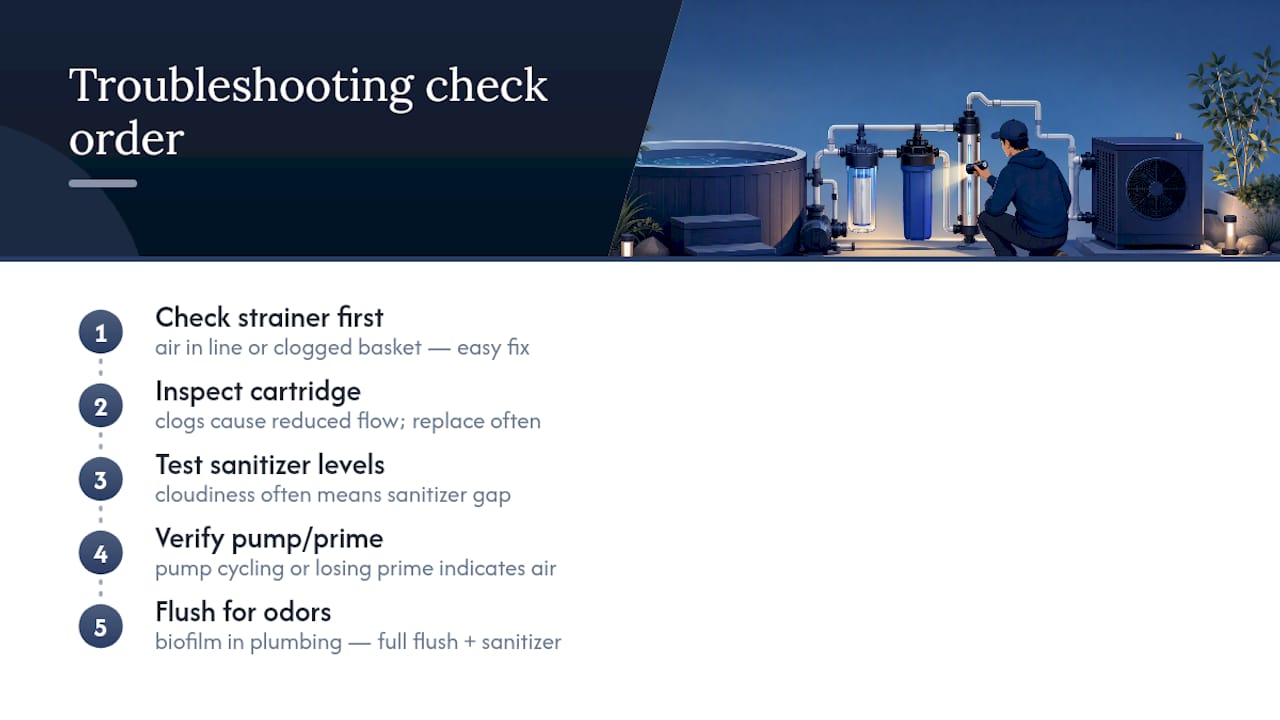
Pump cycling on and off or losing prime usually traces back to air in the line or a partially clogged strainer basket, not the main filter housing at all. Check the strainer first since it’s the easiest fix.
Unusual odor even with clear water suggests biofilm somewhere in the plumbing, often in a section that doesn’t see full flow during normal operation. A full system flush with a stronger sanitizer dose usually clears it.
When in doubt, isolate variables one at a time: check the strainer, then the cartridge, then sanitizer levels, then the pump itself. Skipping steps is how a five-minute fix turns into an afternoon project.
Common Installer Mistakes and Quick Wins
The most common mistake is undersizing the pump to save money upfront, then wondering why turnover takes three hours instead of ninety minutes. The second is installing a filter housing somewhere barely reachable, which guarantees maintenance gets skipped. The third, and most consequential, is treating filtration as a substitute for sanitizer rather than a partner to it.
The quick wins are just as consistent. Install a bypass valve from day one, even if it feels like an unnecessary expense at installation. Keep two spare cartridges on hand at all times, not one. Set a recurring weekly check for sanitizer levels rather than waiting for visible cloudiness. None of these take more than a few minutes, and all three prevent the calls we hear most often from frustrated owners.
If your setup involves anything unusual, an odd tub shape, a long plumbing run, a chiller from a different manufacturer, check the manufacturer’s flow and head specifications before assuming a standard filter will work.
— Teddy
Finding the Right Filtration and Chiller Setup
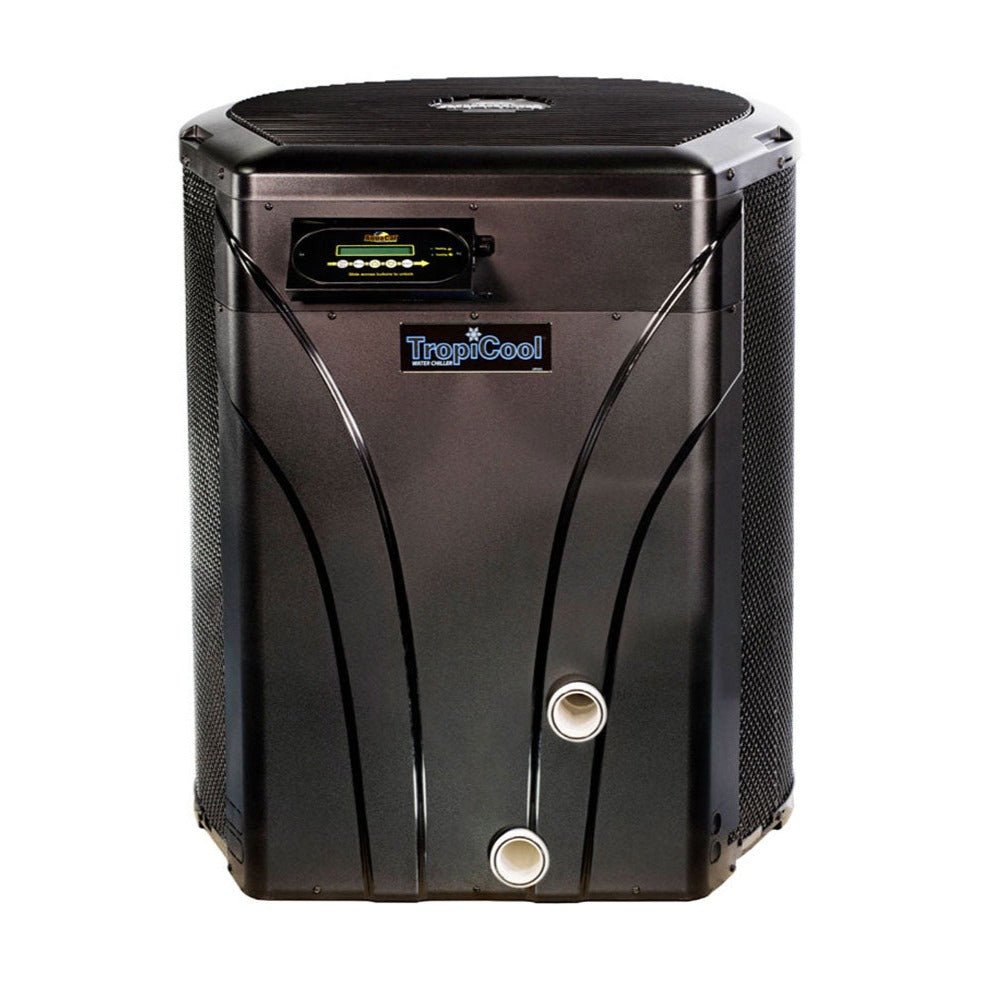
Choosing between a standalone cartridge system and an integrated chiller with built-in filtration comes down to how much manual maintenance you want to take on. Saunaheatersupply carries both paths, so you’re not stuck retrofitting a mismatched pump and filter after the fact.

For a low-maintenance option, the Penguin Cold Therapy Chiller with Filter Kit pairs cooling and filtration in one unit, which sidesteps the pump-to-filter matching most DIY builders spend hours researching. The Coldture Water Chiller is another integrated option worth checking against your tub’s volume and flow requirements. If you’re outfitting a full setup, the Dynamic Cold Therapy CUBOID comes filter-ready in 304 stainless steel, which sidesteps the material questions covered above entirely.
Every product listing spells out flow rate, head requirements, and filter compatibility so you can match components correctly before you order, not after. If you’re unsure which combination fits your space, Saunaheatersupply’s team can walk through the specs with you directly, and every order ships with parts availability and support backing it up. Browse the full lineup of chillers and filter-ready plunges to get started.
Sources
For deeper detail on filtration mechanics and water safety standards, see the CDC’s healthy swimming guidance and the DIY cold plunge filtration breakdown referenced throughout this guide.
- Ice Bath Chiller with Filter: Benefits, Costs & Buying Guide
- How to Set Up a Cold Plunge Filtration System
- Filtration 101: The Best DIY Cold Plunge Filter Setup
- CDC — Healthy Swimming