









Fit, Don’t Guess: Cold Plunge Size for Homeowners, 60–72 inches
Most adults need an interior length of 60 to 72 inches and a depth of 24 to 30 inches for a full, comfortable cold plunge. Interior length, not exterior tub size, is the measurement that decides whether you can stretch out or end up folded into a cramped tub. As a quick capacity check, expect roughly 100 gallons for one person, 250 gallons for two, and 500 gallons or more for a tub built for three or four.
TL;DR:
- Interior length should match the user’s height, with 60 inches for those under 5’10" and at least 72 inches for taller users lying flat.
- Two-person tubs typically measure 66 to 78 inches long with 200 to 300 gallons capacity, while larger tubs for three to four people exceed 80 inches and 400 gallons.
- Exterior dimensions often overstate interior space, so always request interior measurements directly from sellers to ensure proper fit and comfort.
- Structural weight from water can exceed 5,000 pounds for larger tubs, requiring reinforcement and professional verification of installation site capacity.
- Proper clearance of 24 to 36 inches in front of the tub and safe entry-exit features are critical for safety and accessibility.
Table of Contents
- Cold Plunge Size by Number of Users
- How Do You Size a Cold Plunge for a Tall or Broad-Shouldered User?
- Which Cold Plunge Format Fits Your Size?
- How to Measure Before You Buy
- Installation, Weight, and Chiller Sizing
- Maintenance Costs Scale With Size
- How Sauna Heater Supply Helps You Get Sizing Right
- Clearance for Getting In and Out Safely
- Plumbing and Maintenance Access
- Does Insulation Thickness Change the Footprint?
- What Actually Matters When Sizing a Cold Plunge
- Get Help Matching Your Cold Plunge Size and Chiller
- Sources
Cold Plunge Size by Number of Users
Choosing a cold plunge size starts with an honest count of who will actually use it. A single-user tub bought for a household of three gets crowded fast, and an oversized tub for one person wastes water, chemicals, and chiller capacity every single day.
One-person tubs typically run 60 to 66 inches of interior length and 24 to 28 inches of depth, holding somewhere between 80 and 150 gallons. That range covers most solo cold plunge setups, from compact vertical soak tanks to slightly longer models that let you extend your legs instead of tucking your knees to your chest.
Two-person tubs step up to interior dimensions closer to 66 to 78 inches long, with enough width to seat two people side by side or one person reclining. Gallon capacity generally lands between 200 and 300 gallons. This is also where the reclining versus sitting decision matters most: a tub sized for two sitters can be shorter than one built so a single tall user can lie flat.
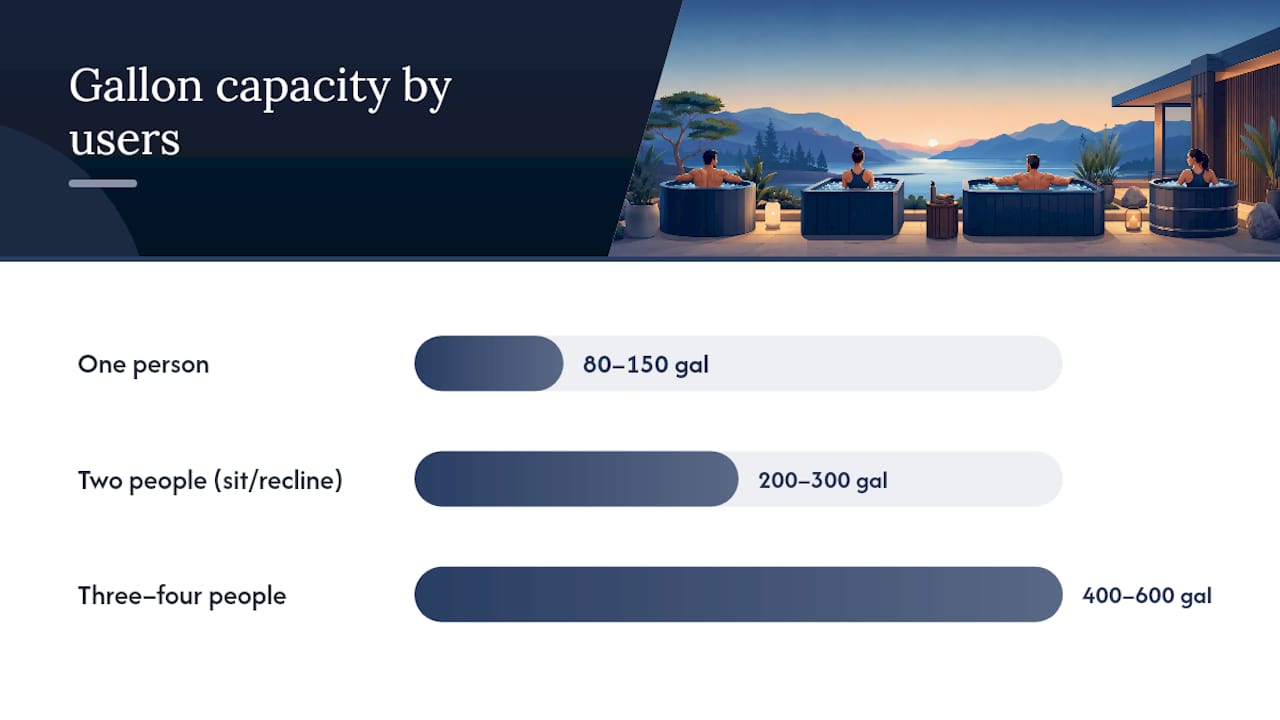
Three to four person tubs move into small-plunge-pool territory, often 80 inches or longer with capacities between 400 and 600 gallons. These are less about deep therapeutic immersion for one person and more about social or family use, where several people step in for a few minutes at a time rather than one person settling in for a longer session.
Here’s how some common interior specs translate to gallons, so you can cross-check a listing before you buy:
- 60 in long x 30 in wide x 26 in deep: approximately 90 to 110 gallons
- 68 in long x 34 in wide x 28 in deep: approximately 220 to 260 gallons
- 78 in long x 40 in wide x 30 in deep: approximately 400 to 480 gallons
- 96 in long x 48 in wide x 32 in deep: approximately 600 to 700 gallons
These figures assume a rectangular or slightly tapered shell. Round barrel tubs hold less water per foot of length than rectangular ones because of the curved walls, so always check the listed gallon figure rather than estimating from length alone.
How Do You Size a Cold Plunge for a Tall or Broad-Shouldered User?
Height is where most cold plunge sizing mistakes happen, and it’s almost always a case of buying by exterior dimensions instead of interior ones. A tub listed at 68 inches long might only offer 60 inches of usable interior space once you subtract wall thickness and a molded seat shelf.
- Under 5’10": an interior length of about 60 inches is usually enough for a knees-bent or semi-reclined position without feeling cramped.
- 5’10" to 6’2": look for 66 to 70 inches of interior length. This range is the most commonly underestimated by buyers who assume “standard” tubs fit everyone.
- Over 6’2": you need 72 inches or more of interior length to lie flat with your knees relaxed. Anything shorter forces a curled position that defeats much of the point of a longer, more comfortable soak.
Exterior length numbers on product pages are often padded by the tub’s rim, lip, and shell wall, which can eat up 4 to 10 inches of usable space compared to what’s printed on the box. That gap is exactly why interior-versus-exterior confusion ranks among the most common cold plunge buying mistakes. Always ask the seller for the interior measurement directly, not the shell dimension used in marketing photos.
Width matters just as much for broader-shouldered users. A tub with 30 inches of interior width fits most people comfortably when seated, but anyone with wider shoulders will feel pinched in a narrow barrel-style tub. Rectangular tubs generally offer more shoulder room per gallon than round ones, which is worth weighing if your build runs broad rather than tall.
Which Cold Plunge Format Fits Your Size?
Format changes usable space just as much as raw dimensions do, and picking the wrong shape for your body type can undo good size research.
- Barrel and round tubs typically offer an interior diameter around 30 inches, which works well for standing or crouched immersion but gets tight fast for anyone over about 6’2" trying to sit with legs extended.
- Rectangular tubs give you a straight interior length, which is what lets taller users actually recline. If lying flat matters to you, a rectangular shell almost always beats a barrel of similar exterior size.
- Inflatable tubs trade some structural rigidity for portability and lower upfront cost, and interior lengths vary widely by model. They’re a reasonable entry point if you’re not ready to commit to a permanent installation.
- Plunge pools solve the size problem differently. Rather than squeezing a body into a tub, a pool gives you real depth and footprint. Therapeutic plunge pools generally call for a minimum depth of 3.5 to 4 feet for seated shoulder immersion, with 4.5 to 5 feet needed if you want to stand fully submerged to the shoulders.
Pools make the most sense when you’re outfitting a multi-person household or a commercial space, since they solve both the length and depth problem at once instead of forcing a compromise.
How to Measure Before You Buy
A tape measure and five minutes of prep will save you from the single most common cold plunge buying mistake: ordering a tub that looks right in photos but doesn’t fit your body or your space.
- Measure yourself lying flat, shoulder to heel, plus a few extra inches for a relaxed knee bend. Add your shoulder width for a rough minimum interior length and width target.
- Ask the seller for interior dimensions specifically, including seat shelf depth and the waterline height, since a listed “depth” sometimes includes freeboard above the actual water level.
- Check your installation site: doorway and hallway clearances for delivery, a turning radius if the tub needs to go around corners, floor load capacity once filled, nearby electrical access, and a drainage point for maintenance and winterization.
Pro Tip: If a listing gives you exterior dimensions only, subtract at least 4 inches from the length and 2 inches from the depth as a rough interior estimate before you commit to a purchase.
Say a tub is listed at 70 inches exterior length. Subtract for wall thickness and a seat shelf, and you might end up with 62 to 64 inches of real interior room, right at the edge of comfortable for someone 5’10" or taller. That’s a small enough gap to matter and easy enough to check with one phone call to the seller before you order.
Installation, Weight, and Chiller Sizing
Every extra gallon of water adds real weight, and that weight has to go somewhere structurally sound. Water weighs about 8.34 pounds per gallon, so a 300-gallon tub holds roughly 2,500 pounds of water alone, before you count the tub shell, frame, and chiller unit.
A 500 to 600 gallon tub can easily exceed 5,000 pounds filled, which is more than most residential decks or upper floors are rated to hold without reinforcement.
- Calculate filled weight by multiplying total gallons by 8.34 pounds, then add the empty shell and equipment weight for your true total.
- Build in a safety margin for dynamic loads like someone stepping in or shifting water, since a static calculation alone can underestimate real stress on a structure.
- Larger tubs need proportionally larger chillers and filters. A 100-gallon tub and a 500-gallon tub don’t just differ in size. They differ in how much cooling capacity, filtration flow, and electrical draw the system needs to keep water clean and cold.
- Leave clearance around the chiller for airflow and service access, and confirm your electrical circuit can handle the unit’s draw before installation day.
If you’re planning anything over roughly 300 gallons, or placing a tub on a deck, balcony, or upper floor, loop in a contractor or structural engineer before you order. Hand them the interior dimensions, the calculated filled weight, and the chiller model you’re considering. That’s enough information for them to confirm your floor, deck, or foundation can handle the load safely.
Maintenance Costs Scale With Size
Bigger tubs aren’t just heavier. They cost more to run every week, and that operating cost is worth weighing against the comfort of extra room.
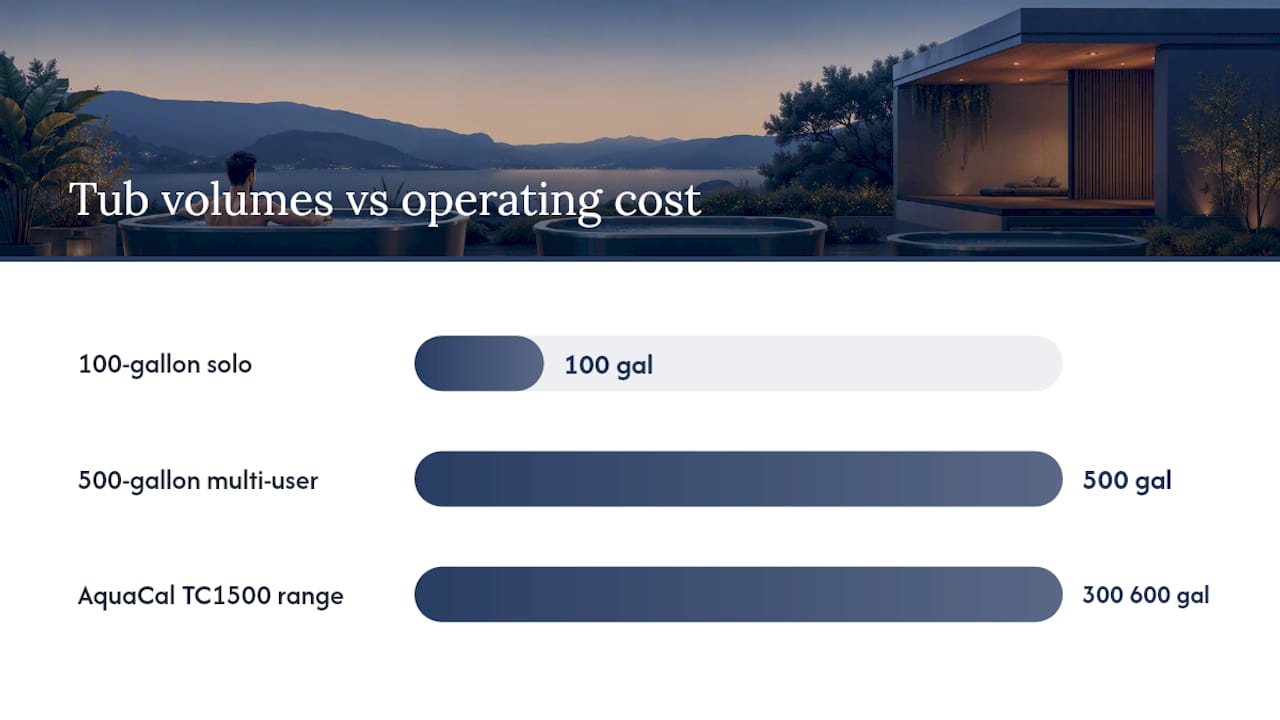
More gallons mean more sanitizer to maintain proper chemistry, more frequent filter cycling to keep water clear, and longer chiller runtimes to bring a larger volume down to temperature and hold it there. A 100-gallon solo tub might reach target temperature in a fraction of the time a 500-gallon multi-user tub needs, and it uses proportionally less power to do it.
A chiller like the AquaCal TropiCool TC1500 is generally matched to mid-size tubs in the 300 to 700 gallon range rather than small solo units, since undersized chillers on large tubs end up running constantly and wearing out faster. Matching chiller capacity to your actual gallon count, with a margin for ambient heat and frequency of use, prevents the common mistake of buying a unit that’s technically rated for your tub but has no headroom for real-world conditions.
A few habits keep costs down regardless of size:
- Use an insulated cover between sessions to cut chiller runtime significantly.
- Keep your fill level consistent rather than topping off inconsistently, which throws off chemical balance.
- Stick to a regular shock treatment schedule instead of reacting after water clarity already looks off.
- Check filter flow rates against your tub’s gallon count, since an undersized filter on a large tub struggles to keep up.
Pro Tip: If you’re using your plunge daily, a slightly larger chiller than the minimum spec will outlast a bare-minimum unit and hold temperature more consistently in hot weather.
For a deeper look at matching filtration to tub size, Sauna Heater Supply’s guide on cold plunge filtration breaks down flow rates and sanitizer options in more detail.
How Sauna Heater Supply Helps You Get Sizing Right
Getting cold plunge dimensions right on paper is one thing. Confirming a specific tub actually delivers on those numbers is another, and that’s where product-specific verification matters. The cold plunge and chiller catalog is curated with interior dimension accuracy and chiller compatibility emphasized to help buyers avoid guessing between exterior marketing specs and real usable space.
For solo or two-person households, the Icetubs IceBath offers a compact footprint suited to the 1 to 2 person gallon ranges covered earlier. For larger households or commercial installs, the Dundalk LeisureCraft Polar Plunge Tub is built for taller users and multi-person capacity, with the structural rigidity that heavier fill weights demand. On the equipment side, the AquaCal TropiCool TC1500 pairs well with mid-size tubs where chiller undersizing is a common and costly mistake. Each product page lists interior specifications directly, so you can cross-check against the thresholds in this guide before you order.
Clearance for Getting In and Out Safely
Wet skin, cold shock, and a raised tub rim are a bad combination if you haven’t planned for entry and exit space. Leave at least 24 to 36 inches of clear, non-slip floor space directly in front of the tub’s entry point, enough for a full stepping motion without pivoting awkwardly on a wet surface.
If the tub has a raised lip or step, a stable step platform or textured mat reduces the risk of a slip during the moment right after you climb out, when cold-shock lightheadedness is most likely. For barrel-style tubs, factor in extra height clearance above the rim since entry often means swinging a leg over the edge rather than stepping through a low door. Rectangular tubs with a side entry door reduce that lift but still need clear floor space on the exit side.
If you’re installing near a wall, corner, or fixed furniture, measure the swing radius of the tub’s lid or cover when it’s open, since a propped cover can quietly eat into your exit clearance without you noticing until moving day. Anyone installing a plunge for a household member with mobility limitations should add a grab bar or rail within reach of the entry point, matched to the tub’s height and rim design.
Plumbing and Maintenance Access
A cold plunge isn’t a “set it and forget it” appliance. It needs periodic draining, refilling, and chiller servicing, all of which are far easier with the right access planned in from the start.
If your tub connects to a drain line, confirm the drain location matches your chiller and filter placement, since running long hose lengths across a floor becomes a tripping hazard and a maintenance headache. A nearby hose bib or water line for refills saves you from hauling buckets every time you need to top off or fully drain for cleaning.
Leave enough space behind or beside the chiller unit for hose connections, filter changes, and occasional troubleshooting. A chiller wedged tightly against a wall with no side clearance turns a five-minute filter swap into an hour-long project. Sauna Heater Supply’s guide on cold plunge filtration covers recommended service clearance alongside filter sizing if you’re planning the mechanical layout in detail.
Does Insulation Thickness Change the Footprint?
Yes, and it’s an easy detail to miss when comparing tubs by exterior dimensions alone. Insulated tub shells add anywhere from an inch to several inches of wall thickness compared to a bare acrylic or plastic shell, which shrinks the gap between exterior and interior length even further than rim and seat shelf design alone.
That added thickness is a worthwhile trade for anyone running a chiller daily, since better insulation means less heat gain and lower chiller runtime. But it does mean two tubs with identical exterior footprints can have meaningfully different interior space depending on how much insulation sits inside the shell. When you’re comparing models, factor insulation into your placement plan too: a heavily insulated tub sits a bit larger in its footprint on a deck or utility room than its water capacity alone would suggest, so measure the actual exterior shell against your available space rather than assuming footprint scales directly with gallons.
What Actually Matters When Sizing a Cold Plunge
The research on this is pretty clear on one point: most sizing complaints trace back to trusting exterior dimensions instead of demanding interior specs, and that single habit fixes more buying mistakes than any amount of extra research into brands or features. Conventional advice tends to fixate on gallons as the headline number, but gallons are a byproduct of length, width, and depth, not the starting point. Get the interior length right for your height first, and the gallon count follows.
Where I think most buyers get it backward is treating “bigger” as automatically better. A 500-gallon tub sitting mostly full for a household of one just means more chiller runtime, more chemicals, and a heavier structural load for no real comfort gain. Size for the tallest regular user and the highest realistic occupancy count, not for hypothetical guests. And take the manufacturer’s exterior length with real skepticism: request the interior figure, request the seat shelf depth, and only then compare tubs against each other.
— Teddy
Get Help Matching Your Cold Plunge Size and Chiller
Picking the right dimensions on paper is one thing. Confirming the tub, chiller, and filtration actually work together in your space is where most DIY research runs out. Every cold plunge and chiller purchase comes with expert product selection, a price match guarantee, and guidance on matching gallons to chiller capacity to support buyers in their choices.
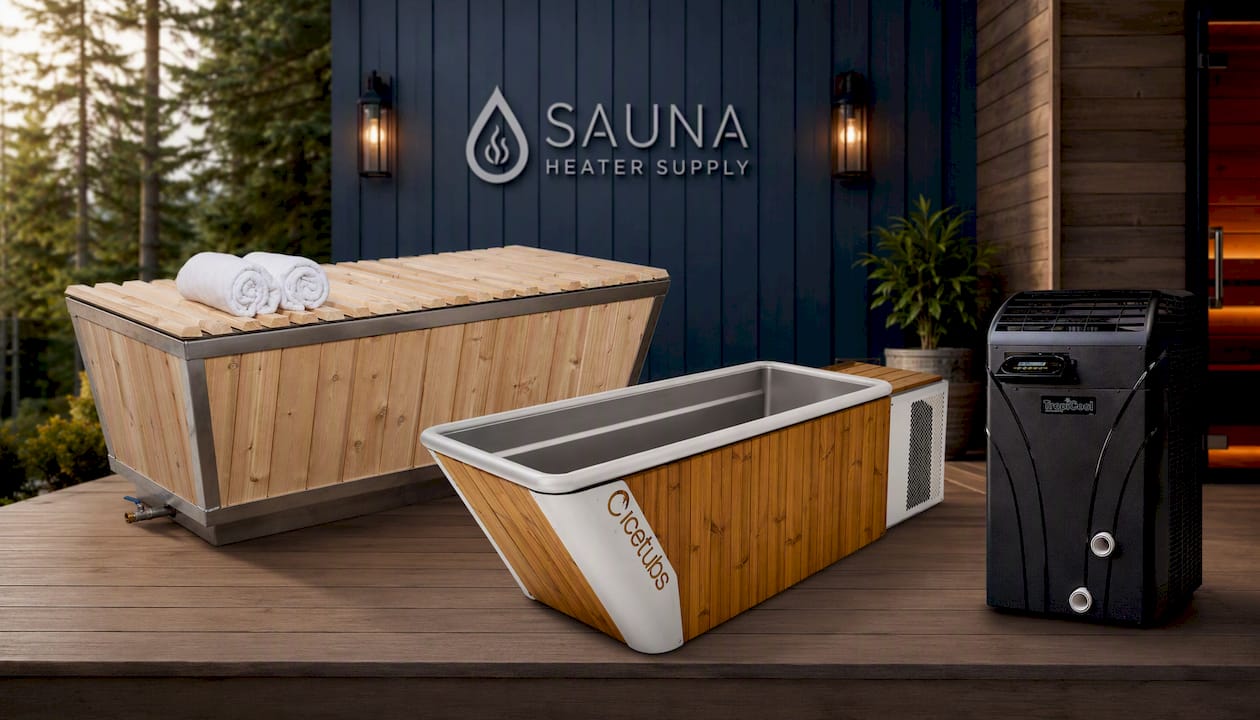
If you’re weighing a compact setup, the Icetubs IceBath is a solid starting point for one or two users. Larger households or commercial builds should look at the Dundalk LeisureCraft Polar Plunge Tub for its multi-user capacity and structural durability, paired with an AquaCal TropiCool TC1500 chiller sized to match. Call Sauna Heater Supply’s team for pricing on any of these products, or browse the full catalog at Saunaheatersupply to find the combination that fits your space and your household.
Sources
- Cold Plunge Buying Guide: Choosing the Right Size and System - Commonplace
- Plunge Pool Design Visualizer | Design Your Cold Plunge or Plunge Pool