







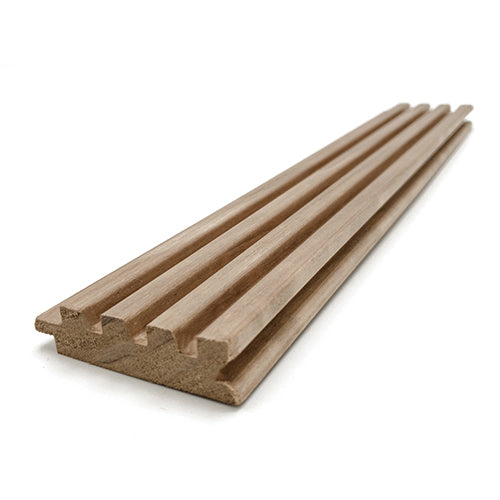
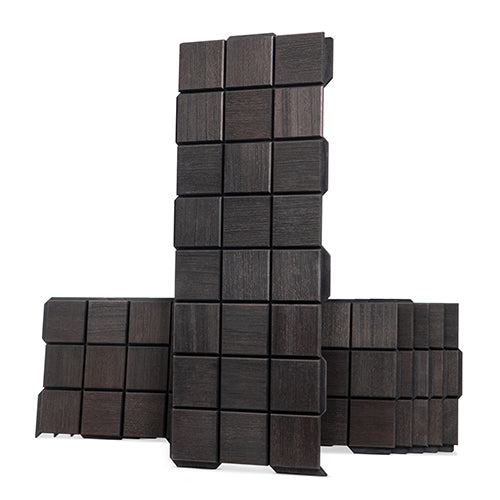



Cedar vs Hemlock Sauna: Which Wood Should You Choose?
Choose cedar when you want maximum natural durability, a signature woody aroma, and low maintenance in high-humidity or outdoor settings. Choose hemlock when you want a lower-cost, neutral-scent option that performs well in indoor and infrared builds. Here are the quick one-line calls:
- Benches and high-contact surfaces: Western red cedar. It stays cooler to the touch under heat and is less likely to splinter than most alternatives.
- Walls and ceilings (indoor infrared): Canadian hemlock. Its low-resin, odorless profile keeps the environment clean and unobtrusive.
- Outdoor or high-humidity builds: Cedar. Its natural oils resist rot and mold without any chemical treatment.
- Budget-conscious home infrared sauna: Hemlock. It costs less per board foot and delivers a clean, stable interior.
- Spa or hospitality setting: Cedar. The aroma and commercial durability match what guests expect from a premium sauna experience.
Table of Contents
- How cedar and hemlock compare side by side
- Detailed breakdown of every dimension that matters
- Which wood fits which part of your sauna?
- How to choose the right wood for your build
- What builders and long-term owners actually observe
- How long will each wood last, and what does that mean for warranties?
- Environmental impact and sustainability
- Where to source cedar and hemlock in the US
- Care tips for cedar and hemlock under sauna conditions
- Key Takeaways
- The wood choice most buyers get wrong
- Pair your wood choice with the right heater from Saunaheatersupply
- Sources and further reading
How cedar and hemlock compare side by side
| Dimension | Western Red Cedar | Canadian Hemlock |
|---|---|---|
| Aroma / scent | Pronounced woody, resinous | Neutral, nearly odorless |
| Durability / rot resistance | Excellent — natural oils resist rot and mold | Moderate — better suited to dry indoor conditions |
| Stability / cracking | Good; minor cracking possible in extreme cycles | Strong dimensional stability in indoor builds |
| Heat retention / insulation | Good; stays cooler to the touch on surfaces | Good; similar thermal performance indoors |
| Appearance / color / grain | Warm reddish-brown, visible grain | Light cream to pale tan, fine even texture |
| Cost | Higher — premium pricing in the US market | Lower — budget-friendly entry point |
| Maintenance | Low outdoors; oils self-protect | Low indoors; no natural oil protection outdoors |
| Allergen / irritation potential | Moderate — natural oils can trigger sensitivities | Low — minimal resins, good for sensitive users |
| Best uses | Benches, outdoor builds, traditional steam saunas | Walls, ceilings, infrared saunas, indoor builds |
Key differences at a glance:
- Cedar costs more but delivers built-in rot resistance that hemlock cannot match outdoors.
- Hemlock’s neutral scent makes it the practical choice for buyers with fragrance sensitivities or anyone building an infrared sauna.
- For benches, cedar’s cooler surface temperature and low splinter risk give it a clear functional edge.
- For walls and ceilings where direct skin contact is minimal, hemlock’s lower price and clean appearance often make more financial sense.
Detailed breakdown of every dimension that matters
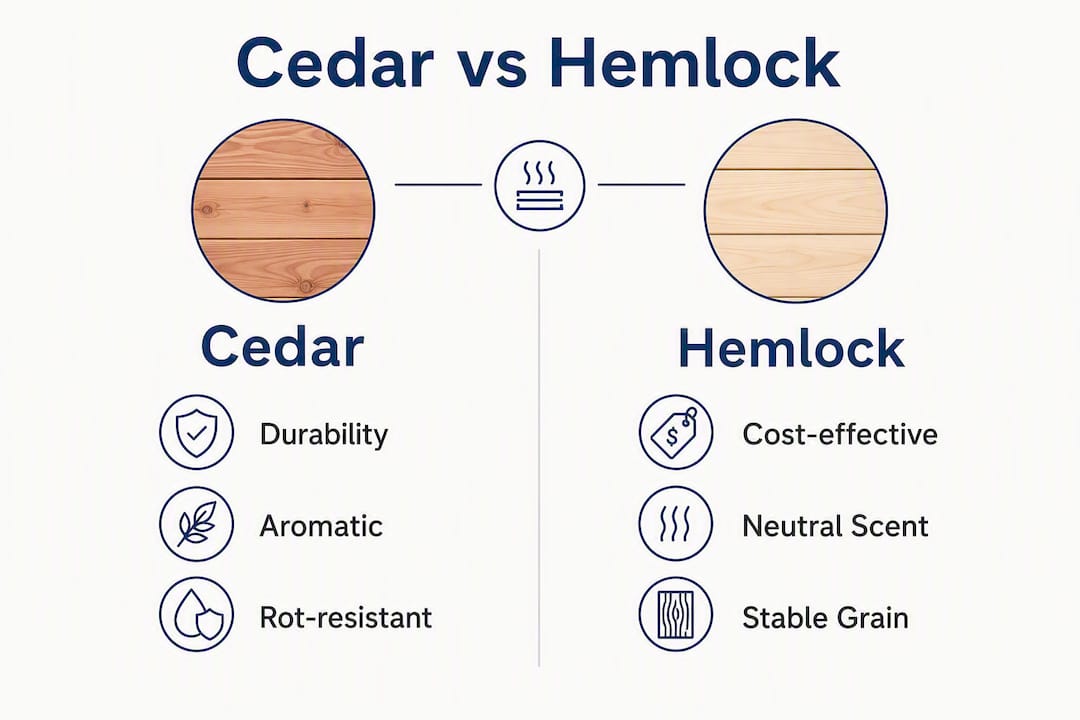
Aroma and scent
Cedar’s aroma is one of its most recognized qualities. Western red cedar releases aromatic oils when heated, producing the warm, woody scent most people associate with a traditional sauna. Many buyers actively want that experience. However, those same oils are the reason cedar can trigger sensitivities in some users — a real consideration for household members with respiratory conditions or fragrance allergies.
Hemlock is low-resin and largely odorless when heated. For buyers who want a clean, neutral environment, that is a genuine advantage, not a compromise.
Durability and rot resistance
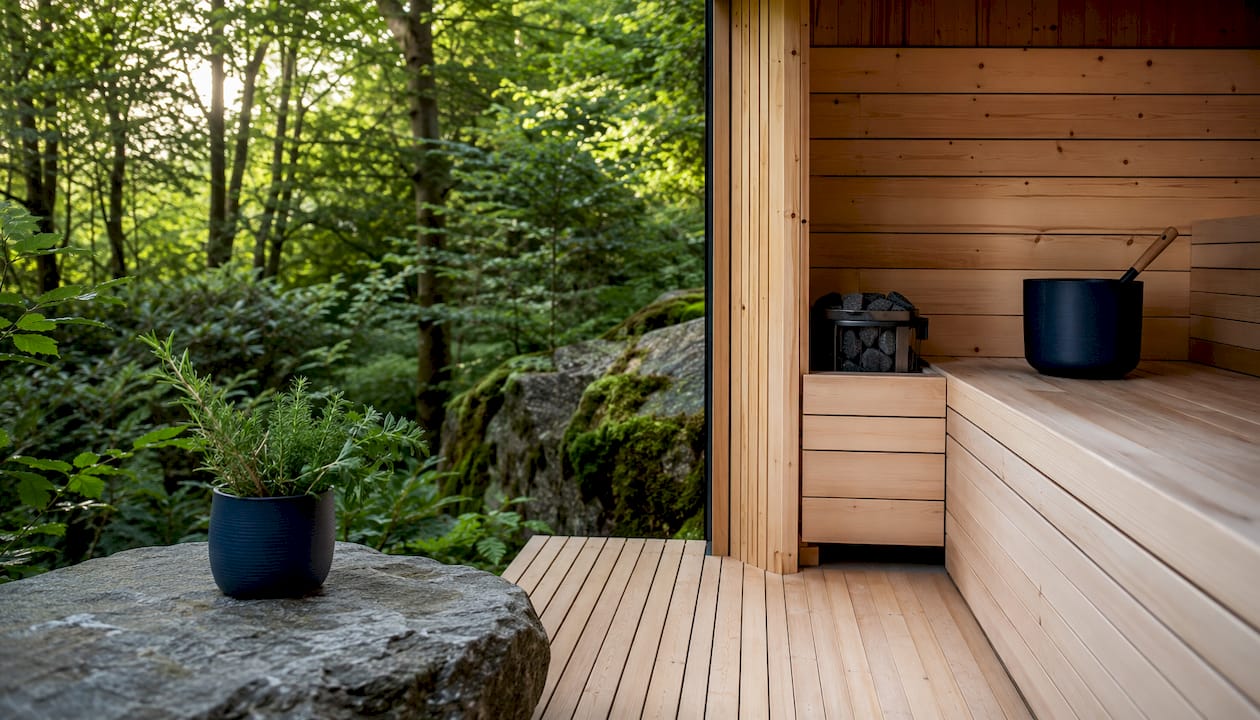
Cedar’s natural oils give it a meaningful maintenance advantage in outdoor and high-humidity spaces. Western red cedar resists rot, mold, and moisture without any chemical treatment, which is why it dominates outdoor barrel sauna builds. Hemlock lacks those protective oils, so it performs best in controlled indoor environments where moisture exposure is limited.
Pro Tip: If you are building an outdoor sauna or placing benches near a steam source, cedar is the safer long-term investment. Hemlock in a wet outdoor setting will require more frequent inspection and may need sealing.
Stability and cracking
Some builders report that hemlock shows greater dimensional stability in certain indoor sauna builds, and that cedar can develop small cracks over time under specific thermal cycling conditions. Neither wood is immune to movement, but kiln-dried boards of either species acclimate better and crack less. The key variable is not the species alone — it is whether the lumber was properly dried and acclimated before installation.
Heat retention and surface temperature
Cedar tends to remain cooler to the touch under high temperatures, which matters most on benches and backrests where skin contact is constant. Both woods offer comparable insulation performance for walls and ceilings. For infrared saunas, where surface temperatures are lower overall, the difference in heat behavior between the two species is minimal.
Appearance and grain
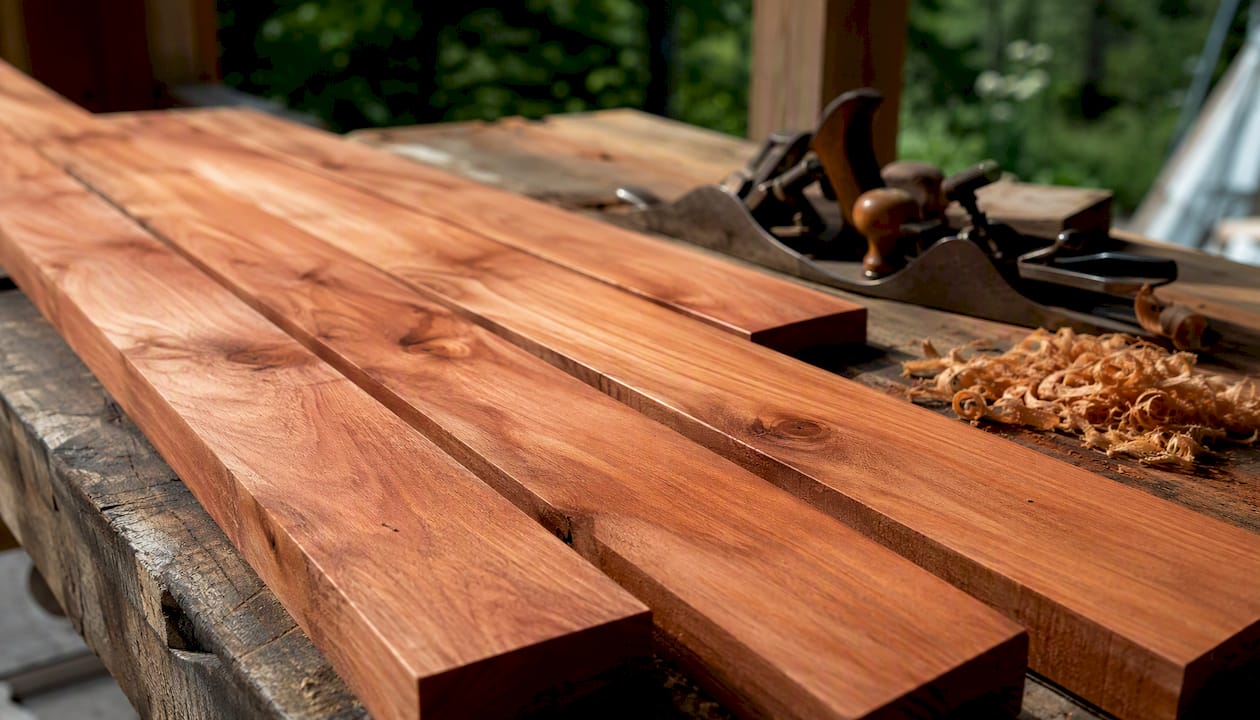
Cedar’s warm reddish-brown tone and visible grain give a sauna a rich, traditional look. The color deepens slightly over time with heat exposure. Hemlock is light-colored with a fine, even texture — closer to a Scandinavian aesthetic. Both are visually clean when finished with clear-grade boards.
Cost
Hemlock is consistently less expensive per board foot than western red cedar in the US market. For a full sauna interior, that difference can be meaningful, especially on larger builds. Cedar commands a premium because of its natural durability and the demand for its aroma.
Maintenance
Cedar’s natural oils reduce the need for sealants or treatments, particularly outdoors. Hemlock requires no special treatment indoors but should not be left unprotected in wet or outdoor conditions. Neither wood should be painted or varnished inside a sauna — both need to breathe and release moisture during heat cycles.
Allergen and irritation potential
Cedar’s aromatic oils, while pleasant to most, are a documented irritant for some individuals. Research published on PubMed has examined wood dust and volatile compounds from softwoods as potential respiratory irritants. Hemlock’s low-resin profile makes it the lower-risk option for buyers with known sensitivities or for commercial settings serving a broad clientele.
Statistic callout: Cedar’s natural oils are both its greatest durability asset and its primary allergen risk — the same compounds that protect the wood outdoors can cause irritation for sensitive users indoors.
Which wood fits which part of your sauna?
Matching wood to function is where most buyers save money without sacrificing performance.
Benches and backrests: Cedar is the preferred choice. Its cooler surface temperature and low splinter risk make it more comfortable for direct skin contact during long sessions. Clear-grade (A-grade) cedar boards with no knots are the standard for bench surfaces.
Walls and ceilings: Either wood works well here. Hemlock’s lower cost makes it a practical choice for large wall areas where appearance matters but skin contact is minimal. Cedar walls are common in traditional steam saunas where the aroma is part of the experience.
Door trim and visible accents: Cedar’s richer color makes it a natural choice for visible trim. Hemlock works well when a lighter, more uniform look is the goal.
Infrared saunas: Hemlock is the dominant choice among infrared sauna builders. Its neutral scent keeps the environment unobtrusive, and its dimensional stability suits the lower, more consistent temperatures infrared heaters produce.
Traditional steam saunas: Cedar performs well here, particularly for benches and any surface exposed to direct steam. Its rot resistance is a practical advantage in high-humidity conditions.
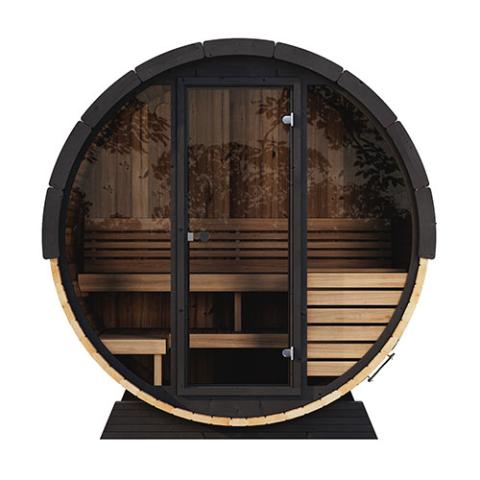
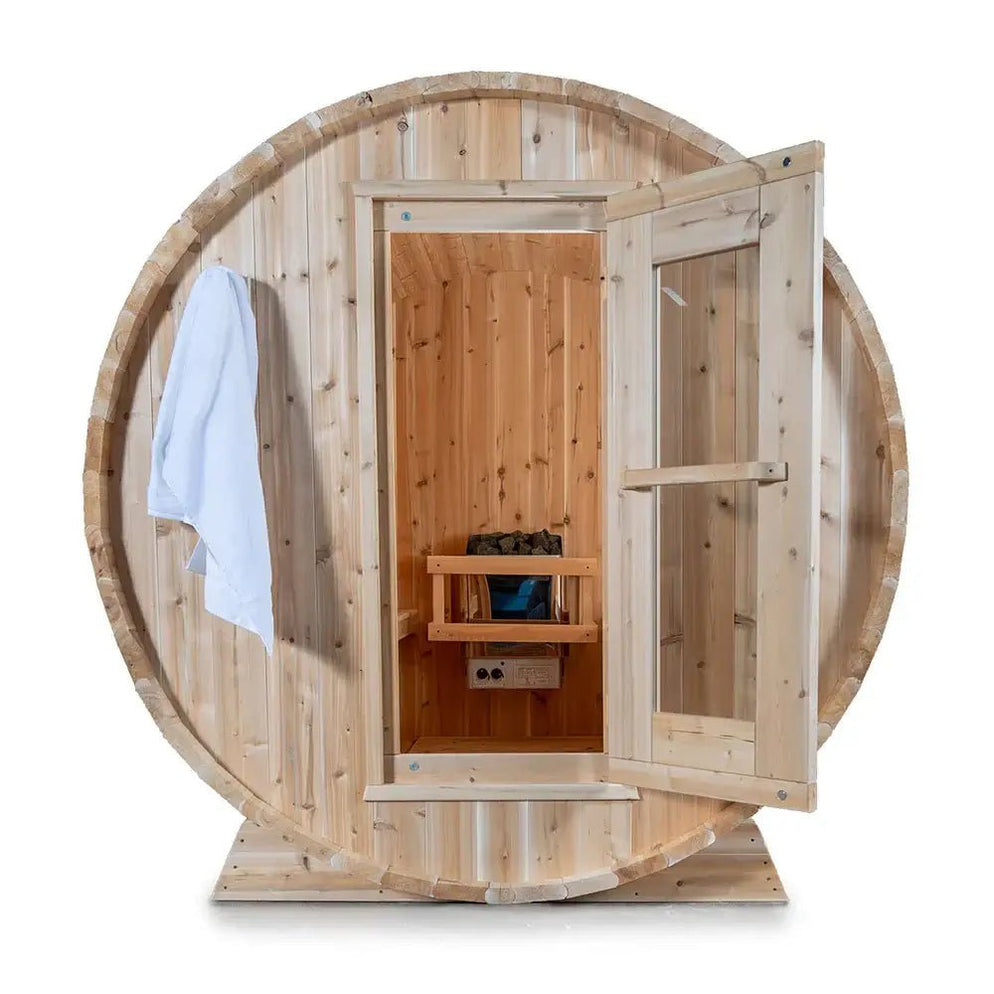
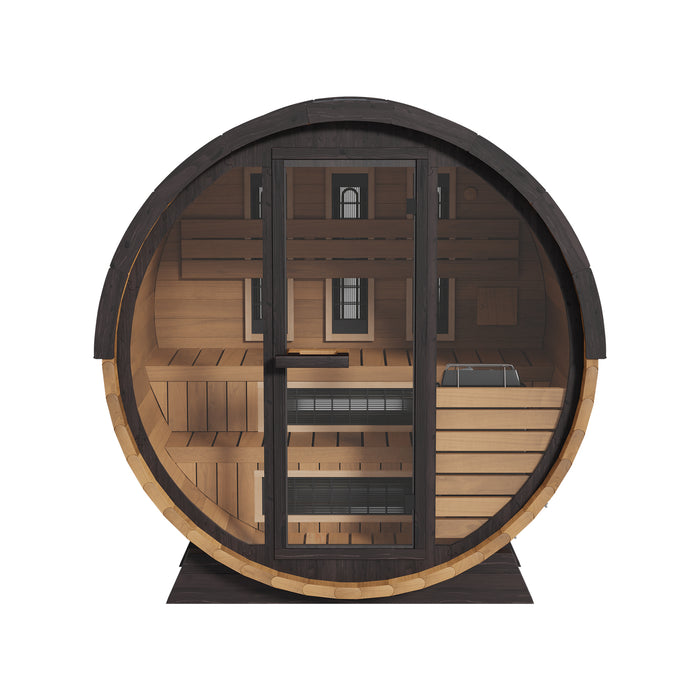
Outdoor barrel saunas: Cedar is the clear choice. The Finnmark Cedar Combination Barrel Sauna FD-6 is a good example of a purpose-built outdoor cedar sauna that takes full advantage of cedar’s weather resistance. For buyers who prefer a thermowood or aspen option, the Finnmark Thermo-Aspen Combination Barrel Sauna FD-7 offers a heat-treated alternative worth comparing.
Quick buyer scenarios:
- Budget home infrared sauna: Hemlock walls, hemlock benches, hemlock ceiling — clean, cost-effective, neutral.
- High-end residential steam sauna: Cedar benches, cedar walls, cedar trim — full aroma experience, long-term durability.
- Backyard outdoor barrel sauna: Cedar throughout — the only practical choice for unprotected outdoor exposure.
- Small commercial spa: Cedar for benches and visible surfaces; hemlock acceptable for back walls where cost control matters.
How to choose the right wood for your build
Work through this checklist before you order lumber or sign a build contract.
- Set your budget. Hemlock costs less per board foot. If budget is tight, hemlock for walls and ceilings with cedar benches is a common hybrid approach that controls cost without sacrificing comfort.
- Confirm your sauna type. Infrared builds favor hemlock. Traditional steam and outdoor builds favor cedar.
- Assess scent sensitivity. If anyone using the sauna has respiratory sensitivities or fragrance allergies, hemlock is the lower-risk choice.
- Check outdoor exposure. Any wood exposed to rain, snow, or persistent humidity needs cedar’s natural oil protection. Hemlock outdoors without treatment will degrade faster.
- Decide on your target lifespan. Cedar’s natural durability gives it a longer expected service life in demanding conditions. For a well-maintained indoor sauna, hemlock can last just as long.
- Review your maintenance tolerance. Cedar largely takes care of itself. Hemlock indoors is also low-maintenance, but it needs more attention if conditions change.
- Confirm warranty and return policy with your supplier before ordering.
Questions to bring to your builder or supplier:
- Is this lumber kiln-dried? What is the moisture content at delivery?
- What grade is the wood? Clear (A) grade for benches and visible trim is the standard.
- Are the boards finger-jointed or solid? Finger-jointed boards are acceptable for walls but not ideal for benches.
- Has any chemical treatment been applied? Avoid treated lumber inside a sauna.
- What board thickness and profile (tongue-and-groove vs. flat) do you recommend for this build?
Red flags to watch for: untested or unlabeled chemical treatments, unseasoned lumber with no moisture content data, missing warranty documentation, and suppliers who cannot specify the species or grade of wood they are quoting.
Pro Tip: Ask your supplier for a temperature probe compatible with your heater controls. Stabilizing operating temperatures reduces the thermal cycling that causes boards to crack over time — regardless of which species you choose.
What builders and long-term owners actually observe
Installers who work with both species regularly note a consistent pattern: hemlock feels more predictable in indoor builds, particularly in climates with stable humidity. Cedar, especially in saunas that go through frequent heat-up and cool-down cycles, can develop hairline cracks along the grain over time. These cracks are typically cosmetic rather than structural, but they are worth anticipating.
Field note from experienced sauna builders: “Kiln-dried, properly acclimated boards dramatically reduce early cracking in both species. The boards that crack first are almost always the ones that arrived wet or were installed without an acclimation period. Give the lumber 48–72 hours in the space before installation — that single step prevents most of the cracking complaints we see in the first year.”
Cedar’s aroma is a genuine split among users. Most people find it pleasant and associate it with the sauna experience. A smaller group — particularly those with sensitivities to volatile organic compounds from softwoods — report irritation after extended sessions. This is not a reason to avoid cedar universally, but it is worth noting for households with known respiratory conditions.
Long-term owners of cedar saunas consistently report that the wood holds up well with minimal intervention. The natural oils continue to protect the surface, and the color mellows to a warm honey tone over years of use. Hemlock ages more neutrally, staying light and even — which some owners prefer for a cleaner aesthetic.
Pro Tip: Ventilate the sauna fully after every session. Leaving the door open for 20–30 minutes after use lets moisture escape and dramatically extends the life of both cedar and hemlock interiors.
How long will each wood last, and what does that mean for warranties?
Cedar’s natural rot resistance gives it a practical longevity advantage in any build that involves moisture, outdoor exposure, or heavy use. In a well-maintained indoor sauna, both cedar and hemlock can last for decades. The difference shows up in demanding conditions: outdoor builds, high-humidity steam rooms, and commercial saunas with daily use cycles.
Warranty terms from sauna manufacturers and kit suppliers typically cover structural components and heater performance rather than the wood interior itself. Wood warranties, when offered, are usually conditional on proper installation, kiln-dried lumber, and the absence of chemical treatments. Always read the warranty terms before purchase and confirm that your chosen wood species and grade meet the supplier’s conditions.
For commercial buyers, cedar’s durability record in high-use environments makes it the lower-risk long-term investment, even at a higher upfront cost. For residential buyers with a well-controlled indoor environment, hemlock’s lower price and comparable indoor performance make it a sound choice.
Environmental impact and sustainability
Both western red cedar and Canadian hemlock are North American softwoods, and both are available from sustainably managed forests. Look for lumber certified by the Forest Stewardship Council (FSC) or the Sustainable Forestry Initiative (SFI) when sourcing either species. These certifications confirm that the wood comes from responsibly managed operations with replanting and harvest controls in place.
Western red cedar grows primarily in the Pacific Northwest and British Columbia. Demand for cedar in sauna, decking, and exterior cladding applications is high, which puts pressure on supply and contributes to its premium pricing. Hemlock is more widely available and grows across a broader range of North American forests, which generally means a lower environmental cost per board foot and a more stable supply chain.
Thermowood, a heat-treated alternative sometimes compared to cedar for outdoor use, offers improved stability and rot resistance through a thermal modification process rather than chemical treatment. It is worth considering for buyers who want cedar-like outdoor performance from a species that may be more locally available.
Where to source cedar and hemlock in the US
Both species are available through specialty lumber yards, sauna kit suppliers, and online retailers. Western red cedar is widely stocked at major home improvement retailers, though the grade and drying quality vary. For sauna-specific applications, sourcing from a supplier who stocks kiln-dried, clear-grade boards is worth the extra effort.
Canadian hemlock for sauna use is most reliably sourced through sauna-specific suppliers rather than general lumber yards, where hemlock stock may be construction-grade rather than the fine-textured, clear boards suited for interior sauna surfaces.
When ordering online, confirm the moisture content, grade, and whether boards are tongue-and-groove profiled for sauna installation. Shipping costs for lumber can be significant, so factor that into your total cost comparison between cedar and hemlock.
Care tips for cedar and hemlock under sauna conditions
For cedar:
- Do not apply sealants, stains, or varnishes to interior surfaces. Cedar’s natural oils protect it without any coating, and sealants trap moisture and can off-gas under heat.
- Wipe down benches with a damp cloth after use. Avoid harsh cleaners that strip the natural oils.
- Sand lightly with fine-grit sandpaper (180–220 grit) if the surface becomes rough or gray over time. This removes the oxidized layer and refreshes the wood’s appearance.
- Inspect outdoor cedar surfaces annually for any signs of checking or surface cracking and address them before moisture penetrates.
For hemlock:
- Keep hemlock interiors dry between sessions. Hemlock does not have cedar’s oil protection, so persistent moisture is its primary enemy.
- Ventilate thoroughly after every session to prevent moisture buildup in the wood fibers.
- Do not use hemlock in outdoor or unprotected wet environments without a protective finish, and note that most finishes are not suitable for sauna interiors.
- Clean hemlock benches with a mild sauna cleaner or diluted white vinegar solution. Avoid abrasive scrubbers that raise the grain.
Both species benefit from consistent ventilation, proper initial acclimation, and kiln-dried sourcing. The single most common cause of premature wood deterioration in saunas — regardless of species — is inadequate ventilation between sessions.
Key Takeaways
Cedar outperforms hemlock outdoors and in traditional steam saunas; hemlock delivers better value for indoor infrared builds where scent neutrality and cost control matter most.
| Point | Details |
|---|---|
| Cedar for durability and aroma | Choose western red cedar for outdoor builds, traditional steam saunas, and benches where rot resistance and scent are priorities. |
| Hemlock for cost and neutrality | Canadian hemlock costs less and suits indoor infrared saunas well, especially for buyers with scent sensitivities. |
| Verify lumber quality before ordering | Confirm kiln-dried, clear-grade boards and no chemical treatments regardless of which species you choose. |
| Smart controls protect your wood | Temperature probes and smart controllers reduce thermal cycling that causes cracking in both cedar and hemlock interiors. |
| Saunaheatersupply for heaters and accessories | Saunaheatersupply carries heater packages and temperature controls that pair directly with cedar and hemlock builds. |
The wood choice most buyers get wrong
Most buyers treat the cedar vs. hemlock decision as a pure aesthetics call. It is not. The more consequential variable is where the sauna will live and how it will be used.
Cedar’s reputation is well-earned, but it is specifically earned outdoors and in high-humidity steam environments. In a climate-controlled indoor infrared sauna, cedar’s rot resistance is largely irrelevant — you are paying for a property the environment never tests. Hemlock in that context is not a budget compromise; it is the technically appropriate choice.
The mistake runs the other way too. Buyers who choose hemlock for an outdoor barrel sauna because it is cheaper are setting themselves up for accelerated deterioration. Cedar’s natural oils are not a luxury feature in that application — they are the reason the sauna holds up through seasons of rain and temperature swings.
The other thing buyers consistently underestimate is the scent question. Cedar’s aroma is pleasant in a 15-minute session. In a daily-use sauna for someone with mild respiratory sensitivity, it accumulates. Hemlock’s neutrality is not a flaw — for a significant portion of buyers, it is the right call for long-term comfort.
Match the wood to the environment and the user, not to the marketing image of what a sauna is supposed to smell like.
Pair your wood choice with the right heater from Saunaheatersupply
Choosing the right wood is only half the build. The heater you pair with it determines how your cedar or hemlock interior performs over time. Consistent, well-controlled heat cycles protect the wood and extend the life of your investment.

Saunaheatersupply carries a curated range of electric heater packages that work with both cedar and hemlock builds. The Harvia Kip45W Heater Package is a popular choice for residential builds, offering Wi-Fi control and stones included. For larger residential or small commercial saunas, the Saunum Air 7 Sauna Heater Package delivers precise temperature management that reduces the thermal cycling stress on wood interiors. Adding a temperature probe to your controls setup is a straightforward step that helps protect your wood long-term. Browse the full range at Saunaheatersupply or contact the team directly for a product recommendation matched to your build.
Sources and further reading
- Advantages of Canadian Solid Hemlock in Sauna Construction — SFH
- Is Hemlock Good for Saunas? — Veritas Olus
- Cedar vs Hemlock Sauna: Which Wood Is Better? — The Sauna Company
- Best Sauna Wood Types — Sun Valley Saunas
- Hemlock vs. Cedar Saunas — MySaunaWorld
- Wood fires and breathing problems — Better Health Victoria
- Softwood volatile compounds and respiratory effects — PubMed
- Hemlock vs. Cedar Saunas: Which Wood is Best — The Soothing Company