









Best Wood Burning Sauna Heater: Top Picks for 2026
For most U.S. buyers, the Harvia Kip45W Heater Package is the best wood burning sauna heater for balanced performance and in-stock availability. The IKI Pillar 9kW is the top pick for authentic löyly and premium Finnish craftsmanship, and the Saunum Air 7 leads for buyers who want advanced climate control alongside wood-fired heat. All three are available through Saunaheatersupply with expert support and fast shipping.
- Best overall: Harvia Kip45W Heater Package — packaged with stones and WiFi control, proven reliability, wide U.S. dealer support
- Best for small/portable saunas: Saunum Air 7 — compact output, advanced air-mixing technology, ideal for rooms up to roughly 265 cubic feet
- Best heavy-duty/long-lasting: IKI Pillar 9kW — hand-built stainless steel mesh frame, exceptional stone mass, built for decades of use
Check current stock and request a quote directly at Saunaheatersupply. For emissions and safety guidance, the U.S. EPA publishes community-level wood-burning appliance guidance worth reviewing before installation.
Key Takeaways
The best wood burning sauna heater for most U.S. buyers is a heavy-stone, well-built stove matched to room volume, sourced from a dealer with real U.S. parts support.
| Point | Details |
|---|---|
| Size to your room first | Divide cubic footage by 45–50 to get minimum kW; add 1–2 kW for glass panels or poor insulation. |
| Stone mass drives löyly quality | Aim for at least 66 lbs (30 kg) of olivine or peridotite stones; more mass means longer steam after the fire dies. |
| Steel gauge determines lifespan | Choose stoves with 3mm or thicker firebox steel to avoid warping after repeated heat cycles. |
| Budget for full installation | Purchase price is only part of the cost; chimney, labor, and wall protection typically add $1,000–$3,000. |
| Saunaheatersupply for U.S. buyers | Harvia Kip45W, IKI Pillar 9kW, and Saunum packages are in stock with expert support and a price match guarantee. |
Table of Contents
- What are the best wood burning sauna heaters you can buy right now?
- How do you choose the right wood-burning sauna heater?
- What does installation actually cost, and what safety rules apply?
- How does stove technology affect your heat and steam quality?
- How were these stoves evaluated?
- What the author would actually choose for a home sauna
- Saunaheatersupply has the stoves, stones, and support you need
- Useful sources for further reading
What are the best wood burning sauna heaters you can buy right now?
The eight models below represent the strongest options available to U.S. buyers across room sizes, budgets, and use cases. The comparison table covers the dimensions that matter most at the point of purchase.

| Model | Best for | Power (kW) | Room volume | Stone capacity | Construction | Efficiency type | Install complexity | Price range | U.S. availability | Warranty |
|---|---|---|---|---|---|---|---|---|---|---|
| Harvia Kip45W Package | Overall / mid-size rooms | 4.5 | Up to ~265 cu ft | Included stones | Carbon steel, black finish | Conventional | Moderate | Mid-range | In stock, Saunaheatersupply | 2 years |
| IKI Pillar 9kW | Premium / large rooms | 9 | Up to ~530 cu ft | High stone mass, mesh frame | Stainless steel mesh, hand-built | Conventional, low-smoke | Moderate–high | Premium | In stock, Saunaheatersupply | Manufacturer warranty |
| Saunum Air 7 Package | Advanced control / mid-size | 7 | Up to ~350 cu ft | Moderate | Steel, air-mixing system | Air-mixing / climate control | Moderate | Mid–premium | In stock, Saunaheatersupply | Manufacturer warranty |
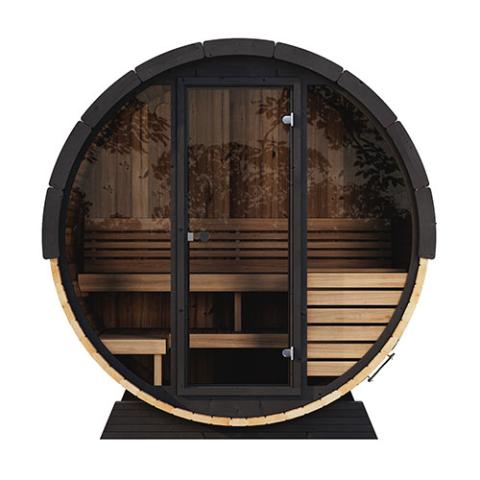
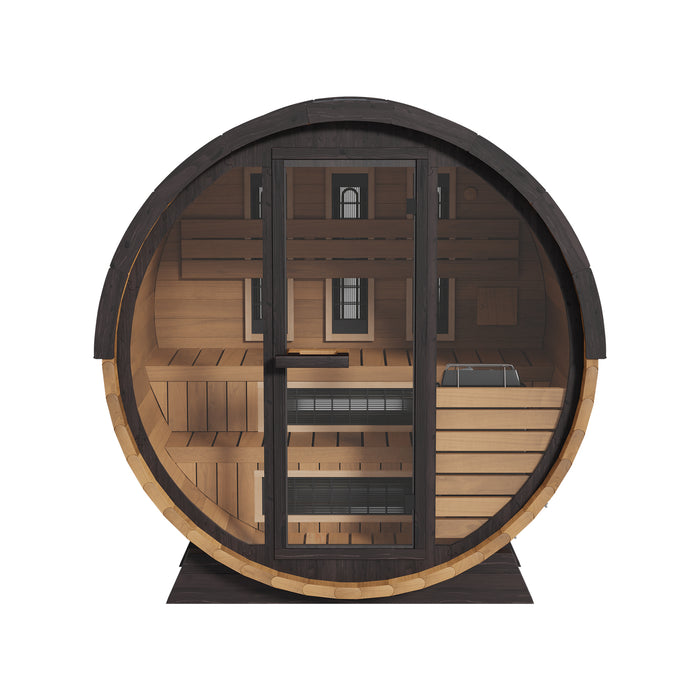
| Finnmark FD-7 Barrel Sauna | Outdoor barrel / all-in-one | Integrated | Barrel-specific | Included | Thermo-aspen wood structure | Conventional | Low (kit) | Mid-range | In stock, Saunaheatersupply | Manufacturer warranty |
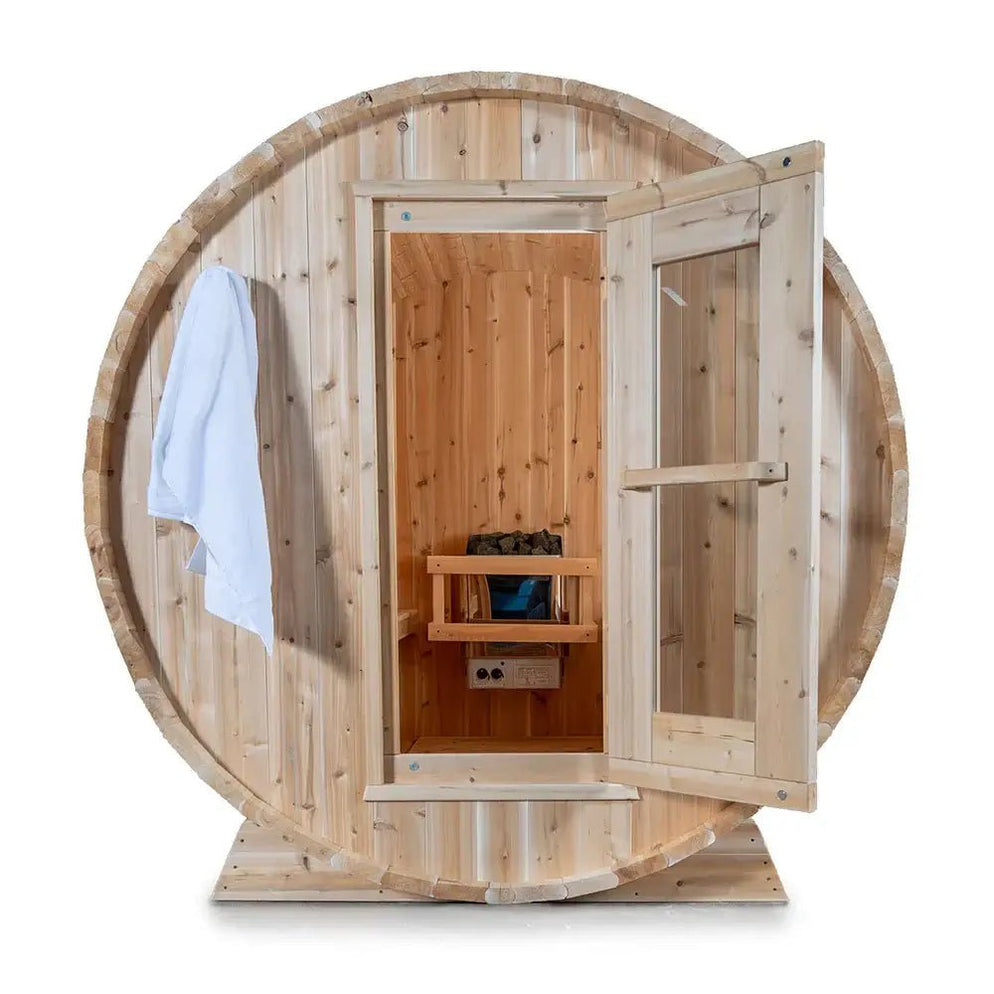
| Finnmark FD-6 Barrel Sauna | Outdoor cedar / all-in-one | Integrated | Barrel-specific | Included | Western red cedar structure | Conventional | Low (kit) | Mid-range | In stock, Saunaheatersupply | Manufacturer warranty |
| Saunum Air L 15 Package | Large rooms / heavy use | 15 | Up to ~530 cu ft | High | Steel, air-mixing system | Air-mixing / climate control | Moderate–high | Premium | In stock, Saunaheatersupply | Manufacturer warranty |
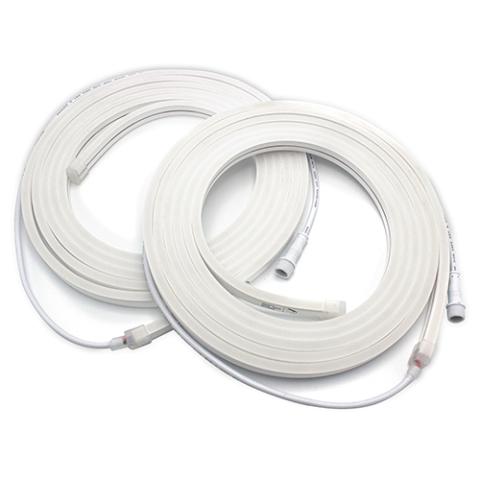
| iSteamX Steam Shower Control | Steam shower integration | N/A (control unit) | Steam shower | N/A | Electronic control + steamhead | Steam control | Low (retrofit) | Accessory pricing | In stock, Saunaheatersupply | Manufacturer warranty |
| Temperature Probe (iSteam/AirTempo/iTempo/iTempoPlus) | Precision temp monitoring | N/A (accessory) | Any | N/A | Sensor accessory | Monitoring | Very low | Accessory pricing | In stock, Saunaheatersupply | Manufacturer warranty |
How do you choose the right wood-burning sauna heater?
Sizing is the single most important decision, and it comes down to one calculation: room cubic footage divided by a standard factor to get the minimum kW output you need.
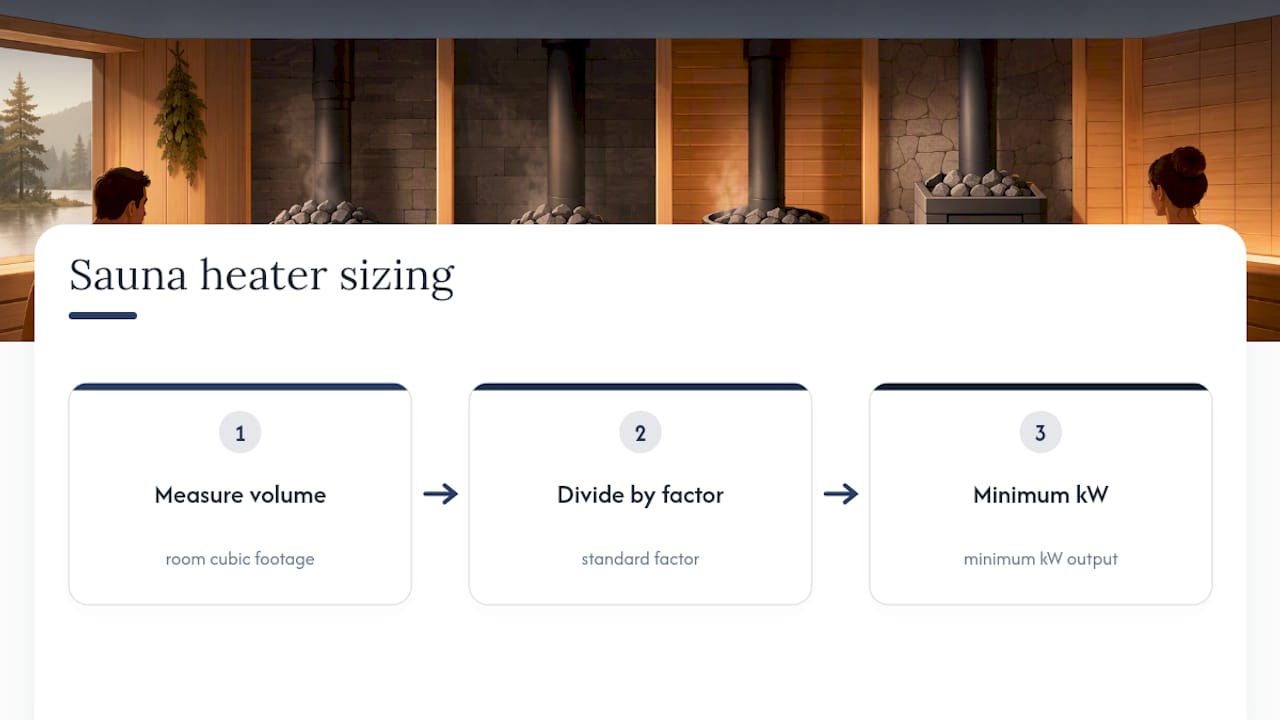
Sizing formula and worked example
A common industry rule of thumb is 1 kW per 45–50 cubic feet of sauna room volume for a well-insulated room. For a room that is 8 feet long × 6 feet wide × 7 feet tall (336 cubic feet), you need roughly 7 kW. Add 1–2 kW if the room has large glass panels, exterior walls with minimal insulation, or a concrete floor.
For small portable saunas under 265 cubic feet, a 4.5 kW stove is sufficient, such as the Harvia Kip45W. The Dwarf 5kW is a well-documented small-stove example for compact installations. For rooms up to 530 cubic feet, move to a 9 kW stove like the IKI Pillar 9kW or Saunum Air L 15.
Stone mass and löyly quality
Stone mass directly determines how long your steam lasts after you stop feeding the fire. A stove with 100+ lbs of stone holds heat long enough for a full session without continuous burning. Smaller stone loads cool faster, which means more wood per session and shorter steam windows. For a home sauna used two to three times per week, aim for at least 66 lbs (30 kg) of stone. Heavier is better, up to the stove’s rated capacity.
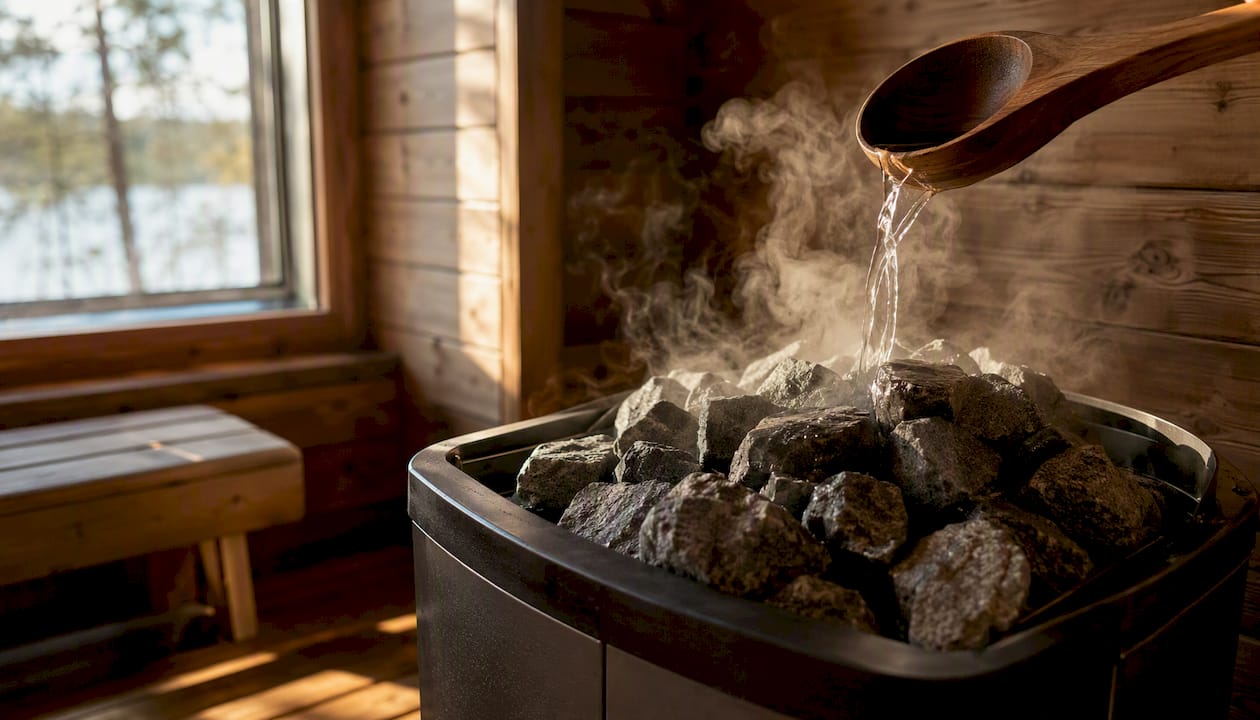
Independent performance testing confirms that higher stone mass improves steam persistence after the fire dies, reducing wood consumption per effective session.
Pre-purchase checklist
- Measure your sauna room: length × width × height in feet to get cubic footage
- Calculate minimum kW: cubic footage ÷ 45–50
- Confirm chimney clearance and flue diameter with your local building department
- Verify the stove fits your wood supply (log length the firebox accepts)
- Check U.S. parts and warranty support through your dealer
- Confirm the stove’s stone capacity matches your target stone mass
- Review local air-quality ordinances for wood-burning restrictions
Red flags to avoid
- Thin steel gauge (under 3mm on the firebox) that warps after repeated high-heat cycles
- High smoke output on start-up, which signals poor combustion design
- No U.S. parts availability or warranty documentation
- Vague chimney specs with no stated flue diameter
Pro Tip: Match stone type to your stove design. Olivine and peridotite stones hold heat longer and resist cracking better than generic river rock. For a stove with a large open stone basket like the IKI Pillar, use rounded stones 3–5 inches in diameter to allow airflow between them. Tightly packed or flat stones restrict convection and reduce steam quality.
For a broader look at how wood-fired heat compares to electric options, Saunaheatersupply’s wood burning vs electric heater guide covers the trade-offs in detail.
What does installation actually cost, and what safety rules apply?
Installation costs vary significantly by chimney type, room location (indoor vs. outdoor), and local labor rates. The table below reflects typical U.S. ranges.
| Cost item | Typical U.S. range | Notes |
|---|---|---|
| Stove purchase | $800–$4,000+ | Varies by brand and output |
| Stainless double-wall chimney kit | $400–$1,000 | Length and diameter dependent |
| Professional installation labor | $500–$1,200 | Varies by region and complexity |
| Wall/floor protection materials | $150–$350 | Cement board, tile, or stone |
| Spark arrestor | $30–$75 | Required in many jurisdictions |
| Permit and inspection fees | $75–$250 | Varies by municipality |
Clearances and ventilation
Most wood-burning sauna stoves require a minimum of 12–18 inches of clearance to combustible walls on the sides and rear, and a non-combustible floor pad extending at least 18 inches in front of the door. Always follow the specific stove manufacturer’s clearance specs, which take precedence over general guidelines. Ventilation is non-negotiable: a fresh-air intake near the floor and an adjustable exhaust vent near the ceiling maintain oxygen levels and prevent carbon monoxide buildup.
Safety note: The EPA’s community guidance on wood-burning appliances recommends properly sized, well-vented stoves and clean-burning practices to reduce particulate emissions and neighborhood smoke impacts. Install a carbon monoxide detector in any enclosed sauna structure and have your chimney inspected annually by a certified chimney sweep (CSIA-certified).
For U.S. permitting, your installer will typically need the stove’s UL listing or equivalent certification, the manufacturer’s installation manual, a site plan showing clearances, and the chimney specification sheet.
How does stove technology affect your heat and steam quality?
The type of combustion system inside your stove determines how efficiently it burns wood, how much smoke it produces, and how long your löyly lasts. These are not abstract engineering details; they translate directly to session quality and operating costs.
Stove technology types
- Gasification / secondary-combustion stoves: A secondary combustion chamber re-ignites unburned gases from the primary fire, extracting more heat from each log and producing less smoke. Harvia’s GreenFlame technology, for example, claims a 20% reduction in particulate emissions and a 70% reduction in CO versus conventional designs.
Materials and construction
Steel thickness matters more than most buyers realize. A firebox built from 3mm or thicker carbon steel or stainless steel resists warping through thousands of heat cycles. Thinner steel, common in budget stoves, can deform within a few seasons, compromising the door seal and combustion efficiency. Stainless steel resists corrosion better in humid sauna environments, which is why IKI uses it for their mesh frame construction.
How stone placement affects steam
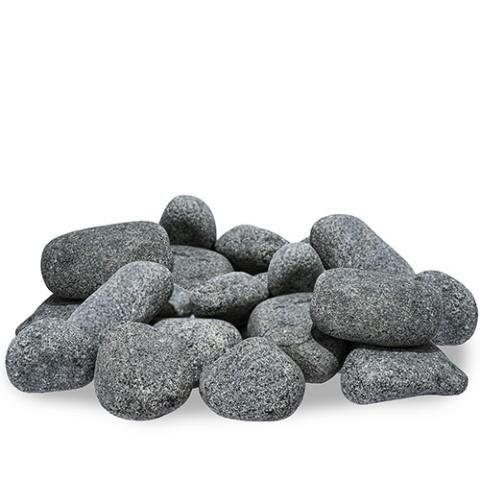
Stones placed directly over the firebox absorb radiant heat most efficiently. A deep stone basket with good airflow between stones produces dense, moist steam when water is ladled on. Shallow or tightly packed stone beds produce thinner steam that dissipates quickly.
Higher stone mass improves steam persistence after the fire dies, and independent testing consistently shows this reduces the wood needed per effective session. For home saunas, a stone mass of at least 66 lbs (30 kg) covers most use cases well.
Pro Tip: Replace sauna stones every 2–3 years regardless of how they look. Stones that have absorbed minerals from water gradually lose their heat-retention capacity and can crack unpredictably when ladled. Olivine and peridotite are the most durable choices for high-temperature wood-fired use.
The SaunaMarketplace roundup notes that efficient designs can require significantly less wood per session than conventional stoves, which adds up to real savings over a heating season.
How were these stoves evaluated?
The shortlist above reflects a structured evaluation across criteria that matter at the point of purchase, not just on paper.
Data sources
Manufacturer specification sheets, SaunaTimes’ hands-on comparison matrix, independent performance testing published by Rosenberry Rooms, IKI and Harvia product documentation, and aggregated customer feedback from Saunaheatersupply’s own customer review roundup all informed the rankings.
The most reliable signal in any wood sauna stove review is not the brand name but the stone mass rating and the steel gauge. Every other performance claim flows from those two numbers.
Transparency note: Saunaheatersupply carries the products featured in this article. Recommendations reflect genuine performance criteria, not inventory preference. Where a model has a meaningful limitation, it is stated in the pros/cons.
What the author would actually choose for a home sauna
If the choice came down to a single stove for a well-insulated 300-cubic-foot home sauna used three or four times a week, the IKI Pillar 9kW would be the pick. The hand-built stainless mesh frame and high stone mass are the two features that separate a genuinely great sauna session from a merely warm room. The steam produced by a full stone load in an IKI holds longer and feels denser than what you get from a conventional firebox with a shallow stone tray.
The practical trade-off is wood use. A large stone mass takes more fuel to reach temperature initially, but once it is hot, you burn less wood per hour to maintain it. Over a two-hour session, that often means fewer logs total compared to a fast-heat stove that cycles on and off.
On maintenance: check the door gasket at the start of each heating season. A worn gasket lets air bypass the firebox, which reduces combustion efficiency and increases smoke. Have the chimney swept annually, and inspect the stone bed for cracked or discolored stones before reloading each fall. Those two habits extend stove life by years.
Saunaheatersupply has the stoves, stones, and support you need
Choosing the right wood-fired sauna stove is straightforward when you have the right products in stock and someone who can answer a specific question about your room dimensions or chimney setup. Saunaheatersupply carries the full lineup covered in this article, including the Harvia Kip45W package, the IKI Pillar 9kW, and the Saunum Air 7, all with fast U.S. shipping and a price match guarantee.

For buyers adding steam shower capability alongside a wood-fired sauna, the iSteamX Steam Shower Control and Steamhead and the Temperature Probe for iSteam and compatible controls are both in stock as accessories. Contractors and spa professionals can contact the team directly for volume pricing and installation referrals. Browse the full wood-fired heater selection or request a quote at Saunaheatersupply.
Useful sources for further reading
- Wood-Burning Appliances and Your Air Quality (EPA community factsheet)
- Wood burning sauna stove review and comparison | SaunaTimes
- Wood burning heater Harvia Linear 22 GreenFlame black | Wood burning heaters | Harvia
- IKI Wood Burning Heaters - IKI SAUNAS USA
- Best Wood Sauna Stoves, Reviews and Guide | SaunaMarketplace.com
- Small stove — The Dwarf 5kW product page
- The Best Sauna Wood Burning Stove 2025: Based On Customer Reviews — Sauna Heater Supply
For permitting and final installation sign-off, contact your local building department directly. Requirements vary by state and municipality, and a local inspector’s approval is the only reliable confirmation that your installation meets code.
Recommended
- The Best Sauna Wood Burning Stove 2025: Based On Customer Reviews — Sauna Heater Supply
- Wood burning vs electrical sauna heaters: a comprehensive guide — Sauna Heater Supply
- Sauna Heater Supply- Shop Premium Sauna Heaters
- The Ultimate Guide to Choosing the Best Types of Sauna Heater — Sauna Heater Supply